Who Has Advanced UAP Transparency in Congress?
Meet the UAP transparency lawmakers driving disclosure, oversight and records access, and learn what Congress actually passed and what remains limited.
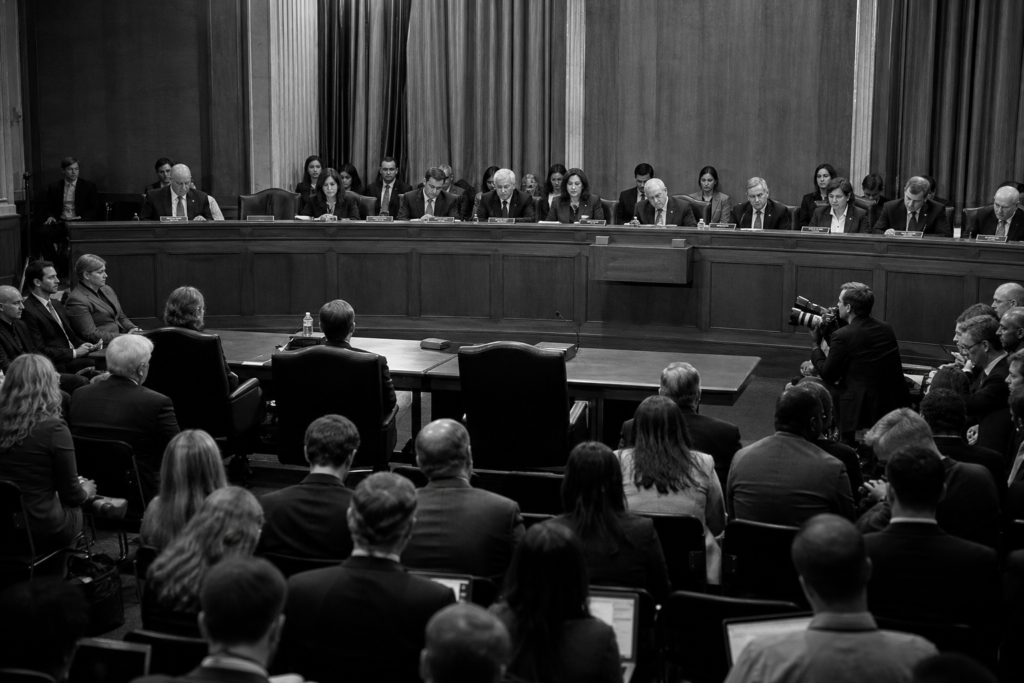
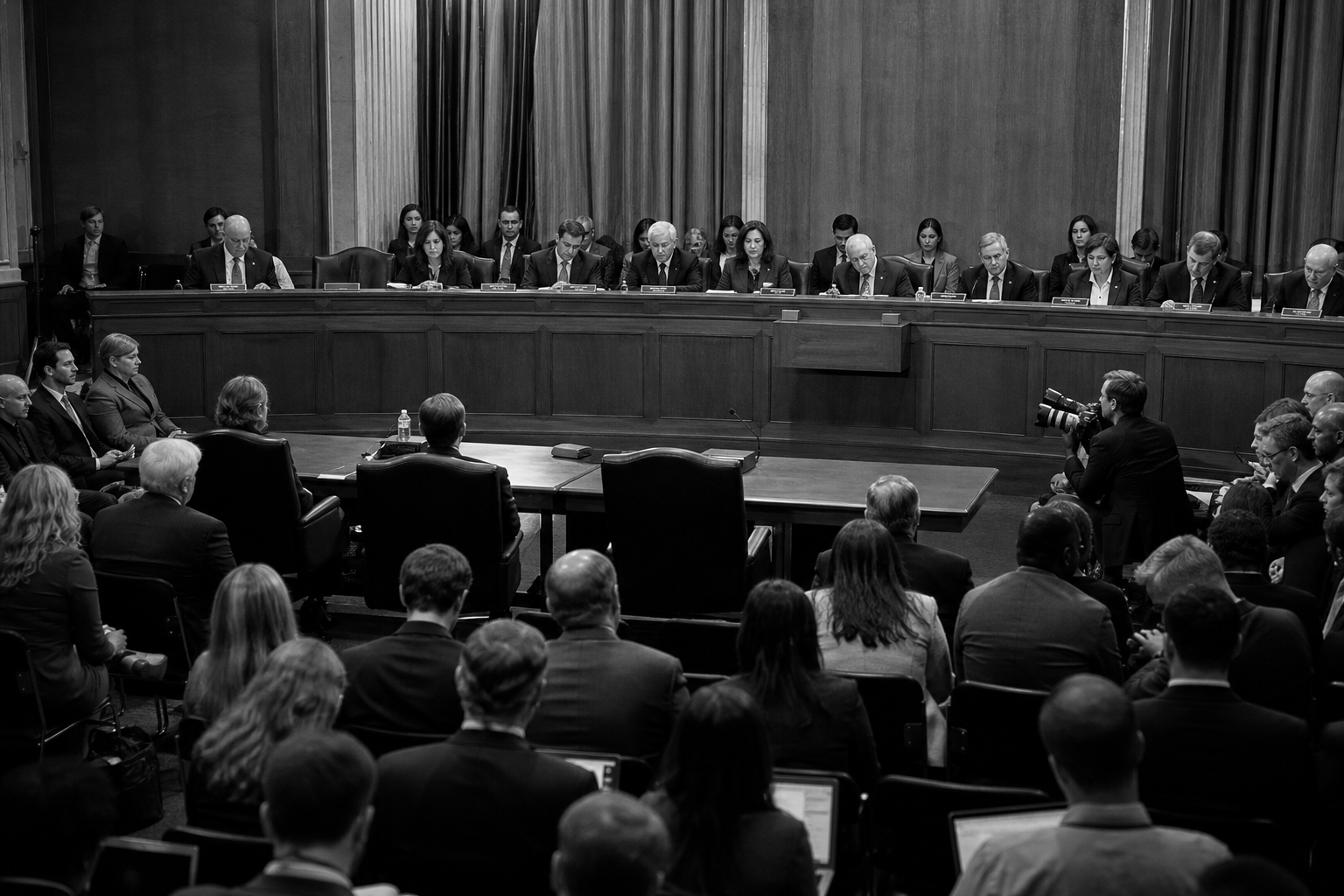
Viral hearing clips and striking allegations are not a reliable measure of who has materially advanced UAP transparency. The consequential work is usually less theatrical: writing disclosure language, attaching reporting requirements to defense legislation, demanding classified briefings, pressing for access to records, and building protections that let government personnel bring concerns to inspectors general or Congress.
This accountability map centers on the UAP transparency lawmakers whose actions can be tied to those institutional levers, especially Senators Chuck Schumer, Mike Rounds, and Kirsten Gillibrand, former Senator Marco Rubio, and House oversight figures including Tim Burchett and Anna Paulina Luna. Their roles are not interchangeable. A disclosure proposal can seek the collection and eventual release of government-held records; an oversight provision can require agencies to report and establish a continuing review structure; a hearing can create public pressure without changing the law.
The distinction matters because Congress can compel reporting, fund offices, set records procedures, and scrutinize classification decisions, but it cannot turn an unverified claim into established fact. This article separates enacted reforms from proposals that were narrowed or did not pass, and sustained legislative work from occasional public interest in unexplained phenomena.
Who Counts as a Serious UAP Transparency Advocate?
The threshold used here is sustained, attributable institutional work. A serious advocate has done more than voice curiosity or attend a well-publicized hearing: the record should show a substantive measure, a formal oversight step, or repeated efforts that can be evaluated by their text and outcome.
- Disclosure legislation seeks a framework for identifying, reviewing, and potentially releasing UAP-related government material. Its weight depends on whether it was merely introduced, advanced, narrowed, or enacted.
- Records-access rules address who must preserve, transfer, organize, or make records available. They matter because public interest alone does not create an accessible record system.
- Whistleblower reporting protections create channels for personnel to bring concerns to inspectors general or Congress. They protect reporting; they do not establish that an allegation is true.
- Congressional oversight includes hearings, classified briefings, letters, and committee demands for answers. It can expose gaps and sustain pressure, but it is distinct from changing statutory requirements.
Bipartisan congressional oversight is a stronger signal than party branding: durable UAP transparency efforts usually require coalition-building across committees and chambers. The lawmakers fighting for UAP transparency featured below meet that action-based standard, while isolated statements and appearances do not.
Chuck Schumer and Mike Rounds: The Most Consequential Disclosure-Legislation Push
Senate Majority Leader Chuck Schumer (D-N.Y.) and Sen. Mike Rounds (R-S.D.) mounted the Senate’s most ambitious bipartisan push for UAP disclosure when they offered the UAP Disclosure Act as an amendment to the fiscal 2024 National Defense Authorization Act. Their design went beyond requesting another report: it would have created a centralized, government-held UAP records collection at the National Archives, required agencies to identify and transfer relevant material, and applied a presumption that records should be disclosed unless a defined harm justified postponement.
The original framework also proposed an independent review board. That body would have assessed agency requests to withhold material, creating an outside decision point rather than leaving disclosure entirely to the agencies that classified the records. It paired that review process with a controlled-disclosure mechanism: sensitive material could be delayed or released in a managed way when immediate publication could damage national defense, intelligence, foreign relations, law enforcement, or other protected interests. The practical distinction mattered. A records collection preserves and organizes material; an independent board could have challenged an agency’s decision to keep it secret.
Schumer and Rounds did not secure the full UAP Disclosure Act in the final fiscal 2024 NDAA. Negotiations removed the proposed review board and other stronger enforcement and disclosure features, including the bill’s broader controlled-disclosure architecture. What survived was narrower but consequential: the enacted law established a UAP Records Collection at the National Archives, directed federal agencies to locate and transfer qualifying records, and retained a presumption of disclosure alongside procedures for postponing release. That outcome makes Schumer and Rounds the leading UFO disclosure lawmakers on statutory architecture, while also showing the limit of their victory: Congress created a records pathway, not the independent disclosure authority they originally sought.
Kirsten Gillibrand and Marco Rubio: Building the Federal UAP Oversight Framework
Sen. Kirsten Gillibrand (D-N.Y.) and then-Sen. Marco Rubio (R-Fla.) helped make UAP oversight a continuing congressional responsibility rather than a one-off intelligence exercise. Gillibrand’s 2021 Senate Armed Services Committee amendment drove the creation of a Defense Department office for unexplained aerial incidents, while Rubio used his Intelligence Committee position to press for the 2021 intelligence-community assessment that brought a formal reporting requirement into public view.
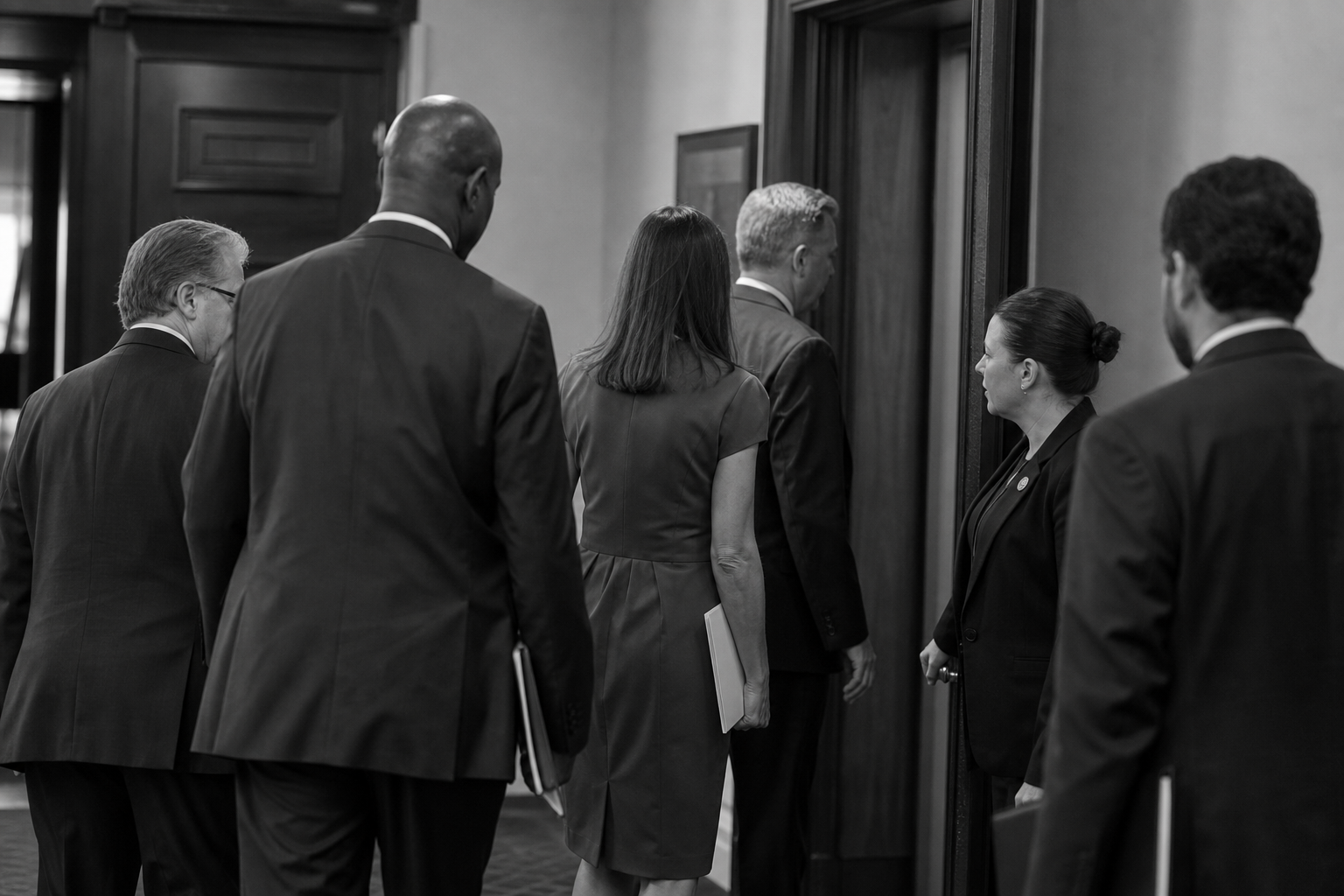
The office evolved into the All-domain Anomaly Resolution Office in the fiscal 2023 National Defense Authorization Act. Its remit is broader than collecting pilot sightings: AARO is meant to synchronize reporting and analysis across Defense Department and intelligence-community components, assess incidents in multiple domains, and provide Congress with recurring reports and briefings. That centralized assignment matters because a report held only within one command is harder for congressional committees to compare against reports, collection gaps, and unresolved cases elsewhere.
Gillibrand’s model paired an office with repeatable accountability measures. An annual report is not a public-release order; it is a scheduled obligation to account to Congress for the office’s work, including the number and disposition of reports and the status of its efforts. The practical gain is continuity: lawmakers can test whether a case was routed, assessed, or left outside the system instead of relying on an ad hoc briefing after public pressure rises.
Rubio’s contribution is similarly institutional. The intelligence reporting requirement he championed required the Director of National Intelligence and the Secretary of Defense to produce an assessment of unidentified aerial phenomena, forcing agencies to assemble information that had been distributed across military and intelligence channels. A requirement to report does not authenticate any witness’s allegation or require publication of classified evidence; it creates a record that intelligence overseers can question and revisit.
Reporting channels and intelligence-community inspector-general pathways serve a distinct purpose. They give current or former personnel an authorized route to present allegations about UAP-related information or possible mishandling for review, while preserving the difference between an allegation, an inspector-general assessment, and a substantiated finding. Gillibrand and Rubio therefore matter to UAP transparency in Congress for building durable intake, review, and reporting systems, not for establishing a blanket right of public access to every underlying record.
Tim Burchett, Anna Paulina Luna, and the House Oversight Wing
House pressure has chiefly taken the form of public questioning and demands for access. Rep. Tim Burchett (R-Tenn.) helped convene the House Oversight Committee’s July 26, 2023 UAP hearing, where former intelligence officer David Grusch and former Navy aviators Ryan Graves and David Fravor testified under oath. That hearing created a public record and exposed disputes over what Congress had been told, but it did not compel release of classified material.
Burchett’s role was not limited to the hearing. He co-sponsored H.R. 8317, the UAP Disclosure Act of 2024, introduced by Rep. Eric Burlison (R-Mo.) in May 2024. The measure would have established a review process and a collection of government UAP records, making it a legislative tool rather than a request for answers at a single hearing. It was referred to the House Oversight Committee and did not become law, so it demonstrates House support for a disclosure framework rather than an enacted change.
Rep. Anna Paulina Luna (R-Fla.), another H.R. 8317 co-sponsor, has paired that legislative position with a more visible access campaign. As chair of the House Oversight Committee’s 2025 Task Force on the Declassification of Federal Secrets, she placed UAP information within the panel’s announced remit and pressed for access to records and potential witnesses. A task force can concentrate members’ inquiries and elevate requests for briefings; unlike a statute, however, it does not itself create a release deadline or override classification.
Burlison merits inclusion as the bill’s sponsor and as a questioner at the 2023 hearing. His exchange with Grusch addressed Grusch’s allegation that the government possessed recovered “non-human” material, an allegation, not an independently established finding. Rep. Jared Moskowitz (D-Fla.), also a co-sponsor of H.R. 8317, used the same hearing to probe reporting failures and Congress’s access to information. Rep. Robert Garcia (D-Calif.), then the ranking member of the relevant Oversight subcommittee, participated in the committee’s November 13, 2024 UAP hearing.
The practical distinction is important: Burchett and Luna have been the most sustained House-facing advocates, while Burlison supplied the clearest House legislative vehicle and Moskowitz and Garcia added bipartisan oversight participation. Hearings can put witnesses and agencies on the record; bills, subpoenas, appropriations conditions, and committee-directed records investigations carry greater leverage when Congress seeks durable disclosure.
What Congress Actually Passed, and What It Did Not
The decisive distinction is between a legal duty to handle records and a political demand that agencies release them. The narrower disclosure framework retained from the Schumer-Rounds effort focused on identifying relevant government-held UAP material, gathering it into a designated records collection, and transferring qualifying records for preservation and eventual public access through the National Archives. That is meaningful public records collection infrastructure: it makes records easier to locate, preserves provenance, and creates a defined path toward release. It is not a blanket declassification order.

- Passed: a records-handling framework that directs agencies to identify and transfer covered UAP records for centralized preservation and review.
- Not passed: the proposal’s stronger independent review-board model and broader compelled-disclosure architecture. Those provisions would have created a more forceful external mechanism for deciding whether agencies could continue withholding material.
- Still limited: classified information may remain restricted where release is judged to create national-security harms or falls within applicable exemptions. A record’s presence in an archive-bound collection does not itself make it public.
Whistleblower reporting protections require a similarly careful reading. Protected reporting means personnel can bring UAP-related information, including alleged improper withholding or retaliation, through authorized channels such as inspectors general, designated defense offices, and congressional committees. Whistleblower retaliation protections are designed to protect that route of reporting; they do not create permission to publish classified information, provide it to unauthorized people, or treat an allegation as a verified finding.
For readers assessing future claims by UAP transparency lawmakers, the strongest signal is therefore an enacted requirement with a named custodian, reporting channel, deadline, or records-transfer duty. A press conference, hearing exchange, or unpassed amendment may still matter politically, but it does not change the government’s legal records or disclosure obligations.
Why UAP Transparency Is Not the Same as Proof of Alien Life
A demand for transparency answers a question about government accountability, not necessarily the origin of an object or material. A lawmaker may seek a classified briefing, a records search, or an explanation for a classification decision without endorsing claims of alien disclosure, non-human intelligence, recovered craft, or reverse-engineering programs.
Future UFO news should be sorted by the kind of support behind it. A member’s statement is a political assertion; sworn testimony places a witness under legal obligations but remains testimony to be tested; an agency assessment records an institution’s analysis; and an inspector-general finding can establish whether reporting, access, or retaliation procedures were mishandled. None automatically verifies the underlying extraordinary claim. The strongest signal is independent corroboration: separately obtained records, authenticated physical evidence, or multiple accounts that can be checked against one another. Treat a newly released document as evidence of what the document records, not, by itself, proof that every allegation within it is true.
The Bottom Line: A Practical Accountability Map for Following UAP Transparency
The practical hierarchy is clear: Schumer and Rounds remain the principal architects of ambitious disclosure-law machinery; Gillibrand and Rubio built the recurring oversight structure; Burchett, Luna, and House allies supply visible investigative pressure. These are different forms of influence, not interchangeable rankings.
For 2025 and 2026, meaningful progress has measurable markers: NDAA language that assigns a records duty, deadline, or enforcement mechanism; committee hearings that produce formal requests or follow-up action; National Archives releases that expand the accessible record; and inspector-general activity that resolves access, reporting, or retaliation issues. A hearing or demand is a useful pressure signal. An enacted provision with a responsible office and timetable is the stronger result.
Readers following UFO sightings in 2025 or 2026 should therefore track whether public calls from UAP transparency lawmakers become enforceable law, funded oversight, or released records, not treat attention alone as disclosure.
What Meaningful UAP Transparency Leadership Looks Like
The next test is whether these efforts leave a durable institutional trail. Schumer and Rounds set the benchmark for ambitious disclosure architecture: proposed statutory mechanisms intended to move records and disclosure decisions beyond agency discretion. Gillibrand and Rubio demonstrated the value of durable oversight infrastructure, where reporting channels, designated offices, and recurring congressional review can make UAP handling an ongoing responsibility. Burchett, Luna, and other House investigators have shown how hearings and direct pressure can force public engagement with questions agencies might otherwise address only in classified settings.
Those contributions should not be measured by the volume of rhetoric or by whether a member embraces a witness’s account. A strong future signal is a bill text that identifies records, assigns an official duty, sets a deadline, funds an office, or requires a report. A weaker, but still potentially useful, signal is a hearing that produces a written request, a follow-up briefing, or a committee investigation. An isolated statement is not equivalent to either.
That standard keeps the focus on results: records preserved or released, reporting requirements met, oversight findings answered, and agencies held to their stated obligations. It also preserves the essential evidentiary boundary: transparency can clarify what government institutions know and did; it does not independently establish extraordinary explanations for UAP reports.
Sources
Frequently Asked Questions
-
Which members of Congress are leading efforts for UAP transparency?
Senators Chuck Schumer and Mike Rounds led the most ambitious UAP disclosure legislation push. Senators Kirsten Gillibrand and Marco Rubio built recurring federal oversight systems, while Representatives Tim Burchett and Anna Paulina Luna have led prominent House oversight and access efforts.
-
What did Chuck Schumer’s UAP Disclosure Act propose?
The Schumer-Rounds proposal would have created a centralized UAP records collection at the National Archives, required agencies to identify and transfer relevant records, and presumed disclosure unless a defined harm justified postponement. It also proposed an independent review board to assess agency requests to keep records secret.
-
Where are federal UAP records kept under current law?
Federal agencies must identify and transfer qualifying government-held UAP records to a UAP Records Collection at the National Archives. The collection creates a centralized preservation and review pathway, but inclusion does not automatically declassify or publicly release a record.
-
What has Tim Burchett done for UFO transparency?
Tim Burchett helped convene the House Oversight Committee’s July 26, 2023 UAP hearing featuring testimony from David Grusch, Ryan Graves, and David Fravor. He also co-sponsored H.R. 8317, the UAP Disclosure Act of 2024, which proposed a UAP records collection and review process but did not become law.
-
What should I look for to tell whether a UAP transparency effort has real legal impact?
Look for enacted language that assigns a records duty, named custodian, reporting channel, deadline, funding, or enforcement mechanism. Hearings and public statements can create pressure, but laws requiring records transfers, recurring reports, or formal review create stronger and more durable accountability.