The Senate Intelligence Committee’s 2020 UAP Assessment Directive
Learn how Sen. Rubio's 2020 UAP mandate drove Congress's first intelligence assessment, what it found, and what it did not reveal.
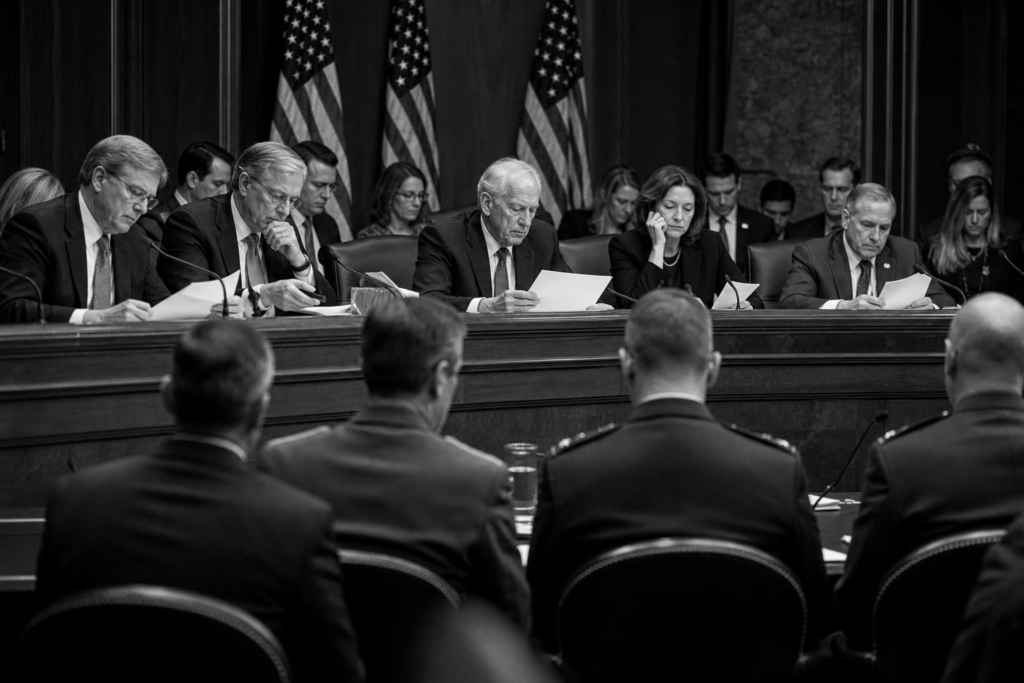
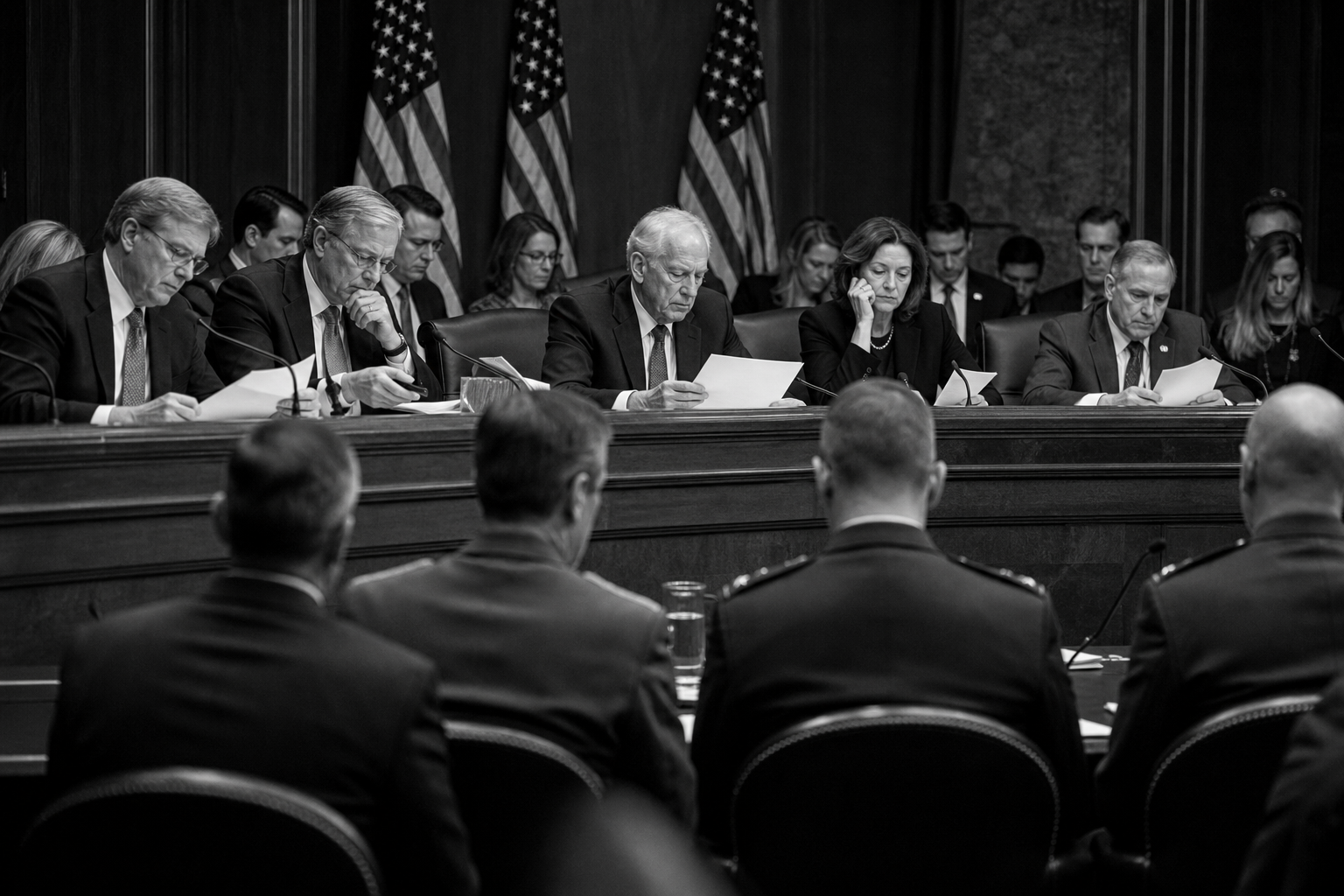
The Sen. Rubio 2020 UAP mandate was not an order for the government to declare that unidentified aerial phenomena were extraterrestrial. It was a demand for an intelligence-accountability process: a structured explanation of what federal agencies knew about reports that military personnel and sensors could not readily identify, how they were analyzing those reports, and whether any posed a national-security or aviation concern. “Unidentified” described an evidentiary gap, not a confirmed extraordinary cause.
That distinction is central to understanding the episode. In Senate Report 116-233, accompanying the fiscal year 2021 intelligence authorization process, the Senate Intelligence Committee directed the Director of National Intelligence to work with the Secretary of Defense on a detailed UAP analysis and to provide an unclassified report, alongside any necessary classified material. Rubio, then the committee’s chairman, helped elevate the issue within Congress, but the directive was a committee action rather than a personal disclosure decree or a standalone statutory command. The pages that follow trace what the committee asked for, how that request moved through the authorization process, and how it led to ODNI’s June 2021 preliminary UAP intelligence assessment, an important public baseline that left the underlying identities of many reported objects unresolved.
Why the 2020 UAP Directive Became a Federal Oversight Turning Point
A committee directive changes the institutional question from whether scattered reports deserve attention to whether the intelligence system can account for them in a defined, reviewable way. The Senate Intelligence Committee’s 2020 request put UAPs into that second category: it sought a formal assessment, coordination between the intelligence community and Defense Department, consideration of potential threats, and a public-facing unclassified result supplemented where necessary by classified material.
Rubio’s position as committee chairman gave him an influential platform to press for that scrutiny, yet the action belonged to the committee and its fiscal-year 2021 intelligence-authorization work. That procedural distinction matters. It was not a standalone law declaring conclusions about unexplained objects, nor a revival of an earlier UFO investigation such as Project Blue Book. It established an oversight mechanism designed to expose analytical gaps and reporting practices to Congress and the public.
The resulting June 2021 ODNI preliminary assessment made that mechanism visible. Its value for UAP disclosure was the creation of a documented federal baseline, not proof of alien or non-human intelligence, and not a resolution of every case. Many identities remained unresolved, but federal agencies had been required to address the uncertainty in a coordinated intelligence framework.
The Context: Why UAPs Reached the Senate Intelligence Committee
For military aviators, an unidentified object is first an operational problem, not a cultural mystery. A report in or near restricted airspace or a training range can affect flight safety, reveal a gap in sensor coverage, or indicate that a foreign platform is observing U.S. forces. The relevant question is not whether every incident has one explanation; it is whether officials can distinguish ordinary airborne clutter, sensor artifacts, and misidentifications from a possible surveillance or foreign-adversary technology concern.
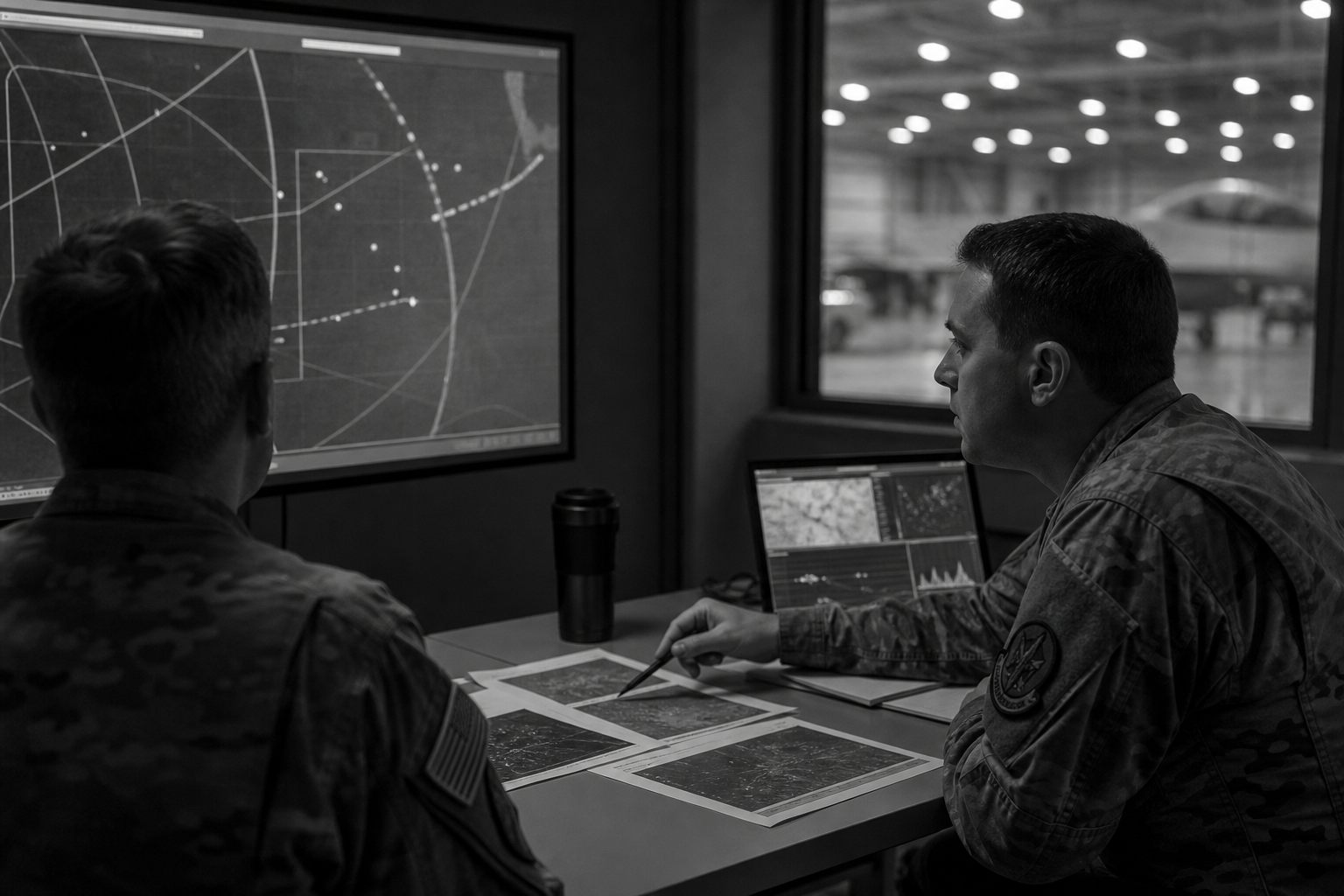
That task was complicated by uneven collection. Observations could begin with a pilot, radar, infrared system, or other sensor, but the available records did not always provide the same quality of location, duration, imagery, or corroboration. A well-supported report combines multiple data streams and permits comparison; a weak one may preserve only a brief observation. Those differences matter because an unresolved label identifies insufficient information, rather than establishing what the object was.
The Senate committee’s interest also followed a much longer federal history, including earlier Pentagon UAP-program funding. The Air Force’s Project Blue Book, which operated from 1952 to 1969, examined thousands of UFO reports, so the 2021 ODNI assessment was not the United States’ first government inquiry into unexplained aerial reports. Its modern significance lay in treating recent military incidents and UAP sightings as an intelligence and aviation-safety oversight issue: one tied to potential collection failures, force protection, and the possibility, unproven in any particular case, of foreign surveillance capability.
What Congress Required in the 2020 UAP Intelligence Assessment
Senate Report 116-233 placed the instruction under “Advanced Aerial Threats” in the committee’s report accompanying the fiscal year 2021 intelligence-authorization process. Its operative direction was to the Director of National Intelligence: working with the Secretary of Defense and the heads of other relevant agencies, the DNI was to deliver a detailed analysis of unidentified aerial phenomena data and intelligence reporting.
The assignment was deliberately broader than a list of sightings. The committee asked for analysis of information collected by the 2020 Pentagon UAP Task Force and the Office of Naval Intelligence, as well as relevant UAP data collected by the FBI. It also requested an account of the interagency process for collecting, analyzing, and disseminating the intelligence. That distinction mattered: an inventory of reports would show volume, while a process assessment could expose gaps in collection, coordination, or analytic responsibility.
The requested Congress UAP intelligence assessment also had a threat-focused component. It was to identify potential aerospace or other threats posed by UAP; assess whether activity could be attributed to one or more foreign adversaries; identify incidents or patterns that might indicate an adversary’s breakthrough aerospace capability; and recommend additional collection, research and development, funding, or other resources if needed. Those questions did not presume a conclusion about the objects’ origin. They required intelligence officials to determine whether the available evidence supported a national-security concern.
The committee set a deadline of 180 days after enactment of the fiscal year 2021 Intelligence Authorization Act and directed that the report go to the congressional intelligence and armed-services committees. It specified an unclassified form, while permitting a classified annex. Public readers therefore received the unclassified June 2021 preliminary assessment; sensitive operational details, sources, methods, or threat analysis could remain outside public view.
This was committee-report direction tied to the FY2021 authorization process, not a freestanding UAP-reporting provision written into the enacted statute’s text. That procedural distinction limits claims that the Marco Rubio UAP mandate was a unilateral statutory order. Yet the instruction gave ODNI and the Defense Department a defined recipient list, deadline, scope, and public-report expectation, enough structure to turn a diffuse issue into a formal federal assessment.
Rubio’s Role, and the Legislative Path From Committee Direction to Report
Rubio’s influence came from his leadership position on the Senate Select Committee on Intelligence, not from a personal power to order an intelligence product. As acting chairman in 2020, he could help set the committee’s oversight priorities and advance the report language through its authorization work. His later public comments, emphasizing the need to understand objects repeatedly reported near military facilities, made him a visible advocate for scrutiny. But the Rubio UFO report mandate was a committee action: members, staff work, and the broader congressional process produced the direction.
That process also explains its limits. A committee report directs and signals congressional expectations during consideration of legislation; it is not the same as a standalone enacted law establishing a permanent public-disclosure system or creating a new agency. The FY2021 intelligence-authorization process supplied the legislative vehicle, while the executive branch had to translate the requested scope into an actual assessment.
ODNI had the coordinating role because the direction was addressed to the DNI. The Defense Department supplied defense-related reporting and analysis, while the UAPTF served as a focal point for consolidating relevant information, particularly material associated with Navy and military reporting. Their respective roles mattered: ODNI could integrate intelligence-community input, DoD controlled much of the operational context, and the task force organized the UAP-specific record.
The result was therefore neither a Rubio-authored disclosure program nor a revival of Project Blue Book. It was a time-bounded oversight request that moved through committee direction, enactment of the wider authorization measure, and executive-branch production of the June 2021 assessment.
What the June 2021 ODNI Assessment Found, and Did Not Find
Released on June 25, 2021, ODNI’s Preliminary Assessment: Unidentified Aerial Phenomena converted the requested analysis into a deliberately narrow public record. It examined 144 reports made by U.S. government sources, principally military personnel, from 2004 through 2021. The assessment did not offer a single explanation for that set; its central finding was that the available information was generally too limited to characterize most incidents firmly.

Only one report was resolved in the unclassified assessment: it was identified as a large, deflating balloon. That result is important because it shows the difference between a case that can be matched to a conventional object and a case that remains unidentified. An unresolved report was not thereby classified as extraordinary; it meant analysts lacked enough dependable information to make a confident attribution.
The June 2021 preliminary assessment organized possible explanations into five broad categories: airborne clutter, such as balloons or birds; natural atmospheric phenomena; U.S. government or industry developmental programs; foreign-adversary systems; and an “other” category for cases requiring additional scientific knowledge to understand. These were analytical buckets, not findings that each category was represented in the 144 reports. Their purpose was to give agencies a common framework for sorting future information rather than to assign dramatic causes to incomplete cases.
ODNI emphasized the underlying collection problem. Reports often lacked sufficient high-quality data, and sensor systems were not designed to optimize UAP identification. Different platforms could collect different fragments of an encounter, while inconsistent reporting practices made comparison difficult. The practical implication was straightforward: a lack of resolution reflected weak or incomplete evidence, not confirmation of an unusual explanation.
The published unclassified report therefore did not establish aliens or non-human intelligence. It did not report evidence of a crash-retrieval program, and it did not substantiate a government cover-up. It identified an intelligence and data-quality gap, alongside possible flight-safety and national-security concerns, while leaving most individual cases unresolved on the evidence then available.
Why the Mandate Changed Modern UAP Disclosure
The lasting shift was procedural: UAPs became a subject for an identifiable intelligence product, a public unclassified baseline, and follow-up oversight rather than an issue handled only through scattered incident reports. That baseline let Congress and the public distinguish two separate questions, what particular cases may be, and whether agencies are collecting, sharing, and analyzing enough information to reach defensible conclusions.
It also made recurring attention easier to justify. A one-time assessment cannot repair uneven reporting or resolve cases built on limited sensor data, but it can expose those weaknesses in a form that lawmakers can revisit. In that sense, the Sen. Rubio 2020 UAP mandate advanced UAP disclosure through institutional accountability: agencies had to show the structure of their analysis, even when the analysis could not yet identify an object.
Later developments should not be read backward into the 2020 directive. AARO, the All-domain Anomaly Resolution Office, is a later Pentagon-centered organization with an ongoing mission to receive, analyze, and resolve reports across domains; it was not created by the Senate committee’s 2020 report language. Likewise, the later Schumer-Rounds UAP Disclosure Act proposal concerned a distinct disclosure-and-records framework. It was not the authority behind the June 2021 preliminary assessment.
The useful historical marker, then, is modest but consequential: the directive did not settle explanations. It created a durable expectation that unexplained reports with possible intelligence, defense, or aviation relevance required coordinated federal accounting.
The Bottom Line for Reading UAP News Today
When a new claim appears in UAP news, start by asking what kind of claim it is. A released government report, video, or hearing transcript is a primary record; an unresolved sighting means the available evidence did not support a firm identification; and an assertion about classified material remains unverified publicly unless its contents are officially released. Those categories are not interchangeable.
That applies equally to headlines about UFO sightings 2025 or UFO sightings 2026. A compelling account may justify further investigation, but it does not itself establish a cause, a capability, or an origin. Later offices, legislation, and testimony may add context, yet they should not be treated as findings contained in the 2020 committee directive or the June 2021 unclassified assessment.
The practical legacy of the mandate is a higher standard for the discussion: separate records from inference, unresolved cases from confirmation, and documented oversight from speculation.
What Rubio’s 2020 UAP Mandate Actually Changed
A useful checkpoint is whether a claim can be traced to a defined government product and its stated limits. The 2020 report language called for a detailed analysis across defense and intelligence bodies, including collection and reporting, possible threats, and an unclassified public account where possible. It was committee direction within the FY2021 authorization process, not a stand-alone statutory declaration about the origin of any object.
The June 2021 ODNI Preliminary Assessment became the public benchmark produced through that request. It documented a limited review of military-linked reports and information constraints that prevented firm conclusions in most cases. An unresolved report therefore records an identification shortfall; it is not affirmative evidence for a particular explanation.
In practice, the Sen. Rubio 2020 UAP mandate made coordinated reporting and congressional scrutiny an established expectation. Released assessments show what the government found at a particular time; unresolved incidents remain open analytical questions; claims of extraterrestrial origin, concealed programs, or extraordinary capabilities go beyond the public record unless independently supported by evidence.
Sources
Frequently Asked Questions
-
What did Rubio’s 2020 UAP mandate require?
The Senate Intelligence Committee directed the Director of National Intelligence to work with the Defense Department on a detailed analysis of UAP data and intelligence reporting. It required coverage of collection, analysis, dissemination, potential threats, possible foreign-adversary involvement, and resource needs.
-
When did Congress order the 2021 UAP report?
The direction appeared in Senate Report 116-233 during the fiscal year 2021 intelligence-authorization process. It set a deadline of 180 days after enactment of the FY2021 Intelligence Authorization Act.
-
What did the June 2021 ODNI UAP report conclude?
ODNI reviewed 144 reports from U.S. government sources, primarily military personnel, covering 2004 through 2021. It resolved one case as a large deflating balloon and found that most cases lacked sufficient high-quality data for firm identification.
-
Was Rubio’s 2020 UAP mandate proof of alien disclosure?
No. The mandate required an intelligence and threat assessment, not a declaration that UAP were extraterrestrial or non-human. The June 2021 unclassified assessment did not establish aliens, crash-retrieval programs, or a government cover-up.
-
What is the difference between the UAP Task Force and AARO?
The 2020 Pentagon UAP Task Force helped consolidate UAP information used for the June 2021 ODNI assessment, particularly military and Navy-related reporting. AARO is a later Pentagon-centered office with an ongoing mission to receive, analyze, and resolve anomalous reports across multiple domains.