David Grusch’s Public UAP Claims: A Sourced Guide
Explore David Grusch claims, from alleged UAP crash retrievals and non-human biologics to testimony, oversight concerns and public evidence.
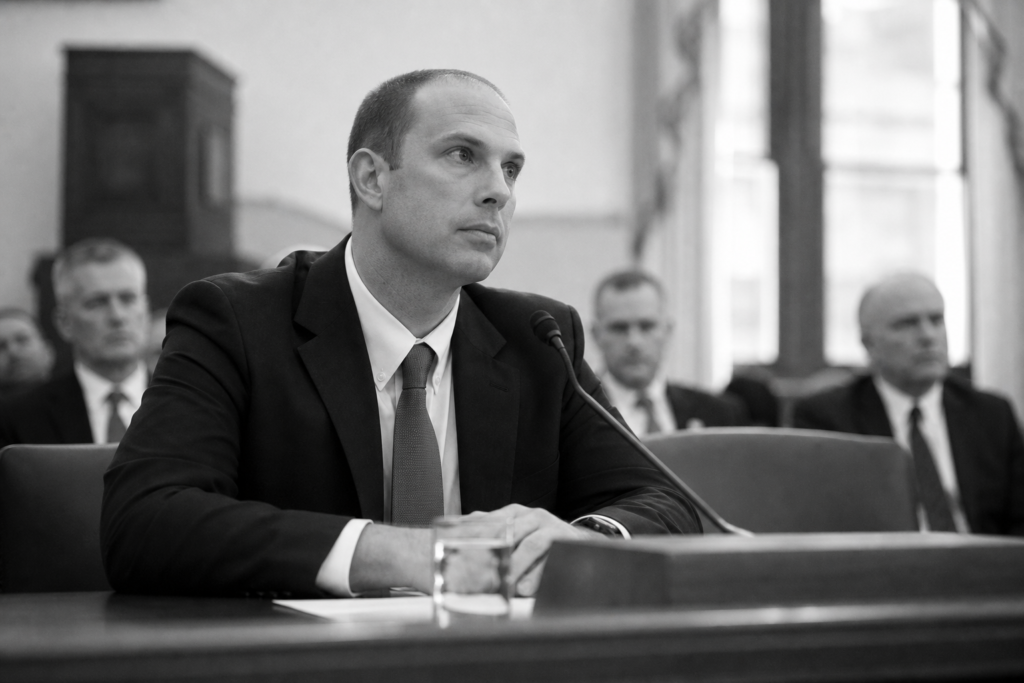
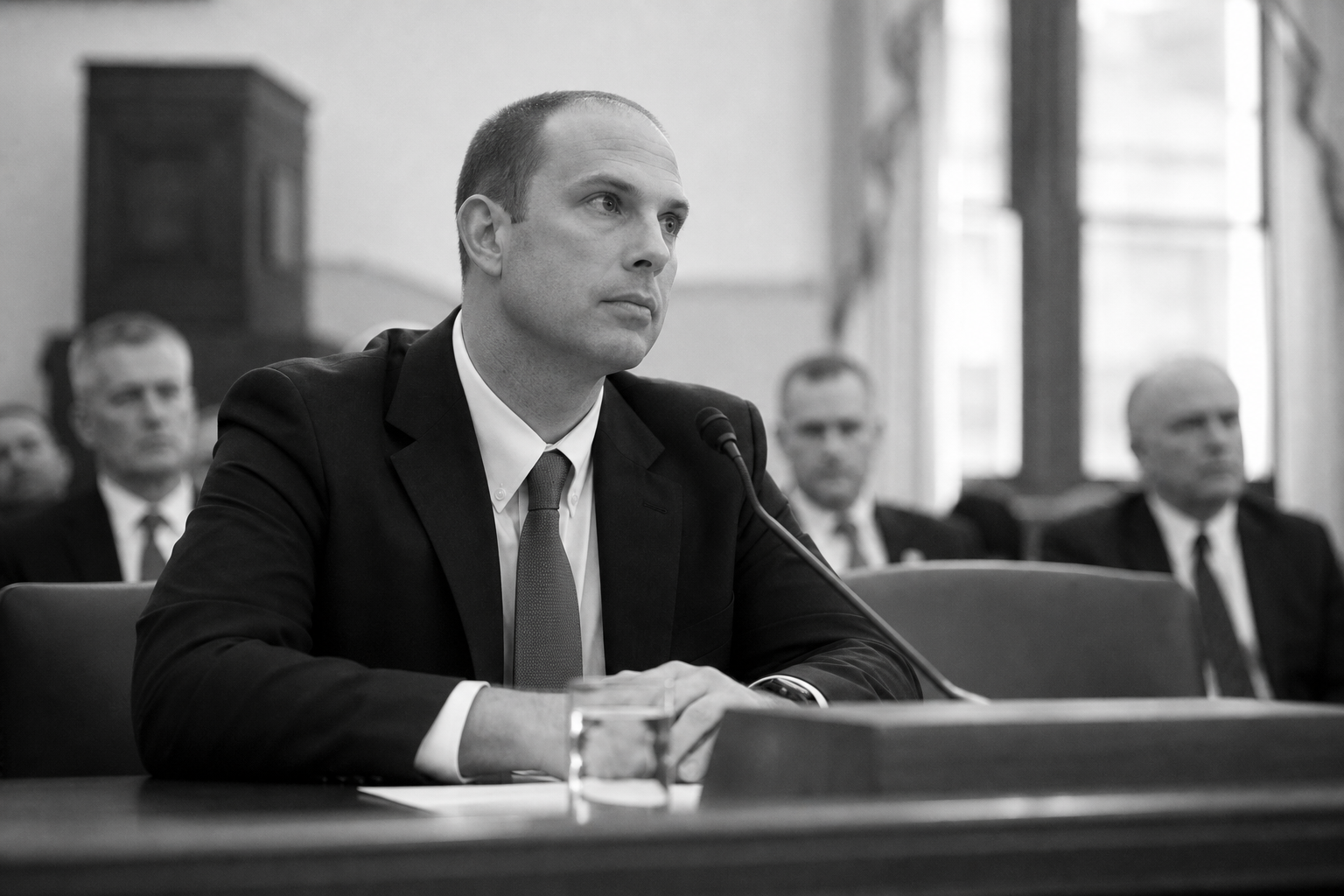
David Grusch UFO claims are notable not because they resolve the origin of unidentified anomalous phenomena, but because a former U.S. intelligence officer put specific allegations into the public record, including under oath before the House Oversight Committee in July 2023. Allegations, however detailed or consequential, are not the same as established findings.
That distinction is central here. In public interviews and testimony, Grusch separated matters he said he learned through interviews, records, and people he described as having direct access from matters he personally observed. A statement that he was told of an alleged program is therefore treated differently from a firsthand observation; a congressional statement is documented testimony, not automatic proof of its underlying proposition.
This article inventories the materially distinct UAP-related claims Grusch made publicly through . Each entry identifies where he made it, the basis of knowledge he presented, and its public verification status. It also distinguishes official responses, including findings or denials by government bodies, from the unresolved question of evidence that remains classified or otherwise unavailable for public assessment. The aim is a sourced allegation record, not a determination that any craft, material, or biological claim has an extraterrestrial explanation.
David Grusch’s Public Record: What This Article Covers
“Everything” is a boundary, not a claim of access to every file or private briefing. The catalogue includes each materially distinct UAP-related allegation Grusch put into the public record by , while combining repetitions of the same assertion. It draws from his House testimony, published interviews and reporting, public written statements, and available disclosure-related material, not unreported conversations or classified evidence the public cannot inspect.
Each entry uses a basis-of-knowledge label. Firsthand covers work Grusch personally performed or events he says he directly experienced. Secondhand identifies information he said came from other people, including purported direct-access sources. Documentary means he described relying on records or materials; it does not establish that readers can independently examine them. Classified-channel identifies assertions he said were raised with oversight bodies or in protected settings but whose underlying material is not public.
Those labels matter because an allegation is an assertion; corroboration is independent support; official acknowledgment is a government body recognizing a specified fact or process; and proof requires evidence sufficient to establish the proposition. They are not interchangeable. The following sections preserve that separation when answering what did David Grusch claim.
Who David Grusch Was, and Why He Filed a Whistleblower Complaint
Grusch’s relevance begins with the access implied by his assignments, not with any public proof of the allegations he later described. A former intelligence officer, he worked for the National Geospatial-Intelligence Agency and the National Reconnaissance Office, and served as the NRO representative to the UAP Task Force from 2019 to 2021.
In his June 2023 interview with The Debrief, Grusch said he was asked during that work to identify whether UAP-related special-access programs existed. Special-access programs are tightly restricted government programs whose information is compartmented beyond ordinary classified access. Grusch’s account was that, while pursuing that assignment, he interviewed people and reviewed information indicating that some UAP-related activities had been withheld from the congressional oversight bodies entitled to receive them.
That is an important basis-of-knowledge distinction. His tasking and his contacts with officials were presented as firsthand; the central allegations about purported hidden programs were information he said was provided by people claiming direct access. His former roles can explain why his statements drew attention, but they do not independently establish the existence of any alleged recovered craft, reverse-engineering effort, or non-human intelligence.
Grusch separately alleged that he suffered retaliation after reporting his concerns through protected whistleblower channels. His attorneys said the Intelligence Community Inspector General found his reprisal complaint “credible and urgent” and transmitted it to the appropriate congressional intelligence committees. That handling concerned whether his retaliation allegations warranted the Inspector General’s attention; the public record does not show that the Inspector General thereby validated his separate UAP claims.
Claim Catalogue I: Hidden Craft-Recovery and Reverse-Engineering Programs
Claim catalogue: alleged recovered craft and exploitation efforts
Allegation: Grusch has alleged that elements of the U.S. government and defense-industrial base possess physical material recovered from unidentified anomalous phenomena, including intact or partially intact craft. In his June 2023 NewsNation interview, he described what he called a decades-long, multi-decade UAP crash-retrieval program. His formulation was not that every unidentified object is recovered, but that a hidden effort allegedly collects selected material for study.
Basis of knowledge: secondhand/reported to Grusch. He said the account came from multiple people who claimed direct knowledge of the activities, as well as documents and interviews he pursued during his UAP-related work. He did not publicly testify that he personally witnessed a recovered craft or participated in a recovery operation.
Reverse-engineering claim: In the same NewsNation appearance, Grusch said the alleged recovered material had been the subject of a “sophisticated disinformation campaign” and that the United States had attempted to understand and exploit it. Reverse engineering, in this context, means examining an object’s construction, materials, propulsion, or other functions in an attempt to reproduce useful capabilities. The allegation therefore goes beyond possession: it asserts an effort to derive technology from the material.
At the July 2023 House Oversight Committee hearing, Grusch repeated the core claim under oath, saying the United States had recovered “intact and partially intact” vehicles. Asked whether the government possessed bodies connected with such craft, he answered separately; that allegation and its limits are addressed in the next section. For the craft claim itself, his public position remained that he was relaying information from people with direct access rather than offering an eyewitness account.
Concealment and oversight allegation: Grusch said the purported program was kept from the congressional bodies entitled to oversee it through unusually tight compartmentalization. That distinction matters: a classified program may be lawfully restricted, whereas his allegation was that relevant oversight was improperly bypassed. His July 2023 written testimony and hearing statements presented this as an institutional-secrecy claim tied to the alleged crash-retrieval program, not merely a claim that classified UAP files exist.
Origin claim: Grusch has said some recovered objects were assessed by his sources as non-human in origin. In later interviews, including his 2024 appearance on The Joe Rogan Experience, he expanded on the claimed historical scope and described the issue as involving long-running government interest rather than a recent response to military sightings. “Non-human” was his chosen category; it did not publicly establish an extraterrestrial origin, a specific species, or a demonstrated mechanism of arrival.
International dimension: Grusch also alleged that other countries possess or seek comparable material, portraying recovery and exploitation as an international competition rather than an exclusively American activity. He offered this as part of the same reported account of a global effort, not as publicly inspectable evidence of any foreign program.
Status: not publicly independently verified. The public record contains Grusch’s interviews, written statement, and sworn testimony, but not the underlying recovered material, program records, or direct witnesses needed to substantiate these allegations independently. These are the central David Grusch UFO claims about a hidden crash-retrieval and reverse-engineering effort; they remain reported allegations rather than established public findings.
Claim Catalogue II: “Non-Human Biologics,” Bodies, and What He Did Not Say He Saw
Claim catalogue: alleged “non-human biologics”
Biologics allegation: The most direct public statement came during the July 2023 House Oversight hearing. Representative Nancy Mace asked whether the government had recovered bodies from alleged UAP craft. Grusch answered that he had not personally witnessed bodies. When Mace then asked whether the biologics were human or non-human, he replied, “Non-human,” adding that this was the assessment of people with direct knowledge of the alleged program whom he had interviewed.
Basis of knowledge: reported to Grusch, not firsthand. That distinction is unusually clear in the David Grusch UFO testimony: he did not say he saw bodies, handled biological samples, visited a storage site, or took part in a recovery. Nor did he publicly identify the people who made the assertion, provide laboratory findings, photographs, chain-of-custody records, or publicly assessable physical material.
“Non-human intelligence” claim: In The Debrief report and subsequent interviews, Grusch used “non-human intelligence” as the category he said his sources applied to allegedly recovered craft and associated material. The phrase conveys an asserted origin or agency outside humanity; it does not, by itself, establish that anything was extraterrestrial. It leaves open no publicly demonstrated origin, species, location, or mechanism behind the reported assessment.
Materials and technology: Grusch’s public account linked alleged biologics to some purported recoveries, rather than claiming that every anomalous object carried occupants. His broader statements about exotic material and attempts to exploit recovered technology concern the alleged program discussed above; they do not provide a separate public demonstration that biological material was tested or that unusual craft characteristics were scientifically established.
Status: not publicly independently verified. The hearing records establish that Grusch made this reported allegation under oath and expressly disclaimed personal observation. They do not establish the existence, nature, or origin of any alleged biologics. Publicly unavailable classified evidence cannot be independently assessed from the record available through August 5, 2026.
Claim Catalogue III: Secrecy, Retaliation, Risks, and Congressional Oversight
Claim catalogue: oversight, reprisals, and alleged risks
Oversight allegation: At the July 2023 House hearing, Grusch alleged that information about the purported programs had been withheld from congressional oversight and described that withholding as improper. He did not publicly disclose the programs, documents, locations, or officials on which that allegation rested, saying sensitive details belonged in a secure classified briefing rather than an open hearing.
Basis of knowledge: mixed. Grusch presented his complaint about reprisals as arising from his own experience after using reporting channels. His broader assertion that UAP-related activities were concealed from authorized overseers relied on interviews and information supplied by people he said had direct access. A request for a classified briefing is therefore a request to provide leads and protected testimony to Congress, not public release of the underlying evidence.
Intimidation and harm allegation: Grusch testified that he knew of people who had been harmed or injured in efforts to conceal UAP information, but he declined to provide details publicly. He did not establish in open session who was harmed, what occurred, or whether any alleged conduct was criminal. That reported allegation remains unverified in the public record and should not be conflated with his personal reprisal complaint.
Safety and public-knowledge claims: Grusch argued that excessive secrecy could obstruct reporting, aviation safety, and national-security assessment, while leaving the public with an incomplete account of government knowledge. His proposed remedy was protected reporting channels for witnesses and closed congressional scrutiny. Those are policy claims and allegations about institutional conduct; they do not publicly demonstrate the existence of the concealed programs he alleged.
What Has, and Has Not, Been Publicly Verified
What has, and has not, been publicly verified
The available record establishes several things about process and testimony, but it does not publicly establish the existence of recovered non-human craft, biologics, or a concealed reverse-engineering program.
The public Inspector General material concerns Grusch’s reprisal complaint, not an official finding that his broader UAP allegations were true. “Credible and urgent” is significant because it describes the threshold for transmitting a protected disclosure through the statutory oversight process; it is not a public adjudication of every factual assertion contained in, or associated with, that disclosure. The Intelligence Community Inspector General’s handling of the matter therefore corroborates that a complaint and reporting process existed, not the alleged crash-retrieval program itself.
The Pentagon publicly disputed Grusch’s central assertions, and the All-domain Anomaly Resolution Office reached a similarly direct conclusion in its March 2024 Historical Record Report. After reviewing the historical record within its stated remit, AARO reported that it had found no verifiable evidence that the U.S. government or private companies possessed extraterrestrial technology, or that alleged hidden UAP programs represented such a craft-recovery effort.
That finding carries more evidentiary weight than an unsupported assertion because it reflects an official review, but it is not a public demonstration that every classified lead, compartmented record, or witness account has been exhaustively resolved. Classified material unavailable to the public cannot be independently assessed here. Nor does an official denial, by itself, disclose every basis for the denial or settle what may have been said in secure settings.
There is limited procedural corroboration: lawmakers and other participants have said Grusch supplied information or offered to provide information in closed briefings. That supports the narrower point that he brought leads to oversight bodies. It is not public confirmation of what those leads prove, because the underlying documents, identities, and testimony have not been released for independent examination.
Stronger verification would require evidence that can be evaluated beyond Grusch’s account: authenticated program records with provenance; physical material available for qualified, reproducible testing; named firsthand witnesses whose accounts are accompanied by contemporaneous documentation; or a specific official finding that identifies and substantiates the alleged activity. None of those forms of public proof has established the central allegations in this article’s research record through August 5, 2026.
Bottom Line: A Sourced Allegation Record, Not a Settled Finding
What remains is a disciplined public-record distinction. Grusch made specific allegations about concealed UAP programs, recovered material, non-human biologics, blocked oversight, and retaliation; his intelligence career and protected-disclosure process provide context for taking those allegations seriously as allegations.
They do not convert reported information into publicly demonstrated fact. For the central claims, Grusch generally described accounts supplied by people he regarded as direct witnesses rather than events or material he personally observed. No public release through this article’s August 5, 2026 research cutoff supplies the underlying evidence needed to independently establish those propositions.
New reporting, including coverage labeled UFO sightings 2025, UFO sightings 2026, or later UAP-disclosure developments, should be assessed on its own evidence. A new sighting, hearing, document release, or official statement may add context, but it does not confirm Grusch’s specific allegations unless it directly and verifiably substantiates them.
What David Grusch’s Claims Establish, and What They Do Not
The decisive test is not whether an allegation was made in a serious setting, but whether the underlying proposition can be independently examined. Sworn congressional testimony records what Grusch said; it does not, by itself, authenticate the reported programs, recovered craft, or alleged biologics. His account carries greater weight as a matter for inquiry when it identifies purported firsthand witnesses and channels of access, yet those witnesses’ underlying evidence has not been publicly produced for independent assessment.
The whistleblower process likewise addresses a narrower question: whether Grusch’s disclosure-related concerns and retaliation allegations were handled through protected mechanisms. It is not a public adjudication that his UAP allegations are true. Official non-confirmation and historical-review findings on the lack of publicly verified extraterrestrial evidence do not prove that every private account was false, but they mean the extraordinary claims remain unestablished on the available public record.
As of this article’s August 5, 2026 research cutoff, future disclosures should be judged by what they add: authenticated records with clear provenance, named direct witnesses subject to scrutiny, or material that qualified investigators can test and reproduce. A compelling allegation can justify investigation; proof requires evidence that others can evaluate.
Sources
Frequently Asked Questions
-
What did David Grusch claim under oath about recovered UFO craft?
At the July 2023 House Oversight hearing, Grusch said the United States had recovered “intact and partially intact” vehicles. He said this information came from people with direct knowledge, not from craft he personally saw or recovered.
-
Did David Grusch say he personally saw alien bodies or spacecraft?
No. Grusch explicitly said he had not personally witnessed bodies, and he did not publicly testify that he saw a recovered craft, handled biological samples, or participated in a recovery operation.
-
What did David Grusch mean by “non-human biologics”?
Grusch used the phrase in July 2023 when asked whether alleged bodies recovered from UAP craft were human or non-human. He said “Non-human,” but identified it as an assessment reported by people he interviewed who claimed direct knowledge of the alleged program.
-
Did the Intelligence Community Inspector General confirm David Grusch’s UFO claims?
No. The Intelligence Community Inspector General’s reported “credible and urgent” finding concerned Grusch’s retaliation or reprisal complaint and its transmission to congressional intelligence committees. It did not publicly validate his claims about recovered craft, biologics, or reverse-engineering programs.
-
What evidence would verify David Grusch’s crash-retrieval claims?
Strong verification would require authenticated program records with clear provenance, physical material available for qualified reproducible testing, or named firsthand witnesses supported by contemporaneous documentation. As of August 5, 2026, no publicly available evidence met that standard, and AARO’s March 2024 Historical Record Report said it found no verifiable evidence of U.S. or private possession of extraterrestrial technology.