2023 UAP Hearing: Grusch, Fravor, and Graves Testify Under Oath
Explore the 2023 UAP hearing: separate Fravor and Graves’s firsthand accounts from Grusch’s allegations, and see what Congress did not prove.
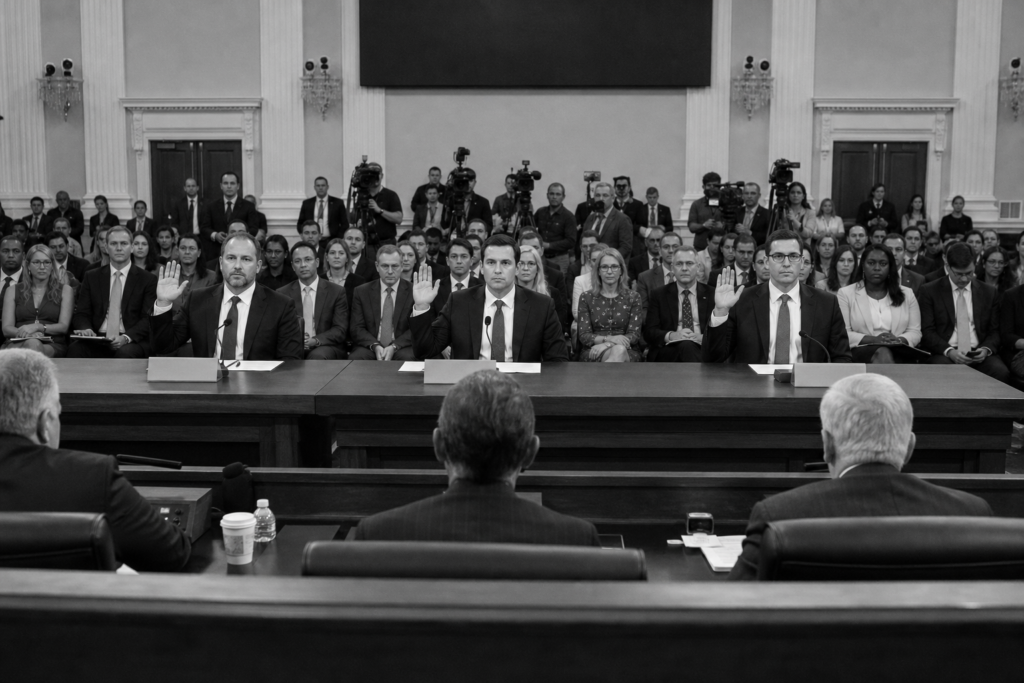
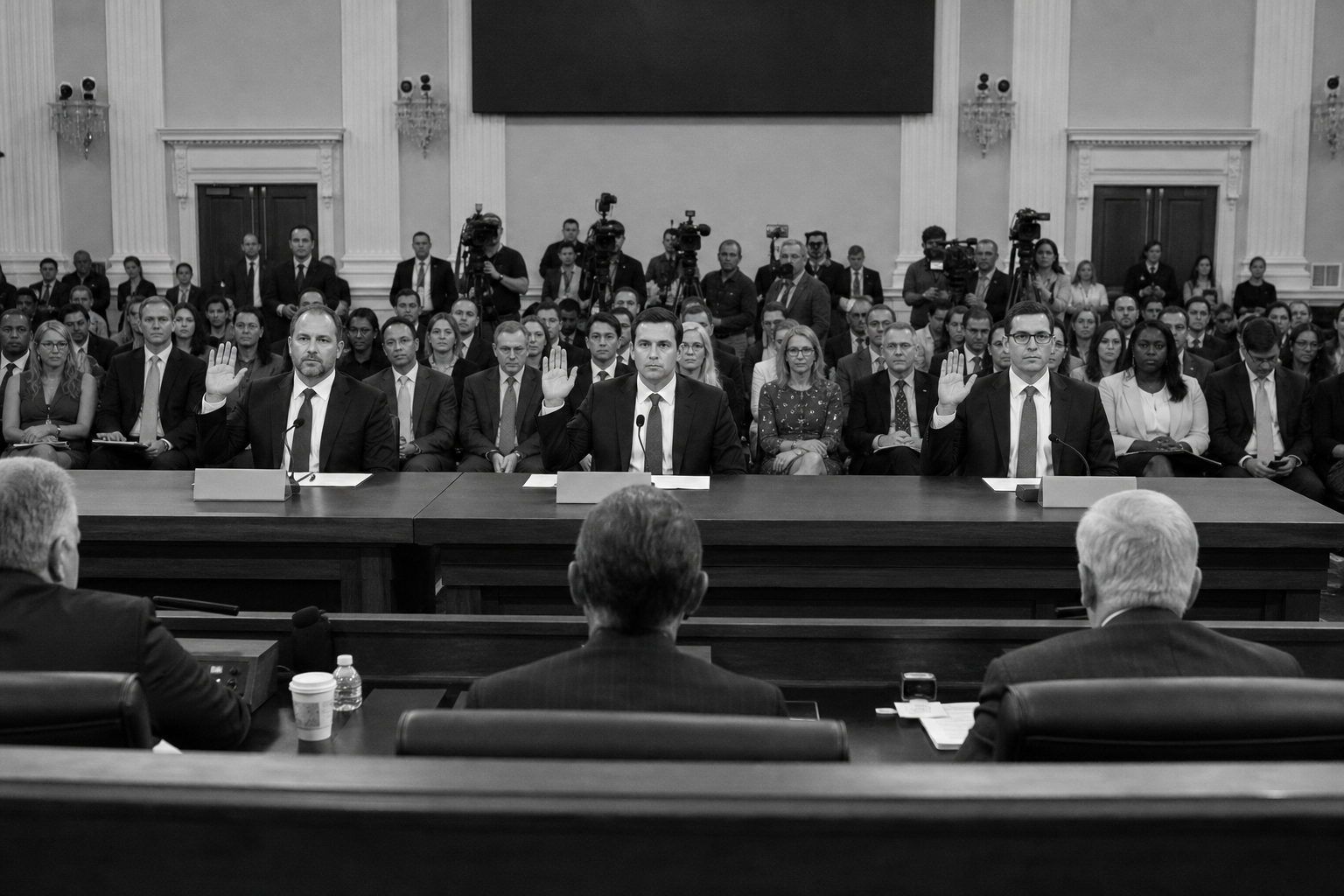
The July 26, 2023 public hearing before a House Oversight subcommittee drew unusual attention because it placed three very different UAP accounts under oath in an open congressional setting. It was not a public unveiling of verified extraordinary technology. It was an oversight proceeding about unidentified phenomena, reporting obstacles, and whether Congress was receiving the information needed to assess them.
That distinction begins with the witnesses. Former Navy pilots Ryan Graves and David Fravor described aviation-related encounters and operational concerns from their own experience: firsthand testimony can establish what a witness says they observed, though it does not by itself identify the object or explain its capabilities. Former intelligence officer David Grusch, by contrast, presented allegations he said were relayed to him by people with relevant knowledge and access. Those assertions warranted scrutiny, but sworn secondhand accounts are not the same as publicly corroborated evidence that the alleged programs or materials existed.
This account follows that evidentiary line closely: what each man testified to, what the hearing record supports, the questions members of Congress pursued, and what remained unresolved when the session ended.
What Happened at the July 26, 2023 House UAP Hearing
Formally titled “Unidentified Anomalous Phenomena: Implications on National Security, Public Safety, and Government Transparency,” the July 26, 2023 session was held by the House Committee on Oversight and Accountability’s Subcommittee on National Security, the Border, and Foreign Affairs. David Grusch, David Fravor, and Ryan Graves were sworn in before delivering their testimony.
The subcommittee’s remit matters because it placed the proceeding in an oversight context: whether the government’s reporting channels, information-sharing practices, and handling of potential aviation and national-security incidents gave Congress an adequate view of the issue. Members questioned the witnesses about pilots’ willingness to report encounters, the treatment of information within government systems, and the limits on what could be discussed publicly.
The witnesses did not present one uniform body of evidence. Graves and Fravor described events and operational concerns they experienced in aviation settings. Grusch described allegations that he said had been conveyed to him through his intelligence and UAP-related work. Being under oath made each witness responsible for the truthfulness of his testimony; it did not independently authenticate every underlying assertion, identify the phenomena involved, or establish an alien or non-human origin.
That is the essential way to read the 2023 UAP hearing: as a public congressional record of unresolved safety, transparency, and access questions, with evidentiary weight that varied materially from witness to witness.
Who Were David Grusch, David Fravor, and Ryan Graves?
Professional role determined the evidentiary value of each man’s appearance. David Grusch was a former U.S. intelligence officer whose career included positions at the National Geospatial-Intelligence Agency and National Reconnaissance Office, as well as UAP-related work. His whistleblower complaint concerned what he described as withheld information and retaliation connected to his efforts to report concerns through official channels. That background positioned him to describe intelligence reporting, access questions, and allegations relayed by other officials, not to offer a pilot’s firsthand account of an encounter.
David Fravor was a retired U.S. Navy commander and former commanding officer of Strike Fighter Squadron 41. His aviation command experience made him a firsthand witness to a particular operational event, with the perspective of an experienced naval aviator making observations during a flight rather than evaluating a broader intelligence record.
Ryan Graves was a former Navy F/A-18 pilot who later founded Americans for Safe Aerospace, an advocacy organization focused on UAP reporting and aviation safety. His testimony drew on direct experience and reports from fellow military aviators in his operational community. In the Grusch Fravor Graves hearing, the distinction is consequential: Fravor and Graves could speak directly about flight operations and observed phenomena, while Grusch’s most consequential assertions rested largely on information he said others had provided.
Ryan Graves’s Testimony: Repeated UAP Sightings and Flight-Safety Risks
For Graves, the operational concern was persistence rather than a single dramatic encounter. He testified that, after his F/A-18 squadron received upgraded radar systems, pilots operating in training airspace off the U.S. East Coast began detecting unidentified objects repeatedly over an extended period. The radar change mattered because it gave crews a more capable means of detecting objects in the training area; it did not, by itself, establish what those objects were.
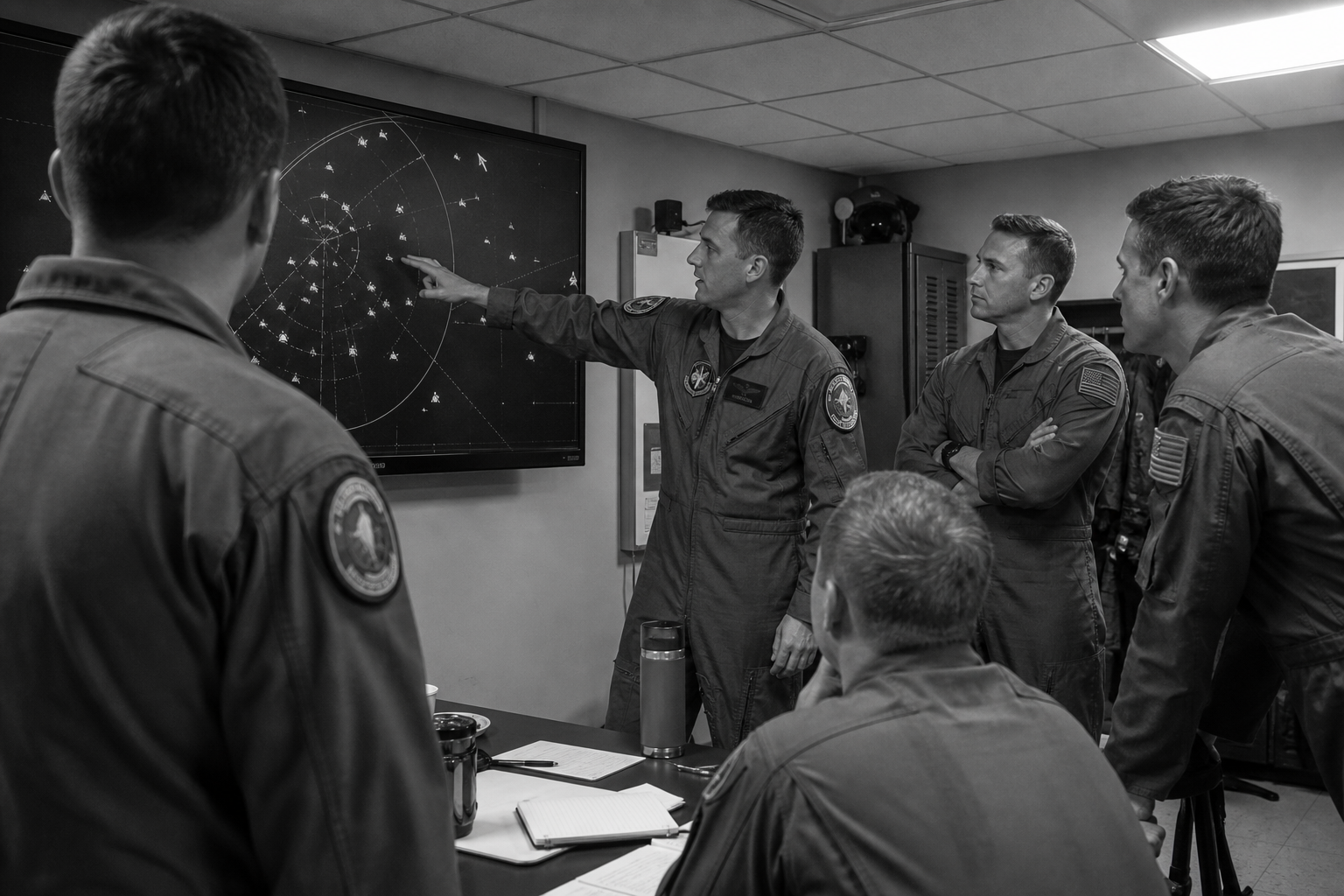
His UAP testimony combined his own experience in that aviation community with accounts relayed by fellow pilots. Graves described the resulting UAP sightings as a flight-safety problem: military aircraft were training at speed in airspace where crews could not reliably identify or predict the objects they encountered. He also portrayed reporting as difficult, saying aviators lacked a clear, trusted process for elevating incidents without concern that the report would be dismissed or stigmatize the person making it. In that sense, the hearing record focused on operational awareness and hazard reporting, not merely on unusual observations.
One episode illustrated the risk particularly sharply. Graves recounted what another pilot told him about a near-miss: the pilot described an object as a dark cube inside a transparent sphere, and said two aircraft had passed close to it during a training flight. That visual description was the reporting pilot’s account to Graves, not an object Graves said he personally saw. Its evidentiary value is therefore different from Graves’s direct account of recurring encounters and reporting conditions.
Graves did not identify an origin, operator, or technology for the objects. “Unidentified” described an unresolved observation, not a conclusion that the objects were extraterrestrial or belonged to any particular nation. His central claim was narrower and consequential: repeated unknowns in military training airspace can create flight-safety and national-security awareness concerns when pilots lack dependable ways to report and analyze them.
David Fravor’s Testimony: The Nimitz “Tic Tac” Encounter
Fravor’s account centered on a discrete 2004 mission connected to the USS Nimitz carrier strike group, rather than the repeated training-range sightings Graves described. He testified that the USS Princeton, a guided-missile cruiser in the group, had reported unusual radar contacts and directed his flight to investigate one location during a training exercise.
After arriving, Fravor said he saw a disturbed patch of water, described as whitewater or a churning area, beneath a white object shaped like a “Tic Tac.” In his David Fravor UFO testimony on the 2004 Nimitz Tic Tac encounter, he described the object as smooth, oblong, and without visible wings, rotors, exhaust, or markings. Those details are important because they identify what he personally observed from his F/A-18; they do not establish the object’s construction, propulsion, operator, or origin.
Fravor testified that he descended to get closer while the object moved in response to his aircraft’s maneuvering. He said it then climbed, accelerated away, and disappeared from view with a speed and abruptness he could not explain. His account of the Nimitz encounter was therefore direct eyewitness testimony: he was describing a particular flight, the visual conditions he encountered, and the movements he perceived in real time.
The evidentiary boundary remains clear. Fravor’s testimony supported the proposition that an experienced naval aviator encountered an object he could not identify during that mission. It did not itself demonstrate extraterrestrial origin, validate a recovered-craft program, or resolve whether radar data, other sensor information, and eyewitness observations described the same object at every point in the event. The “Tic Tac” label was a visual shorthand, not a technical identification.
David Grusch’s Testimony: What He Alleged, and What He Did Not Witness Firsthand
Grusch’s account differed in kind from a pilot’s description of an encounter. In sworn written and oral testimony, the former intelligence officer alleged that people he interviewed, including individuals he characterized as having direct knowledge, told him of a longstanding U.S. program involving the retrieval and attempted reverse engineering of craft of unknown origin.
That formulation is central to evaluating David Grusch UFO testimony. He was reporting information he said had been provided to him in the course of his UAP-related work, not presenting an object, document, or sensor record for the public to assess at the hearing. A reported allegation can justify congressional questions about access, classification, and reporting channels; it does not independently establish that the alleged program existed.
Members also asked Grusch about purported recovered material and “non-human biologics.” He testified that he had been told such biologics were recovered in connection with alleged crash-retrieval activity, but he explicitly said he had not personally seen the purported craft or bodies. The distinction is concrete: a witness describing what he personally observed can be questioned about conditions and perception, while a witness relaying information depends on the credibility, access, and supporting records of the unnamed people who supplied it.
No corroborating classified evidence was publicly introduced, no underlying sources were identified in open session, and the hearing itself did not publicly verify claims of a government UFO cover-up, recovered vehicles, or biologics. Grusch’s testimony placed those allegations into the congressional record under oath and pressed the case for further oversight. It did not turn the allegations into publicly demonstrated facts or complete UFO disclosure.
The Central Distinction: Direct Observations vs. Reported Allegations
The useful test is not whether the accounts were equally sincere, but what each witness could personally establish in open session.
- Firsthand observation: Fravor described what he saw and did during a particular 2004 flight. His account could be assessed through the circumstances of that mission, his perception, other participants, and any associated operational records. It supported an experienced pilot’s report of an object he could not identify, not a conclusion about its origin.
- Direct operational testimony plus relayed reports: Graves spoke from his own aviation experience about recurring unidentified anomalous phenomena in training airspace, while also recounting reports from other aviators. That distinction matters: his safety concern was firsthand, but each colleague’s sighting remained a separate report requiring its own support.
- Reported allegation: Grusch testified to information he said official contacts and interview subjects gave him. His claims raised serious UAP disclosure and oversight questions, but the underlying witnesses and evidence were not publicly examined at the hearing.
Sworn testimony imposes a formal duty of truthfulness and gives Congress a record against which statements can be tested. It does not, by itself, transform an observation into identification or a secondhand allegation into verified fact. The three accounts therefore warranted different levels of corroboration while all pointing to questions Congress could pursue.
Why the Hearing Mattered, and What It Did Not Prove
The practical consequence was to sharpen an oversight agenda rather than settle an extraordinary claim. Members and witnesses focused on reporting channels that aviation personnel can use without stigma or career risk, protections for people who bring information to inspectors general or Congress, and congressional access to records held inside classified programs.
AARO, the Defense Department’s all-domain anomaly resolution office, belonged at the center of that debate. Its purpose is to collect and investigate UAP-related information; the contested question was whether it had the access, reporting pathways, and institutional independence needed to give Congress a reliable account. A stronger system would preserve sensor data and enable prompt reporting. A weak one leaves sightings, safety concerns, and allegations dispersed across offices and inaccessible to oversight.
The 2023 UAP hearing therefore documented credible aviation-safety and transparency concerns and aired serious allegations under oath. It did not publicly prove aliens exist, verify a crash-retrieval program, establish non-human intelligence, or deliver alien disclosure. Those remain claims requiring evidence beyond the public hearing record.
What the 2023 UAP Hearing Established, and What Remains Unresolved
The record is strongest where it preserves a witness’s own observation and weakest where it depends on information that the public could not independently inspect. Fravor could describe what he saw during the Nimitz mission; Graves could describe encounters and reporting problems affecting naval aviators. Those accounts substantiate that trained military personnel reported unresolved objects and that such reports can raise operational concerns. They do not identify the objects’ origin or capabilities.
Grusch’s testimony served a different oversight purpose. His allegations brought claims about allegedly withheld programs and materials before Congress, but their force depended on the unnamed people and classified information he said he had encountered. Without public underlying evidence, those claims remained allegations, not findings established by the hearing.
That distinction is the fair way to assess the 2023 UAP hearing. It strengthened the case for reliable reporting, preservation of relevant data, protection for personnel raising concerns, and meaningful congressional access to information. It left central questions unresolved: what particular sightings were, whether alleged recovery efforts existed, and whether any phenomenon had a nonhuman origin. Sworn testimony made those questions harder for institutions to dismiss; it did not answer them.
Frequently Asked Questions
-
What happened at the July 26, 2023 UAP hearing?
A House Oversight subcommittee heard sworn testimony from former Navy pilots Ryan Graves and David Fravor and former intelligence officer David Grusch. The hearing examined UAP reporting, aviation safety, government transparency, and Congress’s access to relevant information.
-
What did David Fravor say about the Nimitz Tic Tac encounter?
Fravor testified that during a 2004 mission linked to the USS Nimitz strike group, he saw a smooth white oblong object above disturbed water. He said the object had no visible wings, rotors, exhaust, or markings and accelerated away in a way he could not explain.
-
What did Ryan Graves testify about UAP sightings by Navy pilots?
Graves said Navy pilots training off the U.S. East Coast repeatedly detected unidentified objects after upgraded radar systems were installed. He described the sightings as a flight-safety concern and said pilots lacked trusted reporting channels that would protect them from stigma.
-
Did David Grusch testify under oath about UFO crash-retrieval programs?
Yes. Grusch testified under oath that people he interviewed told him of a longstanding U.S. program involving retrieval and attempted reverse engineering of craft of unknown origin, as well as purported non-human biologics. He also stated that he had not personally seen the alleged craft or bodies.
-
What is the difference between Grusch’s claims and Fravor and Graves’s testimony?
Fravor gave a firsthand account of a 2004 flight, while Graves testified directly about aviation safety and recurring unidentified sightings while also relaying some pilot reports. Grusch’s central claims were secondhand allegations from unnamed sources, so they required underlying witnesses, records, or other corroborating evidence to establish them as facts.