Grusch Files 2022 Whistleblower Complaint: UAP Crash Retrieval Alleged
Learn what the David Grusch whistleblower complaint documents, what his UAP crash retrieval allegations claim, and why public proof remains limited.
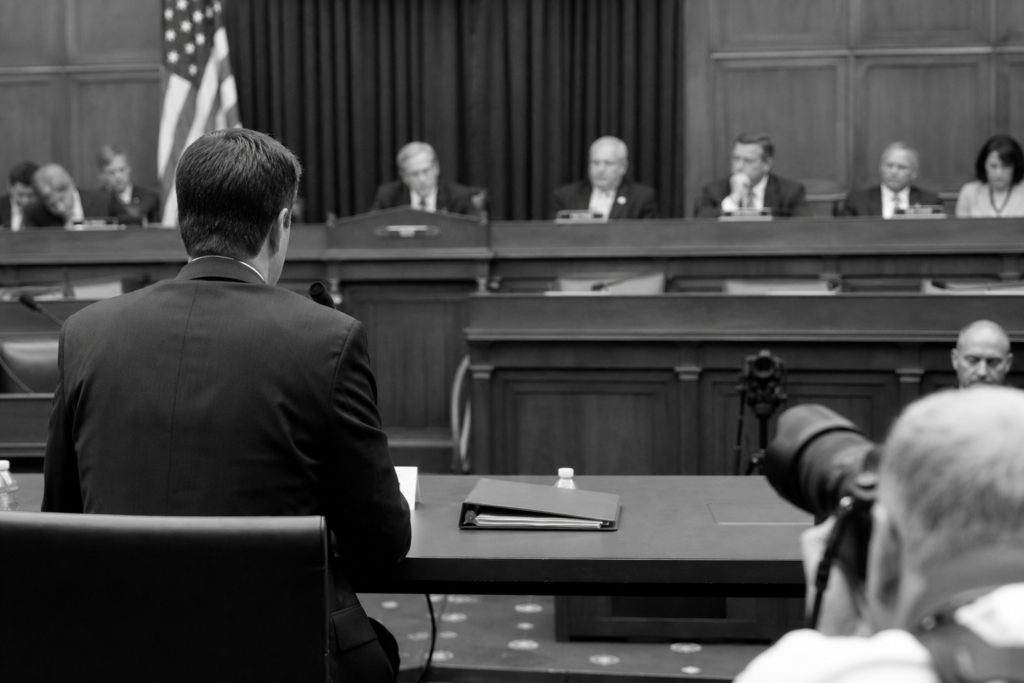
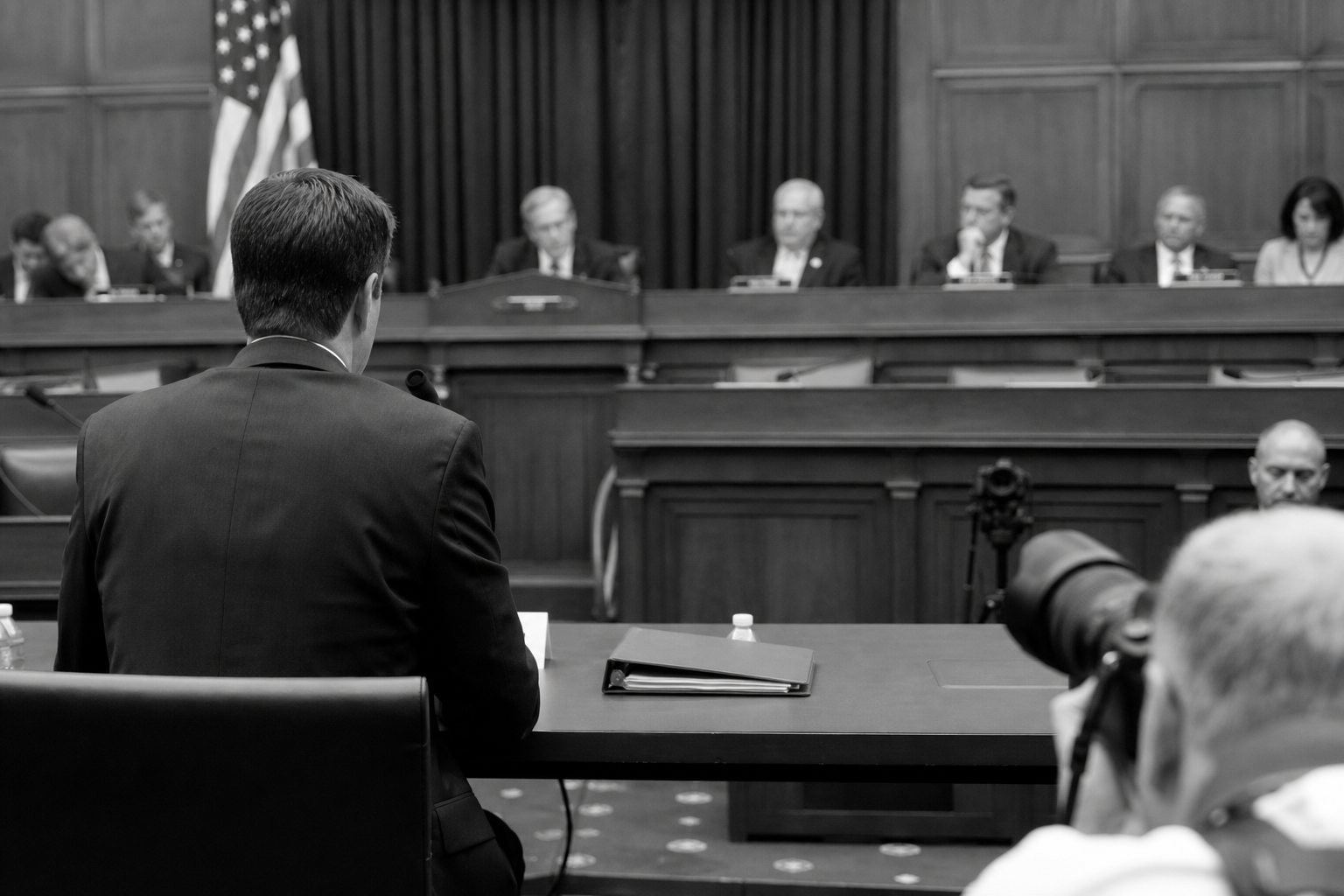
The David Grusch whistleblower complaint is real as a documented 2022 oversight matter; it is not, by its existence alone, public proof that the United States operates a concealed UAP crash-retrieval program.
That distinction is the center of this story. A whistleblower-reprisal complaint asks whether an employee suffered harmful treatment after making protected disclosures. It can establish that oversight officials received and assessed allegations of retaliation. It does not automatically determine whether every underlying disclosure was true, particularly when the asserted evidence was reportedly provided in classified settings unavailable to the public.
Grusch later told Congress that he had learned of a long-running program involving recovered UAP material and non-human biological material. Those were his allegations, including information he said came from interviews with other officials; they are not findings established in the public hearing record. Meanwhile, the Pentagon’s All-domain Anomaly Resolution Office has publicly reported that its historical review found no verifiable evidence of an extraterrestrial-technology possession program.
This article separates those tracks: the 2022 filing and alleged reprisal, Grusch’s later public claims, what oversight interest does, and does not, show, and the limits of official responses and public corroboration.
What David Grusch’s 2022 Complaint Does, and Does Not, Establish
The public record supports a narrow conclusion: Grusch made a whistleblower-related filing in 2022, and his attorneys described it as alleging retaliation tied to protected disclosures. That procedural history records an oversight dispute about alleged treatment of the complainant; it does not itself adjudicate the content of the information he disclosed.
The distinction matters because two questions can move on separate tracks. A reprisal inquiry asks whether protected activity was followed by improper personnel or security-clearance actions. A substantive UAP inquiry asks whether the asserted program, recovered craft, or alleged biological material exists. A finding or review concerning the first question would not, without publicly available supporting evidence, answer the second.
Nor does congressional interest convert an allegation into public corroboration. Grusch’s later UAP disclosure claims included information he said he obtained from others and discussed in classified channels. The public cannot independently examine that material, assess its provenance, or determine whether it substantiates the extraordinary claims. The careful reading is therefore limited: the complaint and alleged retaliation are documented elements of the story; the claimed crash-retrieval evidence remains unproven in the public record.
The 2022 Filing: Timeline, Venue, and What Is Publicly Documented
Grusch’s documented government background supplies the starting dates. He served as the National Reconnaissance Office’s representative to the UAP Task Force from 2019 to 2021, then worked for the National Geospatial-Intelligence Agency while continuing UAP-related work. Those assignments describe his access to intelligence-reporting channels; they do not disclose what particular information he saw or submitted.

In May 2022, Grusch filed what his attorneys later described as a whistleblower-reprisal complaint with the Intelligence Community Inspector General (ICIG). The ICIG is the inspector general with jurisdiction over intelligence-community whistleblower matters: its process can receive protected disclosures and allegations that a person suffered retaliation for making them. That venue is significant because it places the Grusch 2022 whistleblower complaint inside an established ICIG oversight process rather than in a public UAP reporting system.
Grusch’s June 2023 public account and a June 5, 2023 statement by attorneys Charles McCullough and Andrew Bakaj described disclosures to congressional and intelligence-community oversight bodies concerning information allegedly withheld from Congress. The attorneys said their reprisal complaint concerned adverse actions taken after those disclosures. Their statement did not publish the complaint’s text, exhibits, agency responses, or an inspector general’s investigative findings on the underlying UAP assertions.
The matter entered broad public view in June 2023, when NewsNation interviewed Grusch and his attorneys publicly identified the May 2022 ICIG filing. His July 26, 2023 House Oversight Committee testimony followed. Those later appearances can clarify what Grusch chose to allege publicly, but they are separate records from the original complaint and any classified briefings.
The central documentary limit is straightforward: the complete David Grusch 2022 complaint has not been released publicly. Neither its precise allegations, supporting attachments, witness accounts, nor classified evidence can be independently assessed from the public record. A timeline can establish the filing’s venue and later public descriptions; it cannot reconstruct the submission or show that each later crash-retrieval claim was investigated and substantiated through that process.
Retaliation Allegations vs. the Substance of UAP Claims
The two issues require different evidence. A reprisal allegation asks whether a person experienced adverse treatment because of protected disclosures or participation in an oversight process. The underlying UAP assertion asks whether the information disclosed, such as an alleged crash-retrieval effort, was accurate. Evidence supporting one question does not automatically answer the other.
That is why the public descriptions offered by Grusch’s counsel matter, but only within their stated scope: they characterize the 2022 matter as a retaliation complaint connected to protected activity. In practical terms, the alleged harm and its alleged connection to disclosures are the subject of the complaint. The public descriptions do not provide a released investigative finding that recovered craft, non-human biological material, or a concealed program exists.
A useful comparison is a workplace complaint alleging that an employee was penalized after reporting suspected misconduct. An inspector general can examine whether the employee’s report triggered improper treatment even when the suspected misconduct itself requires a separate investigation, different evidence, or remains unresolved. A strong signal for the reprisal question would be evidence of adverse action and a connection to the disclosure; it would not, by itself, establish that every reported underlying fact occurred.
The same limit applies to the often-repeated language that a matter was “credible” or “urgent.” Such terms must be read in relation to the particular complaint or referral they describe, rather than expanded into a blanket endorsement of all David Grusch whistleblower allegations. Publicly unavailable classified submissions may contain additional assertions or support, but they cannot be independently weighed from the record available to readers.
The careful conclusion is therefore narrow: the retaliation complaint concerns alleged consequences of reporting through protected channels. The claimed crash-retrieval program is a separate evidentiary proposition, one that requires publicly assessable corroboration of its own.
What Grusch Alleged About Crash Retrievals in Public Testimony
At the July 26, 2023 House Oversight subcommittee hearing, Grusch placed the most consequential claims on the record under oath. He alleged that the U.S. government and defense contractors had operated a multi-decade UAP crash-retrieval and reverse-engineering program involving recovered material of “non-human” origin. That was David Grusch’s UFO testimony, not a public presentation of recovered hardware, documents, or scientific test results.
Grusch distinguished his own direct experience from information he said he gathered while serving in UAP-related intelligence roles. His firsthand account concerned his work, his efforts to obtain information, and interviews with people he described as current or former officials with direct knowledge. He told lawmakers that he had interviewed more than 40 witnesses over four years. The claimed recovered craft and alleged reverse-engineering effort were therefore secondhand assertions in the public hearing: Grusch said others had provided the underlying accounts.
That distinction was especially clear when Rep. Nancy Mace asked whether he had personally seen bodies associated with alleged recoveries. Grusch answered that he had not witnessed that himself. He nevertheless alleged that “biologics” had been recovered in some cases and, when asked whether the assessment was human or non-human, answered “non-human.” The public record establishes that he made those statements; it does not supply publicly examinable biological evidence supporting them.
Grusch also said he knew alleged program locations and additional details, but maintained that he could provide them only in a classified setting. A classified assertion can be important to congressional oversight, yet it creates a practical limit for outside readers: the public cannot assess the witnesses, documents, chain of custody, or analytical methods behind it.
The hearing thus produced a specific allegation of a long-running UAP crash-retrieval program, alongside a clear evidentiary boundary. Grusch’s personal testimony established what he said he was told and reported; it did not convert those reported accounts into publicly corroborated facts.
“Urgent and Credible”: What That Public Description Actually Means
The phrase “urgent and credible” came from a June 2023 public statement by Compass Rose Legal Group, which represented Grusch. The lawyers said the Intelligence Community Inspector General had found Grusch’s disclosure “urgent and credible” after reviewing material he provided. That is an attributed description by counsel of the inspector general’s response; it is not a public ICIG report setting out the evidence, reasoning, or conclusions.
Procedurally, such language matters because an inspector general’s assessment can determine that a matter warrants attention through oversight channels. It does not, by itself, function as a final factual finding on every assertion connected to the disclosure. A threshold decision to treat information as serious and suitable for review differs from an adjudicated conclusion that a claimed crash-retrieval program exists or that recovered craft are of non-human origin.
The public cannot close that gap through the phrase alone. The underlying submissions reportedly included classified information, while the publicly available account does not disclose the full record, the identities and testimony of alleged witnesses, source materials, or any technical analysis. Corroboration would require independently assessable evidence, such as authenticated records, direct testimony subject to scrutiny, or material capable of scientific examination, not merely evidence that an oversight body received a disclosure.
“Urgent and credible,” then, is best read as a description of the ICIG matter’s oversight significance. It should not be expanded into a public finding that Grusch’s later crash-retrieval allegations were established as fact.
What Official Reviews Say, and the Gap That Remains
In its March 2024 Report on the Historical Record of U.S. Government Involvement with Unidentified Anomalous Phenomena, the Department of Defense’s All-domain Anomaly Resolution Office reached the principal public institutional counterpoint to Grusch’s account. AARO reported that it found no evidence that the U.S. government or private industry had possessed extraterrestrial technology, nor evidence of a hidden program that had successfully reverse-engineered it.

That conclusion addresses a specific historical proposition: whether records, interviews, and other materials available to AARO substantiated claims of recovered non-human craft and a clandestine exploitation effort. AARO said some accounts appeared to arise from misidentified classified programs, misunderstood documents, circular reporting, or unsubstantiated stories. Its finding does not mean every UAP report has an identified explanation; it means its review did not establish the alleged crash-retrieval program.
An official negative finding is important, but its scope also matters. AARO’s assessment reflects the material and access available to that office and the conclusions it made public. Some witnesses and critics have challenged whether its process reached all relevant compartments or sources. Those objections can justify scrutiny of the review’s completeness, but they do not themselves authenticate a recovered craft, establish non-human origin, or demonstrate a government UFO cover-up.
The public record therefore contains competing positions rather than publicly testable resolution: Grusch’s attributed allegations and AARO’s documented assessment. The decisive evidence Grusch said was discussed in classified settings remains unavailable for independent examination, leaving the crash-retrieval claim uncorroborated in public.
Bottom Line: A Documented Complaint, Extraordinary Allegations, and No Public Proof
The clearest way to retain the record is as a three-part ledger:
- Documented: a 2022 whistleblower-related matter, alleged reprisal, and subsequent congressional oversight activity.
- Attributed: Grusch’s sworn account of a long-running crash-retrieval and reverse-engineering effort, based largely on information he said he received from others.
- Unresolved publicly: the underlying material, provenance, and independent evidence needed to establish that such a program existed.
The issue remains consequential because disclosure policy and congressional inquiries determine whether relevant records can be located, reviewed, and released. The UAP Records Collection gives the National Archives a defined archival pathway for that work, but preservation and access are not the same as substantiation. The complaint records an oversight dispute; Grusch’s testimony records extraordinary allegations; neither supplies public proof of the alleged crash-retrieval program.
What the David Grusch Complaint Establishes, and What It Does Not
The decisive boundary is evidentiary, not rhetorical. A complaint process can establish that an allegation of reprisal was raised through oversight channels; it does not, by itself, determine whether every underlying report was accurate. Sworn testimony likewise fixes what a witness said under oath, while leaving separately reported information subject to independent corroboration.
That distinction prevents two weak inferences: that an oversight response necessarily endorses the extraordinary claim, or that a public agency’s inability to substantiate it closes every question about material not available for public review. The stronger standard would be records, physical evidence, or testimony that can be independently assessed against provenance and competing explanations.
Read on those terms, the David Grusch whistleblower complaint is consequential as an accountability matter, and his congressional account is consequential as a formal allegation. Neither is public confirmation of a UAP crash-retrieval program. AARO’s historical review supplies an important contrary official assessment, but the public dispute remains unresolved because the alleged classified material has not been made available for independent examination.
Frequently Asked Questions
-
What did David Grusch allege in his 2022 whistleblower complaint?
Grusch’s attorneys described his May 2022 filing with the Intelligence Community Inspector General as a whistleblower-reprisal complaint. It alleged adverse actions connected to protected disclosures, but the full complaint, its exhibits, and its precise UAP-related allegations have not been released publicly.
-
Was David Grusch’s whistleblower complaint found credible?
Grusch’s attorneys said in June 2023 that the Intelligence Community Inspector General found his disclosure “urgent and credible.” That description indicates the matter warranted oversight attention, not a public final finding that a UAP crash-retrieval program existed.
-
Did the inspector general confirm a UAP crash-retrieval program?
No public ICIG report confirms a UAP crash-retrieval or reverse-engineering program. The publicly documented matter concerns alleged retaliation after protected disclosures, while the alleged classified evidence remains unavailable for independent public review.
-
What did David Grusch tell Congress about non-human biologics?
At the July 26, 2023 House Oversight hearing, Grusch alleged that recovered “biologics” had been assessed as non-human. He said he had not personally seen bodies and based the underlying claims on accounts from officials he interviewed, including more than 40 witnesses over four years.
-
How should you assess Grusch’s reprisal complaint versus his UAP crash-retrieval claims?
Treat the reprisal complaint as evidence that an oversight dispute over alleged retaliation was formally raised, not as proof of the underlying UAP claims. Look for independently assessable records, direct testimony, authenticated provenance, or scientifically testable physical material; AARO’s March 2024 historical review reported no verifiable evidence of a U.S. extraterrestrial-technology possession program.