Gillibrand’s 2023 Call to Investigate Alleged Rogue SAPs After the April UAP Hearing
Explore a possible Senate UAP hearing led by Kirsten Gillibrand, the April 2023 session, Grusch claims, rogue SAP oversight and what is verified.
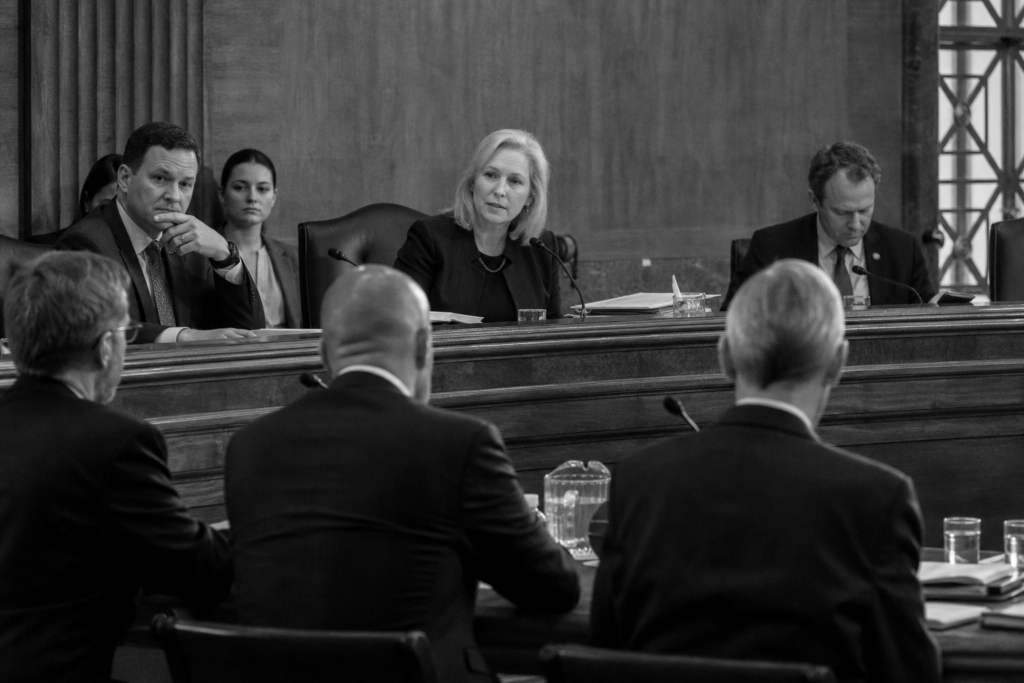
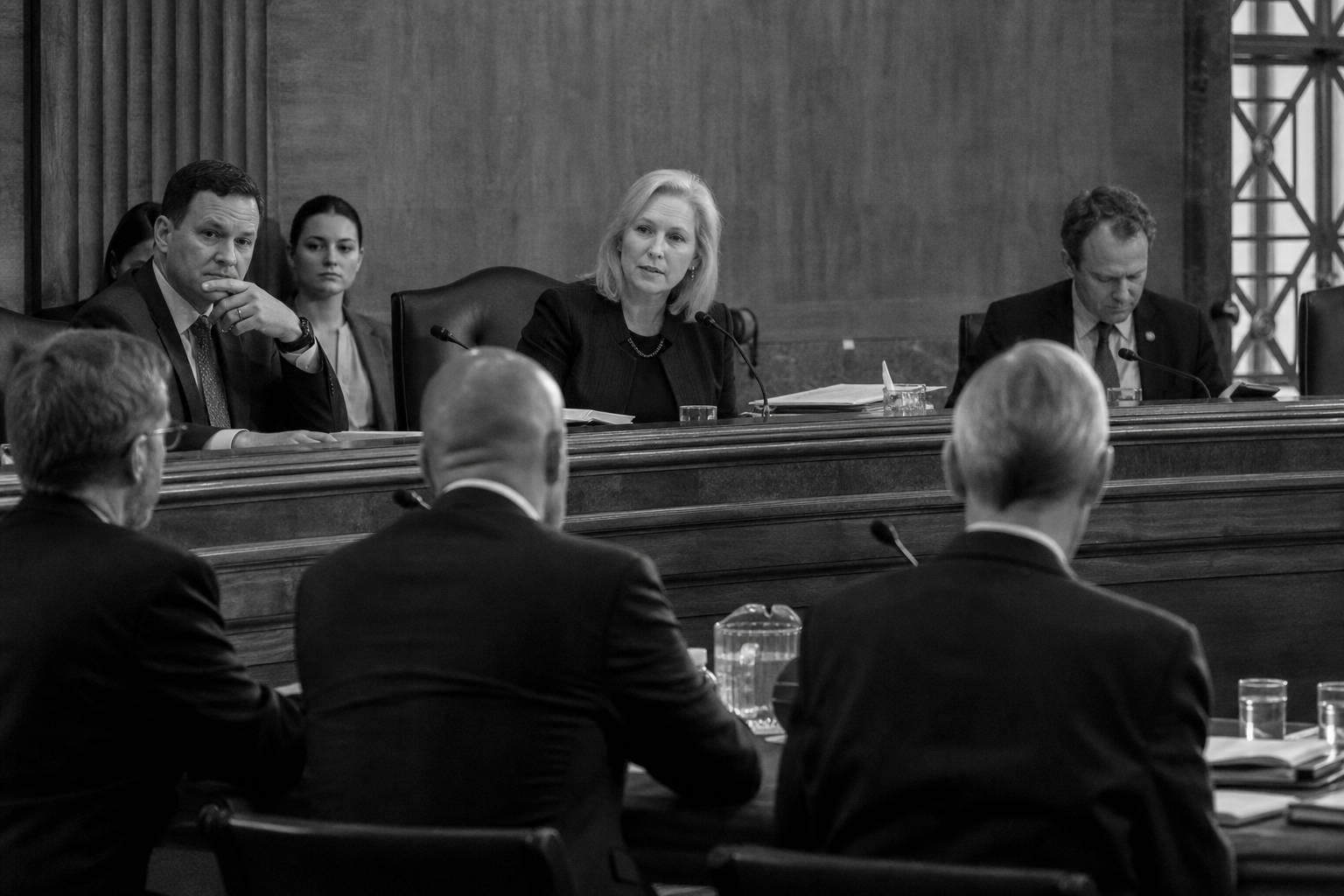
The first public checkpoint is procedural: a Senate inquiry exists as a scheduled event only when a committee or subcommittee posts a date, jurisdiction, and hearing notice. Until those markers appear, discussion of possible oversight of alleged rogue SAP programs is a prospective plan, not evidence that a hearing will occur or that the allegations behind it are true. A Special Access Program is a particularly restricted classified activity; describing one as “rogue” means alleging it was kept from the executive-branch or congressional officials entitled to oversee it.
That distinction matters because the Senate Armed Services Committee’s Subcommittee on Emerging Threats and Capabilities, then chaired by Kirsten Gillibrand, held a UAP hearing on April 19, 2023. A future UAP congressional hearing focused on SAP oversight would require more than that earlier precedent: it would need a defined remit, named witnesses or officials, and a formal notice identifying who is exercising oversight authority.
This analysis separates those public records from former intelligence officer David Grusch’s unproven allegations concerning purported crash-retrieval and reverse-engineering activities. It examines what an inquiry could realistically test, whether sensitive activities were reported through required channels, and the tools Congress could use, including classified briefings, records requests, funding scrutiny, and legislation.
What Is Confirmed About Gillibrand’s Proposed Rogue SAP Hearing?
In a 2023 interview reported by Wired, Gillibrand said her goal was to hold a hearing at some point to assess whether alleged rogue special-access programs existed. That documented expression of intent did not amount to a formally scheduled hearing: no date, witness list, or committee notice accompanied it.
That leaves the development at the proposed or reported-interest stage, not the confirmed-event stage. A senator may seek testimony, request a classified briefing, press committee leadership to set a hearing, or raise an issue publicly without producing a scheduled proceeding. Those actions can signal oversight interest, but they do not establish the scope or outcome of a Senate inquiry.
The practical benchmark is straightforward: a confirmed Kirsten Gillibrand UAP hearing would ordinarily identify the committee or subcommittee convening it, the hearing’s purpose, time and place, and participating witnesses. Until those details appear in an official notice, it remains unconfirmed whether any prospective hearing would focus on alleged improperly concealed programs, broader UAP reporting, classified budget oversight, or another question entirely.
How the Proposed Hearing Connects to the April 2023 UAP Hearing
On April 19, 2023, the Emerging Threats and Capabilities Subcommittee held a public hearing on the Defense Department’s budget request and its approach to unidentified anomalous phenomena. Chaired by Gillibrand, the session was a progress check on the UAP oversight system, not an investigation into alleged covert crash-retrieval or reverse-engineering efforts.
The public witnesses were Ronald Moultrie, then under secretary of defense for intelligence and security, and Dr. Sean Kirkpatrick, then director of the All-domain Anomaly Resolution Office (AARO). Their written testimony and questioning addressed how AARO would receive, assess, and resolve reports across air, sea, space, and other domains. Formal reporting channels matter because they turn unusual incidents into records that can be evaluated for flight-safety, intelligence, counterintelligence, and national-security implications rather than remaining informal accounts.
That Senate UAP hearing also probed whether AARO had sufficient staffing, authorities, access to relevant data, and mechanisms for personnel to report information. Those are conventional oversight questions: lawmakers can examine whether the office is carrying out its assigned work and whether the Pentagon’s reporting system reaches the relevant people and records.
The April 2023 proceeding did not produce public evidence establishing that hidden U.S. crash-retrieval or reverse-engineering programs exist. An inquiry focused on allegedly concealed SAPs would therefore differ in scope: it could test claims about access, reporting, and oversight failures rather than simply revisit AARO’s operational progress.
What “Rogue SAP” Means, and What It Does Not Mean
The distinction turns on access and accountability, not on whether a program’s subject matter is unusual. A Special Access Program adds tightly controlled access rules to classified work: only personnel with both the required clearance and a demonstrated need to know may receive program information. Those controls can protect sensitive technology, intelligence methods, or operational planning without implying misconduct.
An acknowledged SAP is one whose existence can be identified publicly, even though its details remain classified. An unacknowledged special access program conceals its very existence from the public and from people outside authorized channels; that extra concealment can be lawful when accompanied by the required internal and congressional reporting. The practical difference is not that one is “more real” than the other, but that public scrutiny of the latter is necessarily limited.
A waived SAP is an especially restricted arrangement in which normal reporting may be narrowed to a limited set of congressional leaders rather than the full defense-oversight committees. “Waived” does not mean exempt from all oversight. It describes a more constrained reporting structure for exceptionally sensitive activity, making the identity of the officials receiving notice a central accountability question.
“Rogue SAP,” by contrast, is generally an oversight or political description, not a standard formal program category. In this context, the allegation would be that an activity was kept from the executive-branch and congressional officials entitled to know about it, funded or managed outside authorized channels, or falsely characterized to evade scrutiny. That is materially different from the ordinary existence of a lawful classified program.
Nor does the existence of acknowledged, unacknowledged, or waived programs establish claims about recovered craft, reverse engineering, or non-human intelligence. Those claims require independent evidence about the alleged activity itself. A serious inquiry could therefore examine reporting trails, authorities, funding, access records, and witness accounts without assuming the extraordinary premise is true.
Why David Grusch’s Allegations Are Central but Still Unproven
David Grusch brought the alleged oversight failure into sharper focus when he testified under oath before the House Oversight Committee’s national-security subcommittee in July 2023. The former intelligence officer alleged that people with direct knowledge had told him of a long-running UAP crash-retrieval and reverse-engineering effort, and that relevant information had been withheld from Congress.
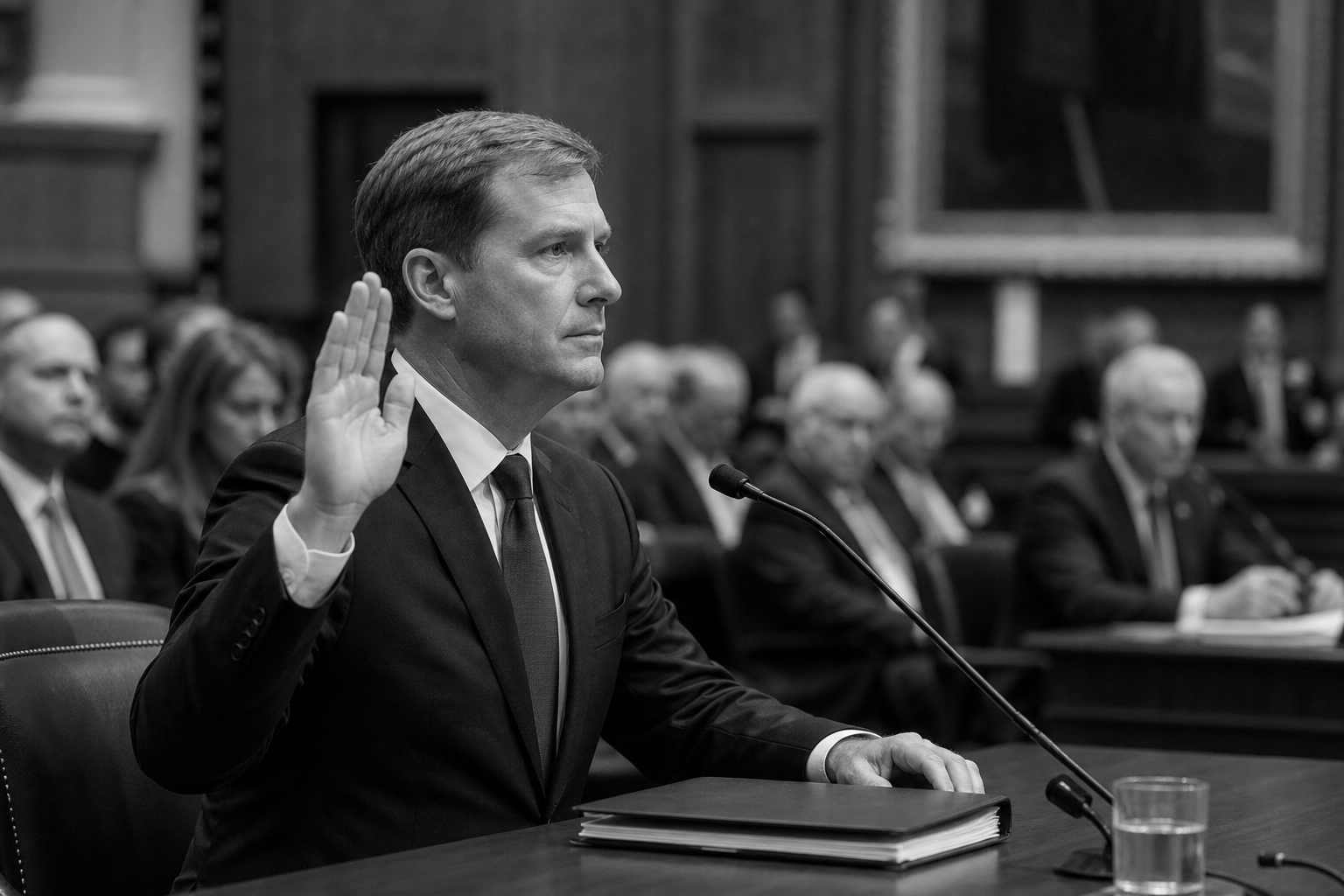
His public testimony established that he made those allegations under oath; it did not establish that he had personally seen a recovered craft or non-human biologics. On the most consequential points, Grusch described information supplied by other current or former officials. That distinction matters: firsthand evidence can be tested through records, physical materials, provenance, and direct witnesses, while secondhand accounts identify leads for investigators rather than independently proving the underlying event.
Grusch also said he had provided classified details, including names and locations, through protected channels to inspectors general and congressional committees. Such a referral can support an inquiry into whether information was improperly restricted, whether personnel faced retaliation, or whether reporting rules were followed. It is not public confirmation that a concealed program exists, nor does it authenticate every claim carried in a whistleblower allegation.
For a UAP congressional hearing, the useful question is therefore narrower than a claim of a government UFO cover-up: can relevant oversight bodies obtain the records and testimony needed to test Grusch’s assertions? Credible corroboration would require more than repetition of the allegations, such as traceable program records, funding and reporting evidence, sworn firsthand accounts, or inspectable material. Until then, claims involving recovered craft, reverse engineering, or non-human intelligence remain unproven allegations rather than established findings.
What Congress Could Actually Examine in a SAP Oversight Inquiry
The first test is whether the alleged information can be traced through ordinary channels of accountability. A Senate inquiry could request program summaries, funding lines, access rosters, briefing records, referral files, and correspondence showing who was informed, who was denied access, and on what basis.
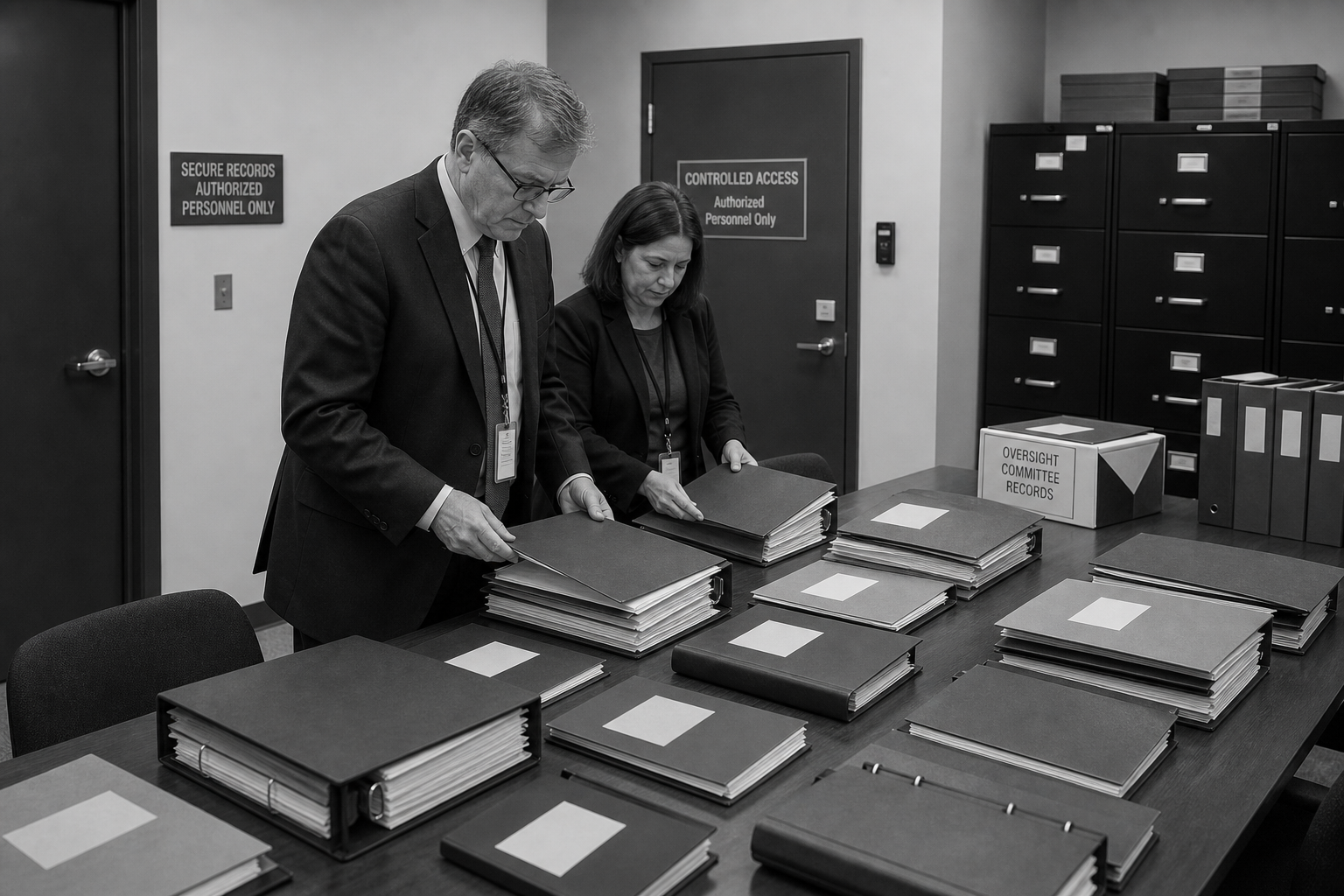
A closed classified briefing would let cleared members question Defense Department or intelligence officials about material that cannot be aired publicly. That is useful for testing specifics, but it produces less public visibility; a public hearing can establish commitments and expose gaps, while a classified session can examine the underlying record.
The Senate Armed Services Committee could focus on Defense Department activities, including whether access and compartmentation rules prevented required oversight. Intelligence committees would be better positioned to examine intelligence-community reporting and handling of classified disclosures. Appropriators can scrutinize whether money was spent through properly identified channels and can attach conditions or reporting requirements to funding. Those lanes can overlap, but none gives one committee automatic control over every agency, contractor, or classified program.
Potential steps range from voluntary testimony and document requests to subpoenas where committee authority permits. Members could also seek an Inspector General review of alleged retaliation, mishandled disclosures, missing records, or failures to follow reporting procedures. A strong result would be a defined finding about compliance, access, funding, or reporting; an unsupported assertion that material exists somewhere would be a weak one.
That distinction keeps the inquiry grounded. Congress could identify an oversight failure even if no UAP allegation is substantiated, and could find that required reporting and controls worked without resolving every extraordinary claim.
AARO Findings, Disclosure Legislation, and the Questions a Hearing Could Test
AARO’s published historical assessment supplies an official baseline, but not a final adjudication of every classified allegation. Its 2024 Historical Record Report, Volume 1 reported that AARO found no verifiable evidence that the U.S. government possessed extraterrestrial technology or operated a confirmed reverse-engineering program. That conclusion differs from whistleblower allegations, including Grusch’s secondhand public claims of concealed recovery and exploitation work; the difference is evidentiary, not merely rhetorical.
The Schumer-Rounds UAP Disclosure Act language sought to make that gap more testable. Its original proposal would have created an independent records-review process, a presumption favoring disclosure of qualifying UAP records, and a mechanism for the government to obtain control of certain recovered material. Those provisions would have gone beyond ordinary declassification by creating a dedicated review structure for historically significant UAP records.
The FY2024 National Defense Authorization Act retained a narrower UAP Records Collection at the National Archives. It directed agencies to identify and transfer relevant records, but Congress did not enact the proposed review board or authority concerning recovered material. The practical result is a records-preservation and access framework, not the independent disclosure process initially envisioned.
A hearing could therefore test three discrete issues: whether AARO and congressional investigators received complete access to relevant records and witnesses; whether any activity was improperly insulated from required oversight; and whether claims can be supported by publicly releasable evidence rather than assertion alone. A documented access denial, traceable funding anomaly, or authenticated record would be more meaningful than generalized claims of secrecy.
What Would Count as a Meaningful Next Development
The next signal worth treating as consequential UAP news is an official act that creates a traceable oversight record, not another circulating claim. Until a Senate notice identifies a proceeding, reports of a Gillibrand-led rogue-SAP inquiry remain less informative than a formal event with a defined remit.
- A committee or subcommittee hearing notice should name the convening body, subject, date, and venue. That establishes jurisdiction and shows whether the inquiry concerns defense oversight, intelligence matters, appropriations, or another remit.
- A verified witness list and released opening statements would reveal who must answer questions and what the panel intends to test. A public hearing permits public accountability; a classified session can examine protected material but may yield few releasable details.
- Enacted oversight language, such as reporting requirements, funding restrictions, or records-access rules, would change agency obligations. A proposed amendment, by contrast, indicates legislative interest without creating a binding control.
- Inspector-general findings, authenticated correspondence, budget records, access logs, or other documents that independent reviewers can assess would provide a stronger basis for conclusions than recollections or unnamed secondhand accounts.
Reports of UAP sightings, including speculative discussion of UFO sightings 2025 or later incidents, are not evidence that an unauthorized SAP exists. The relevant question is whether identifiable records show a program was concealed from officials entitled to oversee it.
The Key Question Is Whether Oversight Becomes Formal
What matters next is the conversion of an allegation into an accountable congressional record. Whistleblower testimony can identify claims worth testing; an agency assessment can state what investigators found; neither is equivalent to a substantiated finding. That threshold is reached only when evidence can be examined, challenged, and tied to identifiable programs, decisions, or officials.
A formal inquiry would give the question institutional consequences. A committee with the relevant jurisdiction could compel or request records, take testimony in public or classified settings, scrutinize funding, and issue findings or pursue legislation. A closed briefing may be necessary to protect classified material, but it is weaker as a public indicator unless it produces an attributable outcome: a report, a referral, a records-access requirement, or a stated corrective action.
The April 2023 proceeding showed that UAP oversight can be placed on a Senate agenda without resolving extraordinary claims. A future UAP congressional hearing focused on allegedly concealed programs would be meaningful only if its remit identifies the responsible institutions and the oversight question to be tested, not merely the subject of UAPs or disclosure.
Readers should therefore treat a Senate notice, the named committee’s jurisdiction, a verified witness list, and documented results as the decisive signals. Until those appear, claims of rogue SAPs remain allegations to investigate, not proof that such a program existed or that its alleged subject matter has been established.
Sources
Frequently Asked Questions
-
Has Senator Kirsten Gillibrand officially announced a hearing on rogue SAP programs?
No official Senate Armed Services Committee notice, calendar entry, date, jurisdictional referral, or witness list has confirmed a Gillibrand hearing on alleged rogue Special Access Programs. A formal hearing would normally identify the convening committee, purpose, time, place, and witnesses.
-
What is a rogue Special Access Program in the UAP disclosure debate?
A Special Access Program is highly restricted classified work limited to personnel with the required clearance and need to know. A “rogue SAP” is not a formal program category; it alleges that activity was concealed from executive-branch or congressional officials entitled to oversee it, or was funded or managed outside authorized channels.
-
How does a proposed rogue SAP hearing differ from the April 19, 2023 Senate UAP hearing?
The April 19, 2023 hearing examined the Defense Department’s UAP oversight system and AARO’s work, with Ronald Moultrie and AARO director Dr. Sean Kirkpatrick as public witnesses. A rogue SAP inquiry would instead test alleged failures in reporting, access, funding, and congressional oversight of potentially concealed programs.
-
What did David Grusch allege about UAP crash-retrieval and reverse-engineering programs?
During House testimony in July 2023, former intelligence officer David Grusch alleged that people with direct knowledge told him about a long-running UAP crash-retrieval and reverse-engineering effort and that information was withheld from Congress. He did not publicly establish that he personally saw recovered craft or non-human biologics, and the claims remain unproven.
-
What should I look for to verify whether Congress is seriously investigating hidden SAPs?
Look for an official committee notice naming the subject, date, venue, jurisdiction, and witnesses, plus documented outcomes such as inspector-general findings, records-access rules, funding restrictions, or authenticated records. AARO’s 2024 Historical Record Report found no verifiable evidence of U.S. possession of extraterrestrial technology or a confirmed reverse-engineering program, so traceable evidence is more meaningful than repeated allegations.