NASA Appoints First-Ever UAP Research Director in 2023: Mark McInerney Named
Learn why NASA appointed NASA UAP Research Director Mark McInerney in 2023, what the role involved, and why it did not confirm alien claims.
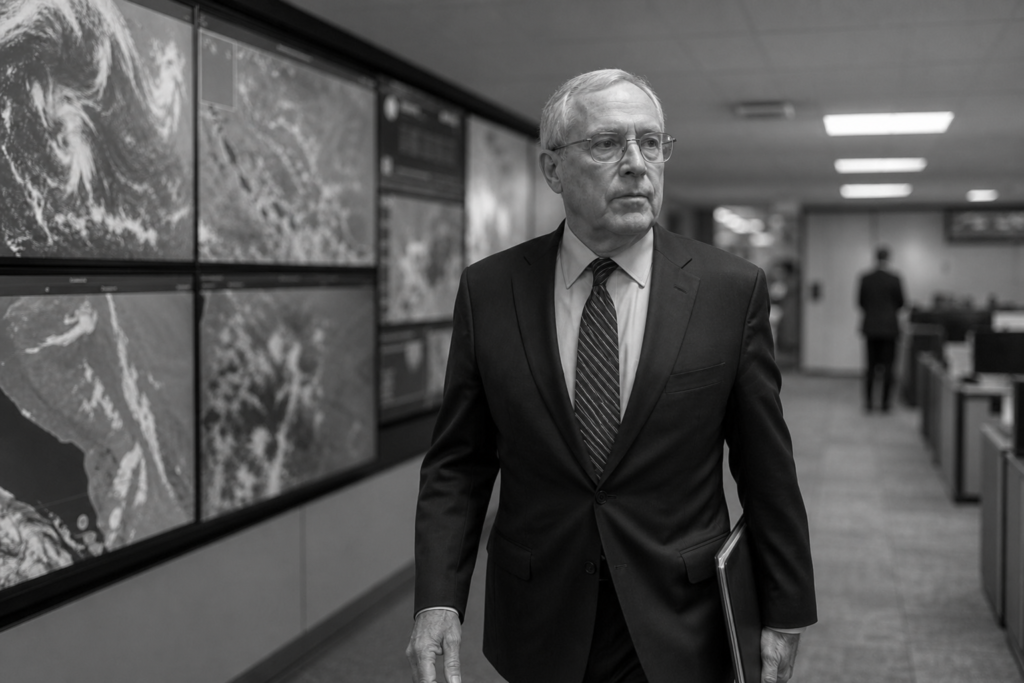
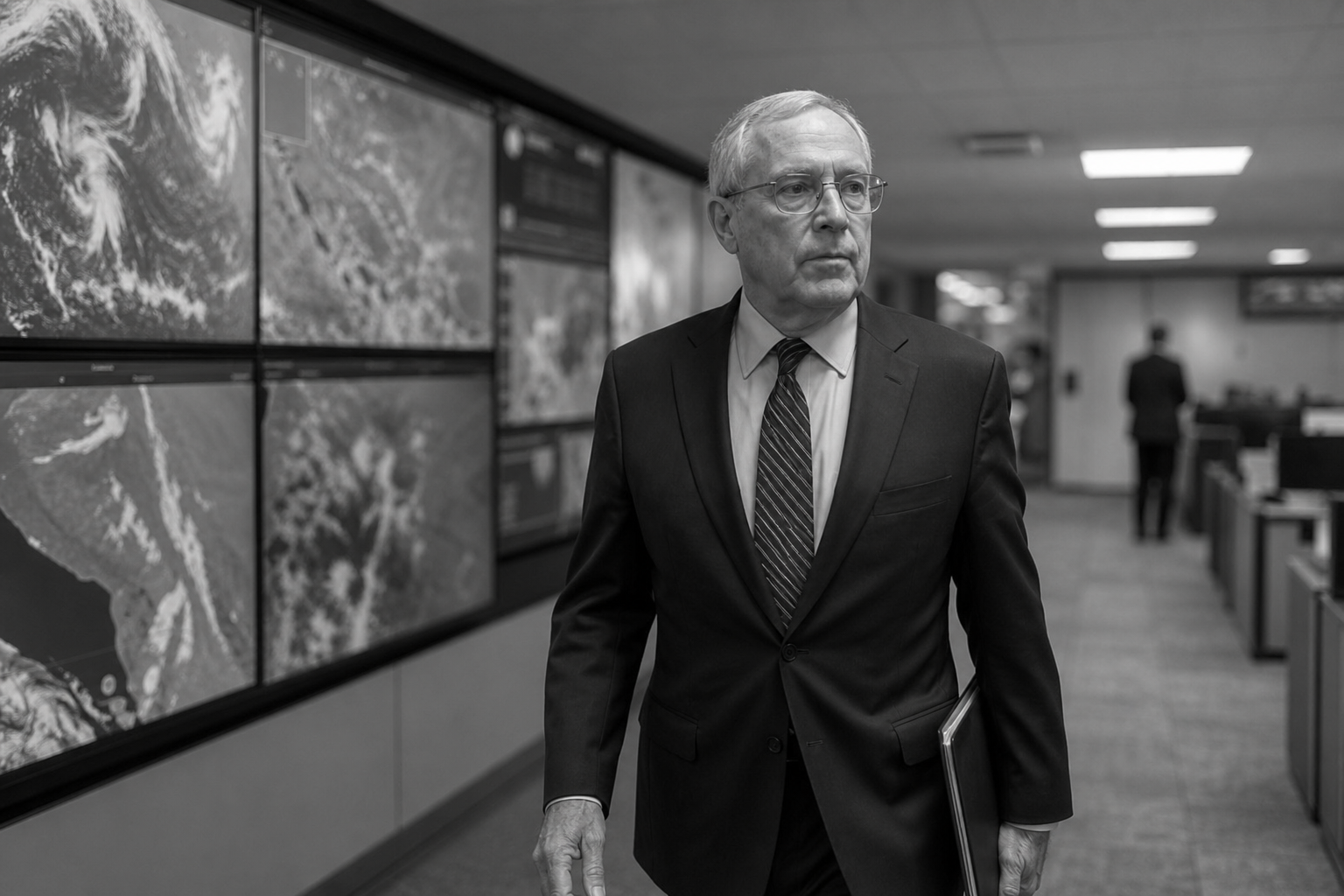
On September 14, 2023, NASA announced that Mark McInerney would serve as its Director of UAP Research, the agency’s first publicly announced role with that title, at the same time it released the report from its independent UAP study team. NASA UAP Research Director Mark McInerney was appointed to give the agency a defined point of leadership for a scientific subject often dominated by incomplete observations and public speculation.
“First-ever” describes this NASA leadership position, not the beginning of U.S. government interest in unidentified anomalous phenomena. The Department of Defense and its All-domain Anomaly Resolution Office (AARO) had separate responsibilities involving military-related reports. NASA’s role was different: improving the use of rigorous methods, better-quality observations, publicly available data where possible, and coordination with relevant scientific and government partners.
The announcement was not evidence that NASA had identified extraterrestrial technology or non-human intelligence. Its 2023 study reported no evidence that UAP were extraterrestrial in origin. The practical significance of this UAP news was institutional: NASA treated unexplained observations as a data and measurement problem worth organizing around, rather than treating an unresolved report as proof of an extraordinary explanation.
Who Is Mark McInerney?
McInerney’s relevant experience was institutional rather than a record as an investigator of extraterrestrial life. NASA described him as a longtime agency official whose work included communications and liaison responsibilities, including service as NASA’s liaison to the Department of Defense.
That background mattered because a liaison role is designed to connect organizations with different missions, information systems, and operating cultures. In practice, it involves keeping the right offices informed, helping establish channels for collaboration, and translating a shared problem into workable coordination. Those are different responsibilities from analyzing a sensor reading, conducting a field investigation, or determining the origin of a particular report.
For Mark McInerney, UAP research therefore represented a leadership and coordination assignment inside NASA. His prior Defense Department liaison work was relevant to an area in which civilian scientific capabilities and government reporting systems could overlap, while remaining distinct in purpose. NASA’s public description supports viewing him as an experienced agency manager positioned to organize a developing research effort, not as a specialist publicly identified with recovered-material claims, classified UAP programs, or extraterrestrial-life research.
The distinction helps set realistic expectations for the NASA first UAP research director role. McInerney’s value was in creating continuity between NASA’s scientific resources and appropriate external partners, so that future work could be structured around better observations and analysis rather than public conjecture.
Why NASA Created a Dedicated UAP Research Role
The problem NASA set out to address was methodological: an observation can remain unidentified because the record is too thin to test competing explanations. NASA commissioned its Independent Study Team in 2022 to examine how the agency could apply scientific tools to UAP, and the panel’s 2023 report emphasized that fragmented, inconsistent data, not simply the number of reports, was the central barrier to progress.
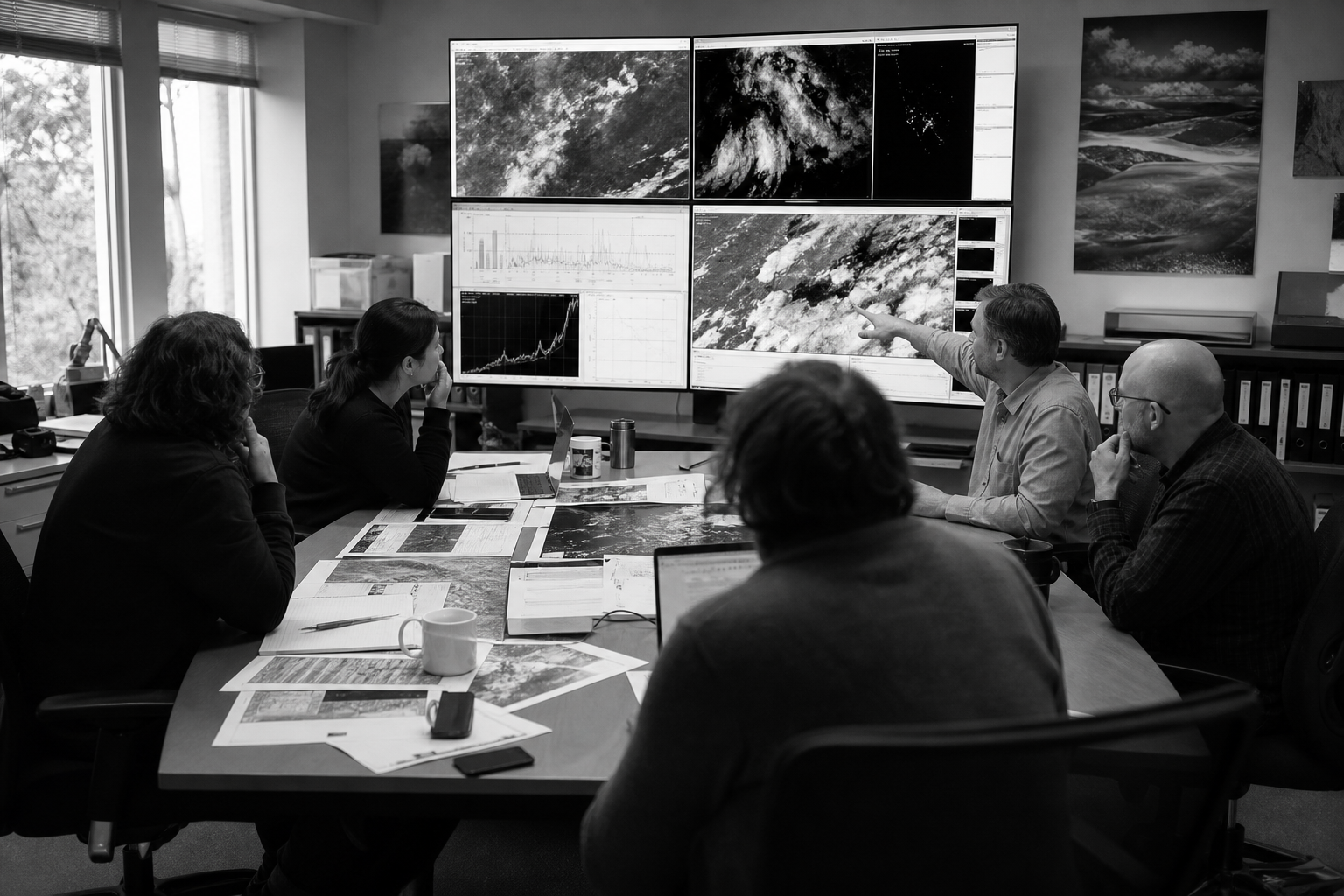
A useful observation needs more than an image or a witness account. Researchers need context such as the time and location, the sensor’s settings and calibration, atmospheric conditions, and information that allows measurements from different instruments to be compared. Without that metadata, an apparently unusual event may be impossible to reconstruct, assess for error, or distinguish from an ordinary object or phenomenon observed under difficult conditions.
The NASA UAP report therefore recommended a more systematic framework for collecting, curating, and analyzing observations, with an emphasis on rigorous methods and data that can be made publicly available where appropriate. A dedicated research leader gave NASA a focal point for turning those recommendations into an organized agency response: aligning relevant scientific capabilities, establishing a consistent approach to incoming information, and communicating clearly about what the available evidence can and cannot show.
Reducing stigma was part of that framework, not a promise that every report would prove significant. If pilots, scientists, and members of the public fear ridicule, potentially useful observations may go unreported or arrive without the details needed for analysis. NASA’s 2023 UAP study treated respectful reporting and careful public communication as ways to improve the quality of the evidence base, shifting attention from speculation toward observations that can be evaluated scientifically.
What NASA’s UAP Research Director Was Designed to Do
The director’s work was intended to turn a broad scientific objective into a repeatable operating practice. That meant coordinating UAP-related activity across NASA capabilities, identifying where outside expertise could sharpen an analysis, and maintaining communication with other relevant government organizations without changing NASA into an incident-investigation office.
A public-data-oriented approach was central to the design. Useful scientific data collection is not merely the accumulation of reports: it depends on observations that retain measurable details, including sensor performance, viewing geometry, timing, environmental conditions, and uncertainty. A single uncalibrated image may prompt a question but often cannot resolve one; observations with standardized metadata and independent points of comparison are far more useful for testing possible explanations. The director could help focus NASA’s analytical resources on that difference.
NASA also saw potential value in tools that improve the quality of observations rather than in a dedicated hunt for a predetermined answer. Earth-observing assets, better sensor standards, computational analysis, and carefully structured reporting could help determine whether an apparent anomaly reflects an object, an atmospheric effect, an instrument artifact, or insufficient information. Where observations intersect with flight operations, better reporting and characterization could also produce information relevant to aviation safety.
Public communication was part of the remit as well. Explaining what data exist, what methods can establish, and where uncertainty remains gives the public a clearer basis for judging NASA UFO research claims. The NASA UAP Research Director Mark McInerney role was therefore designed to strengthen evaluation of anomalous reports, not to label them extraterrestrial, secret technology, or any other explanation before the evidence warranted it.
What the Appointment Did Not Mean for Alien or UFO Disclosure Claims
An unresolved observation is not affirmative evidence for any particular explanation. It may remain unresolved because available imagery, sensor readings, timing information, or contextual data cannot reliably distinguish among ordinary possibilities. That uncertainty does not itself support a conclusion involving extraterrestrial visitors, non-human intelligence, recovered craft, crash-retrieval programs, or a government cover-up.
NASA’s 2023 Independent Study Team reported that it found no evidence that UAP are extraterrestrial in origin. That finding did not claim to have solved every case or rule out every hypothetical explanation; it described the evidentiary position reached by the study. “Unidentified” is a description of the limits of a record, whereas a claim about alien technology is a specific conclusion that requires independently testable supporting evidence.
For the same reason, creating the director position was not an act of alien disclosure or UFO disclosure. It did not authenticate allegations about hidden programs, validate accounts of retrieved material, or announce that NASA possessed proof of extraordinary origins. The appointment established leadership for improving how observations could be assessed, not for presenting a settled answer.
The study’s practical recommendation was to improve the quality and availability of relevant data, reduce stigma around reporting, and apply disciplined analysis to future cases. Better evidence can narrow explanations or reveal that a reported anomaly was atmospheric, instrumental, or conventional; it can also show when the information remains inadequate. Scientific openness means making methods and limits clearer, not treating every unresolved report as confirmation of an extraordinary claim.
How NASA’s Work Differed From AARO and Pentagon UAP Investigations
Institutional responsibility, rather than the label “UAP,” separates NASA’s work from the Pentagon’s. NASA approached the subject as a civilian scientific problem: how to obtain higher-quality observations, make suitable data publicly available, apply reproducible analytical methods, and communicate the limits of the resulting conclusions. Its role was to improve the evidentiary basis for analysis, not to run a defense incident-response system.

AARO, the Department of Defense’s All-domain Anomaly Resolution Office, has a different mandate. Often described as the Pentagon UFO office, AARO is positioned to receive, assess, and resolve reports that arise in military and national-security settings across domains. That mission can involve operational reporting, defense sensors, and information that is not public. NASA’s interest in better data and scientific tools could complement the Pentagon’s anomaly-resolution responsibilities, but coordination does not give NASA control over DoD investigations or give AARO authority over NASA’s research agenda.
For readers following UAP news, the practical checkpoint is simple: a NASA analysis asks whether available observations can support a sound scientific inference; an AARO investigation addresses DoD reporting and anomaly-resolution responsibilities. Mark McInerney’s appointment did not move Pentagon cases to NASA, establish a new intelligence office, or replace the permanent Pentagon UAP office, or decide the separate policy debates over congressional disclosure proposals. It created a named civilian-science leadership role focused on improving the methods by which future observations might be understood.
The Practical Significance of NASA’s 2023 UAP Appointment
The lasting value of the 2023 decision lies in the standard it set: unexplained reports merit organized scientific attention, but only evidence can determine what they show. A named director gave that work continuity inside NASA and linked it to the agency’s broader emphasis on stronger observations, transparent methods, public-facing data where feasible, and reporting practices that do not discourage useful information.
That standard is also a way to read later UAP sightings and UFO news. A strong signal is a documented agency finding that identifies the data, method, and limits of an analysis. An unresolved case is narrower: it means the available record did not support a reliable conclusion. Speculation goes further by assigning an origin or intent without comparable evidence. NASA’s 2023 study found no evidence that UAP were extraterrestrial in origin; the appointment committed NASA to improving how observations are studied, not to validating extraordinary claims.
What Mark McInerney’s Appointment Meant
The appointment’s real test was whether it would make future observations more useful: better defined reporting, stronger data handling, and clearer scientific analysis. Mark McInerney’s 2023 role provided a responsible point inside NASA for that coordination. It did not create a separate discovery program or convert an unexplained report into proof of an extraordinary origin.
That boundary matters when comparing agencies. NASA’s contribution was science-led: improving the quality of observations that can be analyzed and, where appropriate, shared publicly. AARO’s Defense Department function is investigative and operational, addressing reports and anomalies within the national-security system. Those missions can be complementary without being interchangeable.
NASA UAP Research Director Mark McInerney therefore represented an institutional commitment to evidence standards rather than an announcement about what UAP are. NASA’s 2023 study found no evidence that UAP were extraterrestrial in origin. For readers weighing disclosure claims, the meaningful development was a named leader tasked with making the underlying evidence more capable of supporting, or ruling out, specific conclusions.
Frequently Asked Questions
-
Who is Mark McInerney, NASA’s UAP Research Director?
Mark McInerney is a longtime NASA official appointed as NASA’s first publicly announced Director of UAP Research on September 14, 2023. His experience included communications, liaison work, and serving as NASA’s liaison to the Department of Defense.
-
Why did NASA create a UAP Research Director position?
NASA created the role to organize a scientific response to unidentified anomalous phenomena after its 2023 independent study identified fragmented and inconsistent data as the main obstacle. The position supports better observations, standardized data collection, public data where appropriate, and rigorous analysis.
-
What does NASA’s UAP Research Director do?
The director coordinates UAP-related work across NASA, connects relevant outside expertise, and communicates with other government organizations. The role focuses on improving data quality, including sensor calibration, timing, viewing geometry, atmospheric conditions, and uncertainty, rather than investigating individual incidents.
-
Did NASA’s 2023 UAP report find evidence of aliens?
No. NASA’s 2023 Independent Study Team reported that it found no evidence that UAP are extraterrestrial in origin. An unresolved observation means the available data cannot support a reliable conclusion, not that it proves alien technology or non-human intelligence.
-
How is NASA’s UAP research different from AARO and Pentagon investigations?
NASA approaches UAP as a civilian scientific data problem, emphasizing reproducible methods, higher-quality observations, and public-facing data where feasible. AARO is the Department of Defense office responsible for receiving, assessing, and resolving military and national-security anomaly reports, including information from operational defense systems.