AARO Formally Established in 2022: Pentagon’s Broadest UAP Mandate Ever
Explore AARO UAP history: learn how the Pentagon formally established AARO in 2022, its all-domain mandate, and how it compared with predecessors.
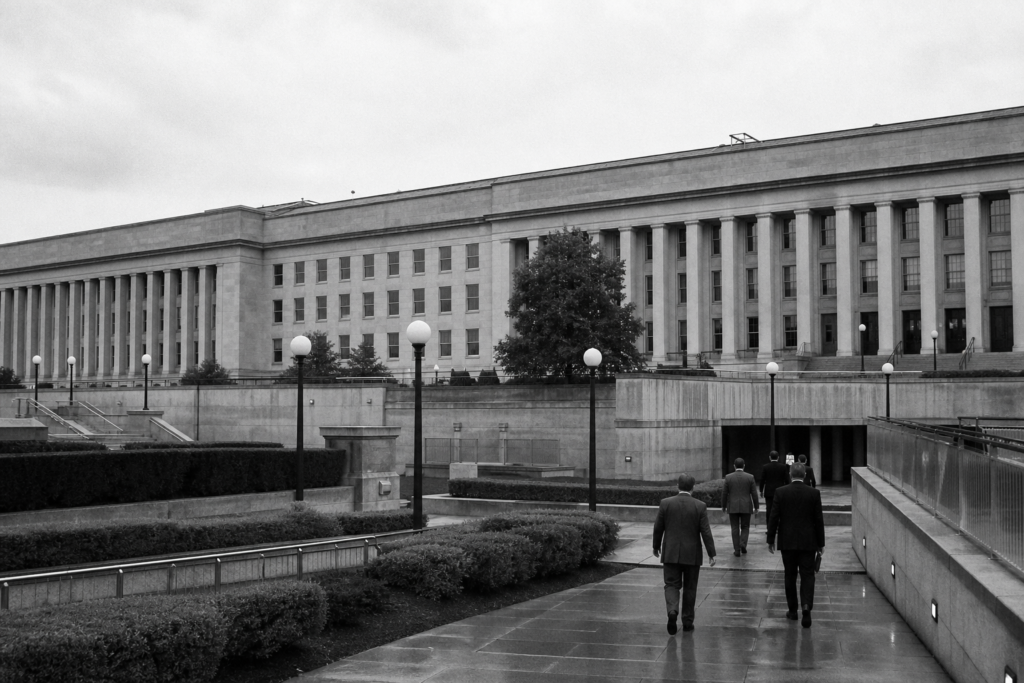
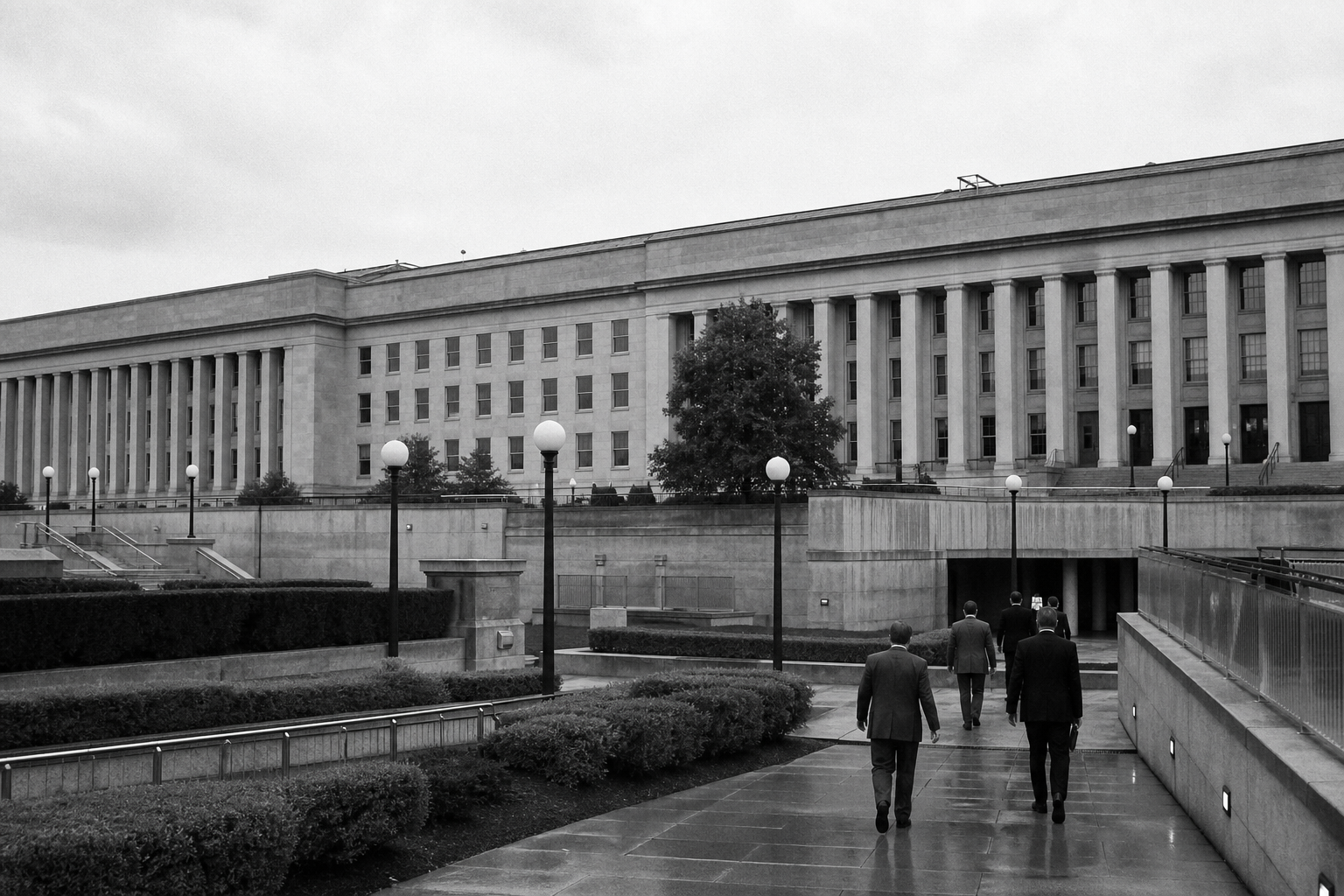
The creation of the All-domain Anomaly Resolution Office was an institutional event, not a resolution of the wider debate over unidentified anomalous phenomena. On July 15, 2022, a Deputy Secretary of Defense memorandum formally established AARO as a Pentagon office. That action is the chronological anchor here: it created a standing structure with assigned responsibilities, unlike public discussion of sightings, alleged recovered material, or claims of non-human intelligence.
The question is narrower and testable: did the initial AARO UAP remit represent the Pentagon’s broadest standing mandate of its kind? “Broadest” does not mean that AARO possessed every relevant record or that its assessments settle what any particular incident was. It means comparing formal missions: the environments covered, the agencies it was meant to synchronize, its detection and analysis functions, its reporting chain, and its responsibility for historical material.
This article follows the path from Project Blue Book and the UAP Task Force to AARO’s July 2022 establishment, then measures their mandates on those same terms. The conclusion will distinguish the Pentagon’s written authority from later statutory additions, official findings, and unproven allegations about crash retrieval or concealment.
Why AARO’s 2022 Establishment Matters
The July 2022 action supplies a fixed institutional baseline rather than a change in terminology. The comparison turns on written responsibilities: whether an office could address observations across air, sea, space, and transmedium settings; combine detection, analysis, and mitigation work; synchronize components inside and beyond the Department of Defense; and provide defined reporting and records functions. A unit that collects reports from one operational setting is therefore not equivalent to a standing office assigned to connect information and responsibilities across several settings.
On that measure, the article treats AARO as the broadest stated Pentagon UAP remit up to its establishment, not as a claim that every authority was exercised immediately or that later legislation added nothing. The UAP Task Force and Project Blue Book remain essential comparators because their missions were narrower in institutional setting, period, or operational scope. Their existence also prevents “unprecedented” from becoming a slogan: the conclusion depends on comparing their formal assignments with AARO’s, category by category.
That distinction sets a necessary limit on the inquiry. A broader mandate can create a stronger mechanism for receiving, coordinating, and assessing information; it does not itself constitute UAP disclosure, establish the nature of unresolved cases, or substantiate allegations involving non-human intelligence, recovered craft, reverse engineering, or concealment.
AARO Did Not Appear From Nothing: Its Predecessors and the FY2022 NDAA
The immediate lineage ran through two short-lived transition structures. The Navy-led UAP Task Force concentrated Defense Department attention on reports of unidentified aerial phenomena and supported the intelligence assessment delivered to Congress in 2021. Its purpose was to collect and analyze a defined body of military reporting, rather than to serve as a permanent, department-wide coordinating office.
In November 2021, the Department of Defense announced the Airborne Object Identification and Management Synchronization Group, or AOIMSG, to succeed that effort. Established jointly with the Office of the Director of National Intelligence, AOIMSG was intended to synchronize identification and management of airborne objects of interest, especially where they might present flight-safety or national-security concerns. The name and announced focus matter: it was an airborne-object group, not yet the all-domain office that would follow.
Congress supplied the next institutional step in Section 1683 of the FY2022 National Defense Authorization Act. The provision directed the Secretary of Defense and the Director of National Intelligence to establish an office for unidentified aerial phenomena. It assigned functions including developing procedures for synchronizing collection, reporting, and analysis across relevant agencies; evaluating links to adversarial foreign governments or other threats; coordinating scientific and intelligence analysis; and reporting to Congress.
That statutory instruction did not itself name AARO or create it on enactment. Instead, it set the required duties and joint DoD–ODNI framework against which the Pentagon’s later July 2022 action was organized. The sequence is therefore consequential: the UAP Task Force supplied a focused reporting-and-analysis precursor, AOIMSG marked an attempted synchronization transition, and the NDAA required a more formal office capable of carrying the specified functions forward.
When and How the Pentagon Formally Established AARO
The decisive administrative checkpoint came on July 15, 2022, when Kathleen Hicks signed a memorandum directing the establishment of AARO and superseding AOIMSG. The memorandum, not the earlier statute by itself, was the formal Department of Defense establishment event, converting Congress’s instruction into a named office with a defined place in the Pentagon’s structure.
AARO was placed within the Office of the Under Secretary of Defense for Intelligence and Security. Its director was to report to that under secretary, providing a senior intelligence-and-security reporting line rather than leaving the work as a service-level collection effort. That placement was intended to connect operational reporting, intelligence holdings, technical analysis, and defense-security concerns held across separate components.
The memorandum also assigned the office to synchronize efforts throughout the Department of Defense and the intelligence community. Synchronization meant more than accepting sighting reports: it encompassed detection, identification, attribution, analysis, and mitigation involving unidentified objects of interest. A unit focused on aerial incidents could examine individual reports; this structure was designed to link the organizations gathering data, assessing possible threats, and reporting within one framework.
The chronology remains important. Section 1683 of the FY2022 National Defense Authorization Act supplied the prior legal requirement for a DoD–ODNI office and specified core functions, but it did not establish AARO by name. The July 15 memorandum created the Pentagon office and its initial reporting arrangement. Later congressional enactments changed terminology and added duties, records provisions, and oversight mechanisms; they were not the instrument that formally created AARO in 2022.
What AARO’s ‘All-Domain’ UAP Mandate Actually Covered
The key operational checkpoint was whether an observation could be connected to information beyond the sensor or setting in which it first appeared. “All-domain” described that problem set, not a conclusion about what any particular object was. The July 2022 mandate covered airspace, maritime and orbital environments, as well as transmedium objects, objects associated with more than one operating environment or apparently moving between them. An event first detected by an airborne sensor, for example, could require comparison with maritime, space-based, intelligence, and technical data rather than treatment as an isolated aviation report.
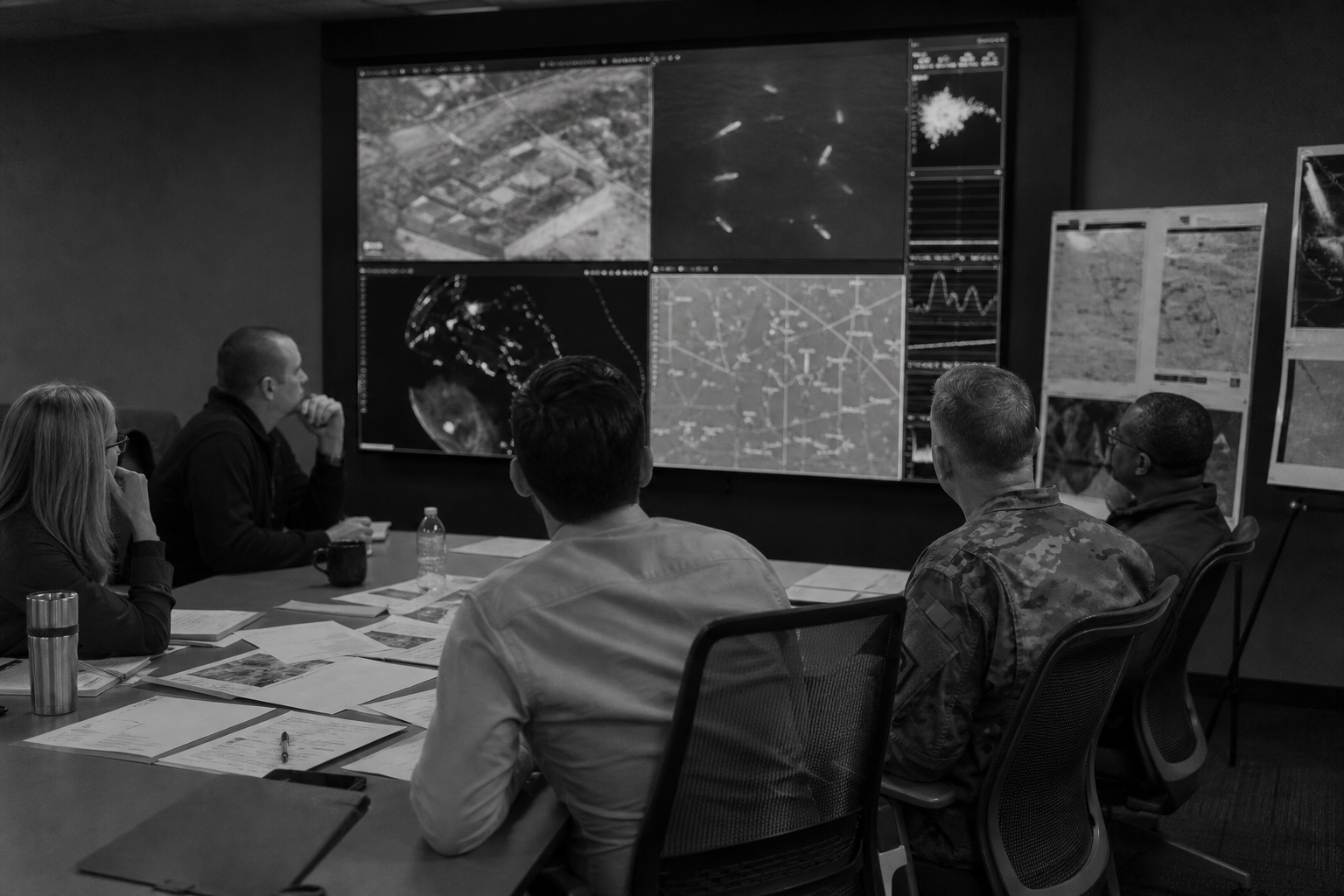
That breadth mattered because the same core questions take different forms in each environment. Detection concerns whether available sensors registered something at all; identification asks what the object or phenomenon may have been; attribution examines whether it can be connected to a known actor, system, or cause; and mitigation concerns reducing any operational or security risk. AARO’s mandate joined those functions with reporting and synchronization, allowing information held by different Defense Department and intelligence organizations to be assessed as part of one case picture.
The practical value of that structure was not limited to unusual sightings. An unidentified object near military operations may reflect an airborne safety hazard, a sensor artifact, a conventional platform, a foreign collection or surveillance concern, or insufficient data. A cross-domain review can test those possibilities against multiple data streams and avoid treating a single pilot observation, radar track, or video clip as self-explanatory.
The AARO mandate therefore addressed national-security and flight-safety questions created by uncertainty: whether an observation could affect operations, reveal a gap in awareness, or require prompt defensive attention. It did not determine that reports involved advanced craft, an extraterrestrial origin, or non-human intelligence. “Unidentified” describes the status of available information at the time of assessment; it is not an attribution.
Why This Was the Pentagon’s Broadest Standing UAP Remit
A side-by-side comparison shows where the change occurred: not in the mere use of a new acronym, but in the number of environments, institutions, and functions placed within one standing Pentagon UAP investigation structure.
| Program | Documented focus and structure | What it did not yet combine |
|---|---|---|
| Project Blue Book | An Air Force investigation centered on unidentified flying-object reports and their possible implications for national security and aviation. | It was not a modern, all-domain DoD–intelligence-community coordinating office with responsibilities spanning sea, space, transmedium activity, and department-wide synchronization. |
| UAP Task Force | A focused effort to collect and analyze military reports of unidentified aerial phenomena and support an intelligence assessment for Congress. | Its remit was centered on aerial reporting rather than a standing office directed to integrate cross-domain detection, attribution, mitigation, and reporting functions. |
| AOIMSG | A DoD-led synchronization group announced to coordinate identification and management of airborne objects of interest, including potential threats in special-use airspace. | It signaled broader coordination, but its stated focus remained airborne objects and it was superseded before becoming the July 2022 all-domain office. |
| AARO | A standing office established on July 15, 2022, to synchronize DoD and intelligence-community work across air, sea, space, and transmedium cases, while linking detection, identification, attribution, analysis, mitigation, and reporting. | Its formal remit did not guarantee that every component possessed the same data, that every case could be resolved, or that the office automatically had access to every alleged special-access program. |
The decisive institutional feature was senior-level synchronization. AARO was placed under the Under Secretary of Defense for Intelligence and Security and structured to coordinate with the intelligence community, making responsibility for the problem set broader than the collection role associated with the UAP Task Force or the airborne emphasis of AOIMSG. Defined reporting pathways also meant that operational observations could be elevated, compared, and assessed beyond the originating service or sensor system.
“Broadest” therefore describes the formal remit in the Pentagon’s governing action: covered environments, permanent office structure, interagency coordination, analytic responsibilities, and reporting authority. It is not a finding that AARO produced better results than every predecessor, nor evidence for claims concerning non-human intelligence, crash retrieval, reverse engineering, or concealment.
What Changed After July 2022: Statutory Expansion, Records, and Oversight
Congress subsequently refined the framework that the Pentagon had put in place. The FY2023 National Defense Authorization Act adopted the broader term “unidentified anomalous phenomena” and assigned additional duties that reached beyond the handling of new operational reports. Among them was a historical record review: AARO was to examine government records concerning UAP-related activity since 1945 and report its findings to Congress. That requirement added a retrospective research function and another channel of congressional oversight; it did not retroactively make the statute the instrument that created AARO.

The National Archives’ UAP Records Collection is a separate, later preservation-and-access framework. It provides a designated collection for qualifying federal records and establishes procedures for agencies to identify, transfer, review, and release material subject to applicable restrictions. Its purpose is archival accountability: a record’s presence in the collection shows that it was preserved or processed under that framework, not that every assertion within it has been authenticated.
This distinction matters. The July 2022 Deputy Secretary memorandum established the office; the FY2023 law expanded and specified responsibilities; and the archival collection created a later route for preserving and making eligible records available. None of those steps, by itself, validates claims of non-human intelligence, recovered craft, reverse engineering, or a coordinated concealment effort.
The Bottom Line: A Broader Mandate Is Not a Disclosure Verdict
The decisive comparison is between assigned functions, not public expectations. The July 15, 2022 Deputy Secretary memorandum gave AARO the Pentagon’s most expansive formal UAP remit to that point: a standing office combining coverage across operating environments with department-wide synchronization, analysis, mitigation support, and reporting. That was materially broader than the UAP Task Force’s focused reporting role and unlike Project Blue Book’s historical Air Force investigation.
Mandate and conclusion are different things. An office empowered to collect and assess more information can identify gaps, resolve some reports, and leave others unresolved; neither outcome establishes a government UFO cover-up, delivers UFO disclosure, or demonstrates non-human intelligence. The documented record supports a claim about the scope of Pentagon organization and authority, not the origin of anomalous observations or the truth of allegations attached to them.
What AARO’s 2022 Creation Ultimately Established
Replacing AOIMSG with a named office created a durable center of responsibility: AARO could connect reporting, technical analysis, operational response, and senior-level coordination across the Department of Defense and intelligence community. Its reach across air, maritime, space, and transmedium contexts made it structurally different from the UAP Task Force’s more focused military-reporting role. Project Blue Book, meanwhile, was an Air Force investigation of an earlier era rather than a cross-domain Pentagon synchronization office.
That comparison supports a limited historical judgment. AARO UAP was the broadest standing Pentagon remit of its kind at its creation when measured by environments covered, organizations brought into the process, and functions assigned, not by the number or character of reports it would ultimately resolve. Later legislation added historical-review, reporting, and records-related responsibilities, refining the framework rather than changing the 2022 establishment event. None of those administrative authorities determines whether an unresolved observation reflects non-human intelligence, recovered technology, reverse engineering, or concealment; those are separate claims requiring separate evidence.
Frequently Asked Questions
-
When was AARO formally established?
AARO was formally established on July 15, 2022, by a memorandum signed by Deputy Secretary of Defense Kathleen Hicks. The memorandum superseded the Airborne Object Identification and Management Synchronization Group, or AOIMSG.
-
What does AARO investigate?
AARO investigates unidentified anomalous phenomena across airspace, maritime, orbital, and transmedium environments. Its functions include detection, identification, attribution, analysis, mitigation, reporting, and synchronization across the Department of Defense and intelligence community.
-
Does AARO investigate UAP in space and underwater?
Yes. AARO’s July 2022 remit covered air, sea, space, and transmedium cases, including objects associated with more than one operating environment. This allows an observation to be assessed using aviation, maritime, space-based, intelligence, and technical data.
-
Was AARO created by Congress or the Pentagon?
Congress required a DoD and ODNI UAP office through Section 1683 of the FY2022 National Defense Authorization Act, but the Pentagon formally created AARO on July 15, 2022. The establishing memorandum placed AARO under the Under Secretary of Defense for Intelligence and Security.
-
How is AARO different from the UAP Task Force and what should you look for when comparing their mandates?
AARO was a standing, cross-domain Pentagon office coordinating work across air, sea, space, and transmedium settings, while the UAP Task Force focused on collecting and analyzing military reports of unidentified aerial phenomena. Compare covered environments, coordinating authority, reporting lines, and functions such as detection, attribution, mitigation, and historical-record review rather than assuming a broader mandate proves any specific UAP claim.