Pentagon Establishes the UAP Task Force in 2020
Learn why the Pentagon created the UAPTF in 2020, what it investigated, its 2021 findings, and how it shaped modern UAP oversight.
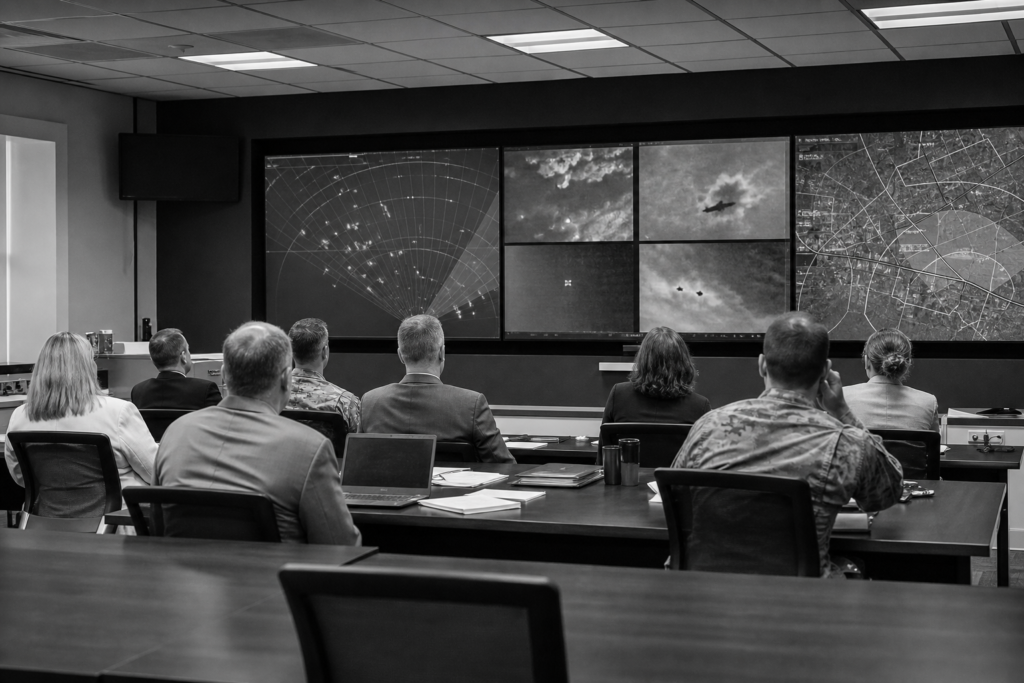
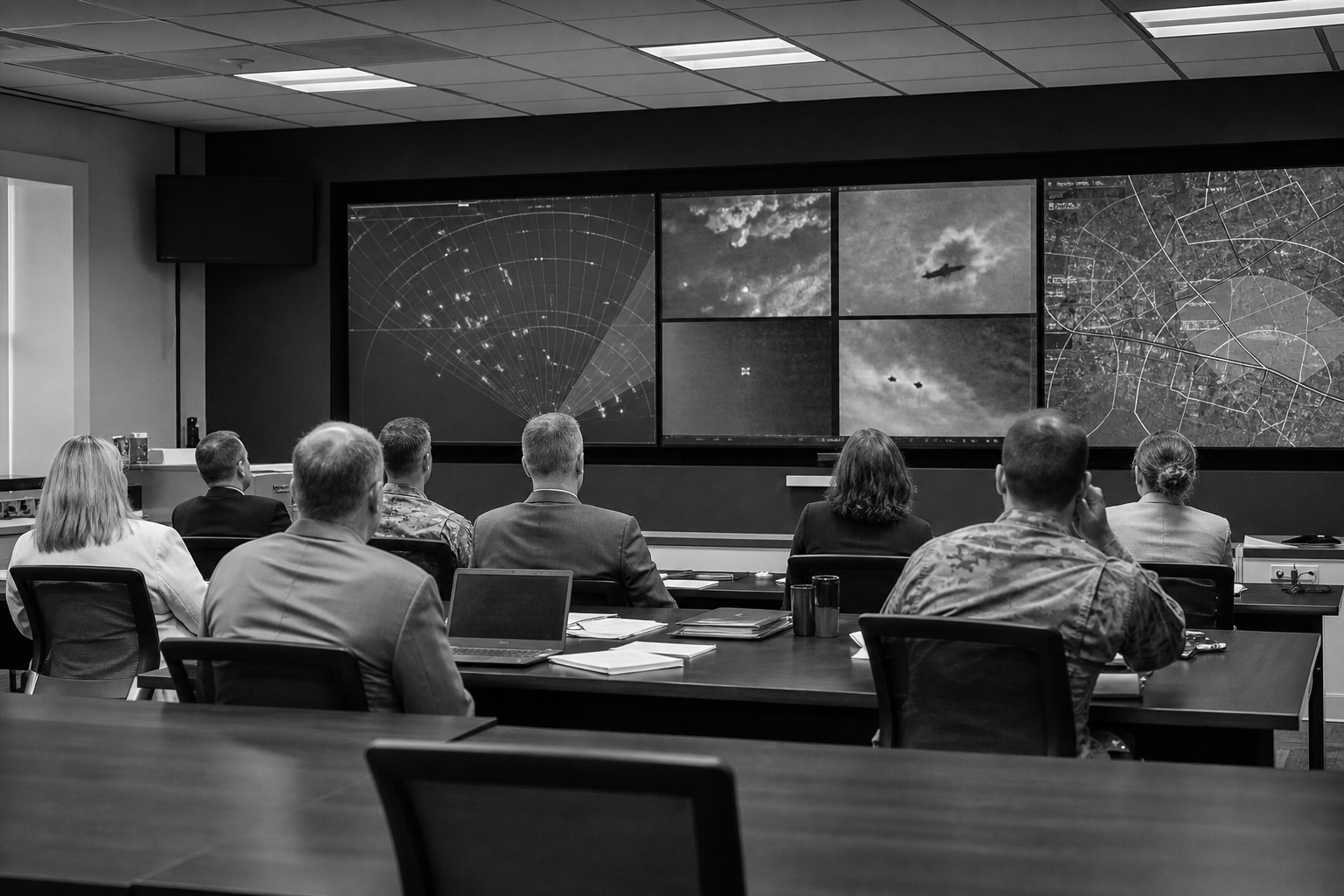
August 4, 2020 marked the public checkpoint at which the Pentagon identified a single focal point for reports involving military personnel, training ranges, and restricted airspace. The UAPTF centralized the collection, assessment, and reporting of those incidents rather than leaving them solely as separate aviation-safety or intelligence matters.
It was not the United States’ first investigation of UFO reports. The Air Force’s Project Blue Book and other military inquiries had examined sightings decades earlier. “First dedicated” is therefore best understood as shorthand for a modern, Pentagon-wide effort centered on operational military reporting, not a claim that the federal government had never studied unidentified sightings.
Its importance lay in the bridge it created: reports from training ranges and restricted airspace could be brought into a defined assessment mission and compared across the defense enterprise. That structure also helped establish an expectation of formal accounts to Congress and, within classification limits, the public. In this sense, UAP disclosure meant more consistent reporting and public accountability, not confirmation of extraordinary explanations.
Later reporting requirements and organizations expanded or replaced this framework. The task force did not determine the origin of unresolved cases; its lasting contribution was to make their collection and analysis an enduring defense, intelligence, and oversight responsibility.
When the Pentagon Established the UAPTF, and What the August 2020 Announcement Meant
August 4, 2020 is the key public date, not necessarily the first day on which Pentagon components began organizing related work. On that day, the Department of Defense announced that it had established the Unidentified Aerial Phenomena Task Force, placing a previously limited and largely nonpublic effort into an official, named framework.
The announcement came from the Office of the Under Secretary of Defense for Intelligence and Security, the senior office responsible for aligning defense intelligence and security functions. It said the task force would be led by the Department of the Navy under that office’s oversight. That arrangement reflected the Navy’s central role in the immediate precursor activity: Navy aviators and personnel had reported encounters in military operating areas, and the service had already developed a process for receiving such reports.
Thus, “UAPTF established in 2020” should be read as an institutional and public milestone. It does not mean that all Navy, intelligence, or Defense Department examination of unidentified aerial incidents began on August 4. The announcement formalized a cross-department task force around an existing operational problem and gave it a clearer reporting chain.
The August statement defined the immediate purpose narrowly: improve understanding of, and gain insight into, the nature and origins of UAP. It did not declare that the objects were extraterrestrial, nor did it promise public release of every underlying report. Its significance was more concrete: the Pentagon had created a recognized body to bring together information relevant to incidents affecting U.S. military training ranges and operations.
That is why the UAP Task Force 2020 announcement became a useful dividing line in the public record. Earlier Navy reporting practices and intelligence activity supplied the context; the August 4 action supplied an accountable Pentagon-wide focal point that could later support formal assessments and congressional reporting.
Why the Pentagon Created a Dedicated UAP Task Force
A prompt identification is the practical threshold: personnel must be able to determine whether an observation is a known aircraft, a benign object, a sensor artifact, or something that warrants further assessment. Until that question is resolved, an encounter can affect training activity, crew awareness, and the intelligence picture around military operations.
The Pentagon UAP Task Force was intended to turn scattered UAP sightings into intelligence that could be compared and assessed. Its stated work centered on detecting, analyzing, and cataloging phenomena that might pose a threat to U.S. national security. That focus, reinforced by the 2020 congressional intelligence-assessment mandate, treated reports as potential aviation-safety and counterintelligence concerns: an unknown presence near military operations could represent an ordinary object, a misread sensor return, or a capability requiring further assessment.
“Unidentified” therefore described the status of the available information, not an answer about origin. A report remained unidentified when the data available to analysts did not support a confident attribution. The important distinction is between an unresolved case and a proven extraordinary explanation: incomplete sensor coverage, limited contextual data, or conflicting observations can prevent resolution without establishing what the object was.
Centralizing the work also addressed an information-collection problem. Reports from aviators, radar systems, infrared sensors, and other military sources can carry different strengths and limitations; bringing them into a common assessment process makes it easier to spot recurring patterns, identify data gaps, and distinguish a credible security concern from an incident that lacks enough evidence for a conclusion.
In that sense, the UAPTF’s purpose was disciplined risk assessment rather than validation of sensational claims. The task force gave the Defense Department a way to treat unexplained encounters in sensitive operating areas as matters requiring better reporting, analysis, and accountability.
What the UAPTF Was Mandated to Do, and How It Operated
The operational challenge was not simply to gather more sightings, but to make unlike pieces of information usable together. A pilot’s account could establish what a crew perceived and when; radar could show a track’s location and movement; infrared imagery could record a heat signature; and other onboard or ground-based systems could add context. None of those inputs, standing alone, necessarily identified an object. Their value increased when analysts could compare timing, location, sensor settings, and surrounding operational conditions.
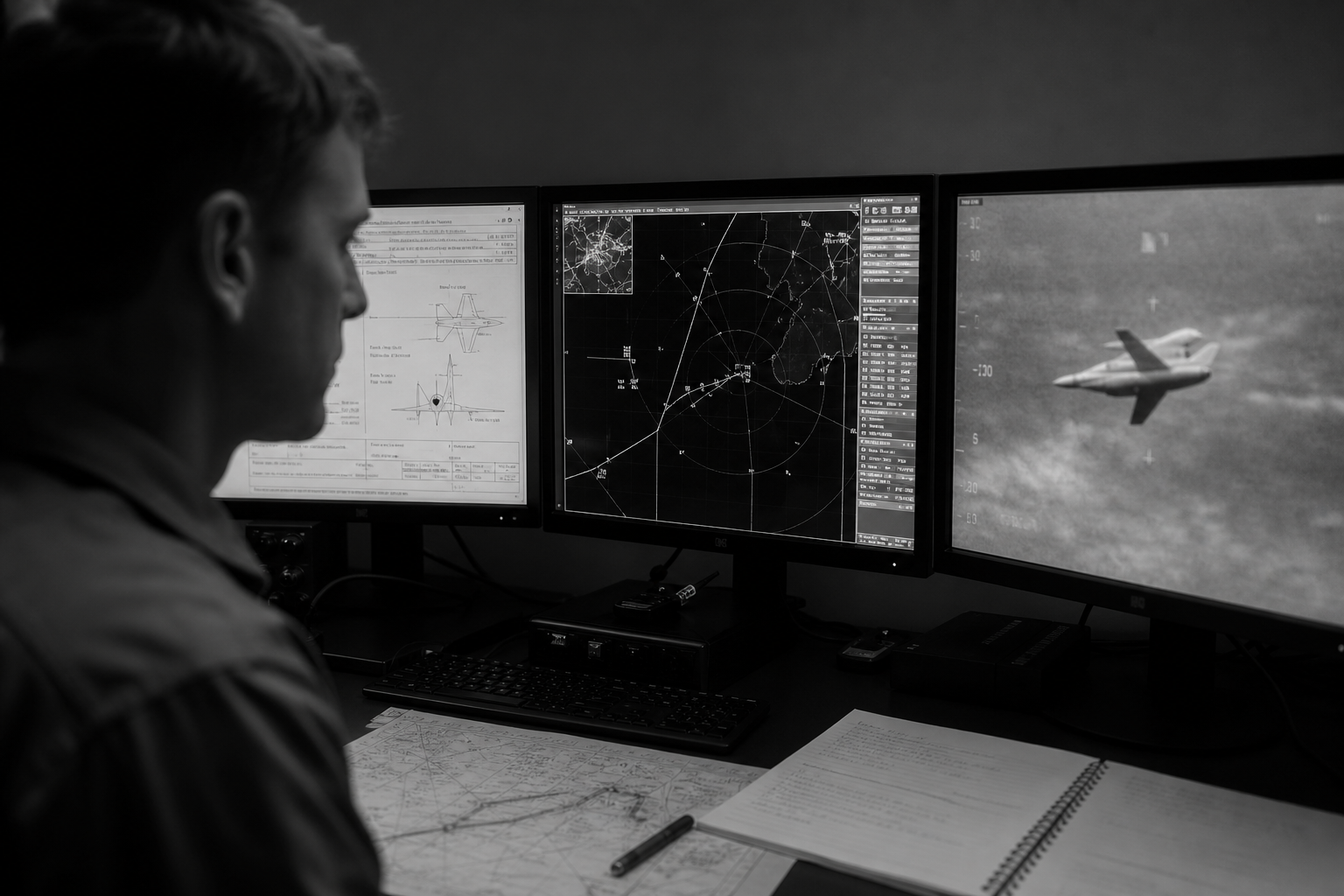
The Unidentified Aerial Phenomena Task Force functioned as an assessment and coordination body for that comparison. Its working mission was to receive and consolidate UAP reports, evaluate available intelligence and sensor data, catalog cases, and identify patterns or gaps that individual commands could not readily see. Standardized reporting mattered because a report with precise time, position, weather, platform, and sensor details is more useful for analysis than an account lacking those basics.
That process also required coordination across defense and intelligence organizations. The practical aim was to connect operational reporting with intelligence collection, so that encounters near military activity could be assessed for possible safety, security, or counterintelligence implications and elevated in assessments for senior officials and congressional oversight.
Its limits were as important as its method. Some cases lacked enough data to resolve, while relevant information could be fragmented across systems or remain classified because it revealed military capabilities, collection methods, or operating patterns. An unresolved file therefore signaled an evidentiary shortfall, not proof of a particular explanation. The UAPTF’s contribution was to make those shortfalls visible, comparable, and reportable rather than leaving them as isolated incidents.
What the UAP Task Force Found in the Public Record
Congress required the first public accounting of this work, and the result was the Office of the Director of National Intelligence’s June 2021 preliminary assessment. Drawing on 144 UAP reports made between 2004 and 2021, most from the preceding two years, the report offered a bounded snapshot of what the task force could support with the material then available.
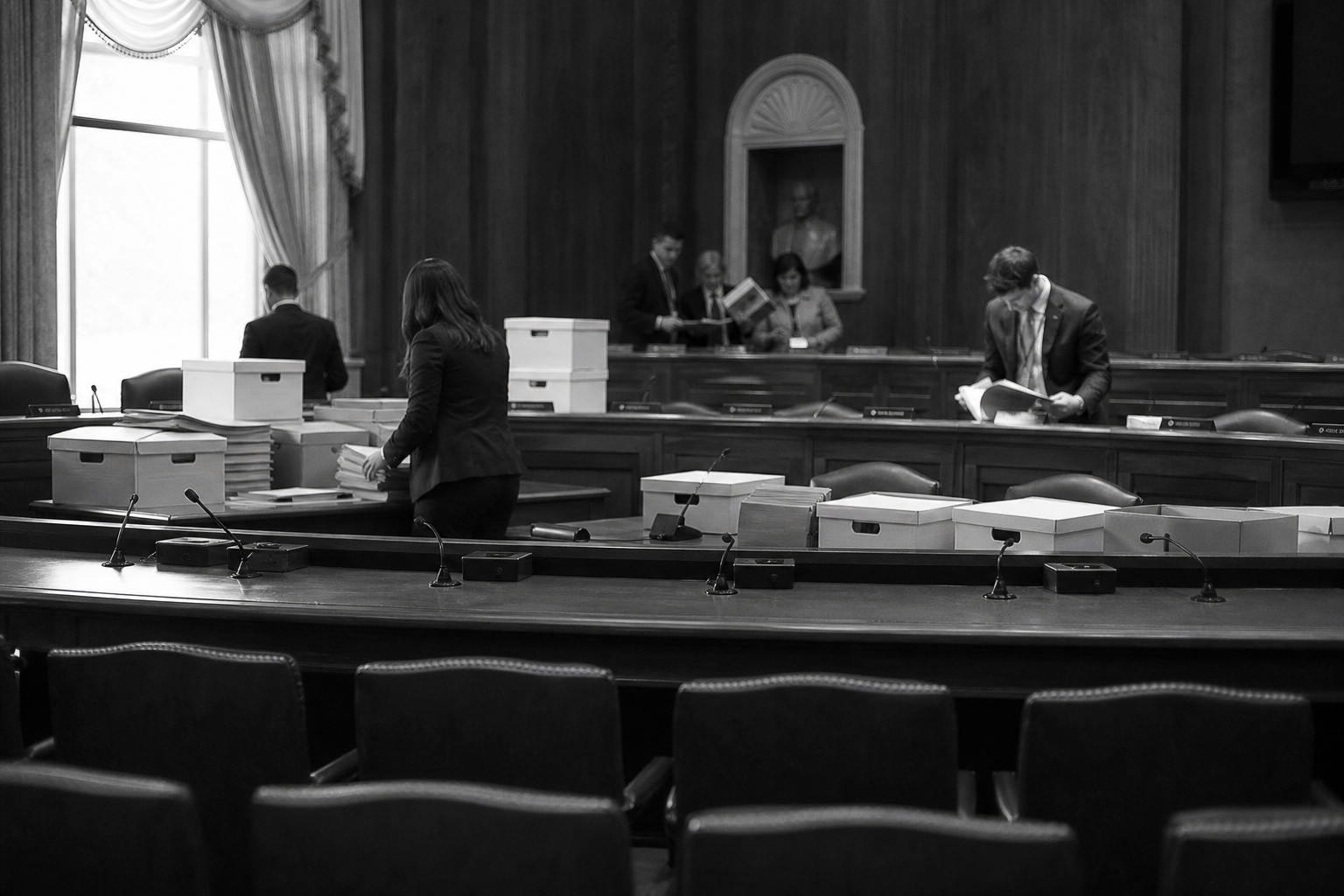
Only one report was explained with high confidence: a large, deflating balloon. The other 143 reports remained unresolved at that point, largely because available data were limited, inconsistent, or insufficient for a definitive attribution. That count described the status of analysis, not the number of confirmed physical objects or a finding that every report involved an extraordinary craft.
The assessment organized possible explanations into five analytical buckets: airborne clutter, such as balloons or debris; natural atmospheric phenomena; U.S. government or industry developmental programs; foreign adversary systems; and an “other” category for cases lacking enough information to fit elsewhere. These were working categories, not conclusions assigned to each unresolved report. Their purpose was to direct collection and analysis toward testable explanations rather than collapse unlike cases into a single theory.
Some reports appeared to show unusual movement or sensor characteristics, but the assessment cautioned that further analysis was needed. It did not establish alien craft, non-human intelligence, or any particular origin for unresolved incidents. The public release also had a classified annex, reflecting the fact that fuller case details could expose intelligence sources, sensor performance, or military operations. For readers following UFO news, the important distinction is straightforward: uncertainty in the public record was documented uncertainty, not official confirmation of a sensational explanation.
How UAPTF Differed From AATIP, Project Blue Book, and the Navy Video Cases
Names, footage, and programs are often grouped together in public discussion, but they refer to different parts of the government’s UAP history. Project Blue Book was an earlier U.S. Air Force investigation of UFO reports; it was not the 2020 Pentagon task force. AATIP, the Advanced Aerospace Threat Identification Program, was a separate former Defense Department effort associated with examining unusual aerospace-related reports. Neither label describes the later task force’s role in consolidating and assessing military reporting.
The UAPTF was the distinct 2020 framework created to bring reporting, intelligence assessment, and coordination into a named Pentagon structure. That difference matters when reading claims about “Pentagon UAP programs”: a reference to Blue Book may concern a Cold War-era Air Force inquiry, while a reference to AATIP may concern an earlier Defense Department activity rather than the task force that supported the 2021 assessment.
The Navy videos added another source of confusion. Footage commonly called the Nimitz UAP footage, Go Fast video, and Gimbal video became prominent after the Navy and Defense Department authenticated that the released clips were genuine military recordings. Authentication established the footage’s provenance; it did not identify what each clip depicted, establish extraordinary origins, or show that every related incident had been resolved. Later interest, including discussion of UFO sightings 2025, should likewise not be projected backward as a finding of the 2020 task force.
From UAPTF to AARO: Why the 2020 Task Force Still Matters
Congress turned an interim task force into a more durable oversight subject. The FY2022 National Defense Authorization Act required the Defense Department and intelligence community to establish a formal office for synchronizing UAP work and to provide recurring reports to congressional committees. That changed the practical baseline: reporting and assessment were no longer dependent solely on a temporary task force or a single preliminary assessment.
In November 2021, the Pentagon announced the Airborne Object Identification and Management Synchronization Group as the successor structure to the UAPTF. Its initial emphasis remained airborne objects, but Congress subsequently directed a broader office. In July 2022, the Defense Department renamed it the All-domain Anomaly Resolution Office, or AARO. “All-domain” is consequential: AARO’s remit extends beyond airspace to anomalous activity in space, on land, at sea, and across domains, allowing analysts to consider whether reports and sensor data intersect rather than treating every case as an isolated aerial event.
The UAPTF therefore matters less as a final answer than as the point at which recurring military reporting, formal assessments, public reporting, and congressional scrutiny became harder to unwind. Its successors inherited an expectation to collect cases systematically and explain what could be released without exposing sensitive capabilities. That institutional continuity does not establish a proven government UFO cover-up, nor does it amount to alien disclosure; it establishes a continuing mechanism for investigating unresolved reports while keeping conclusions tied to available evidence.
The UAPTF’s Lasting Impact on UAP Oversight
The June 2021 preliminary assessment illustrates what a durable oversight system requires: a repeatable path from an operational encounter to a record that analysts can compare, leaders can assess, and Congress can scrutinize. It examined 144 reports made from 2004 through 2021, identified only one with high confidence as a large, deflating balloon, and emphasized that limited, inconsistent reporting constrained resolution. The task force’s practical contribution was to make data quality, time, location, sensor information, and operational context, a central analytical issue rather than leaving unexplained incidents as disconnected anecdotes.
That distinction also gives the public a firmer way to read an unresolved case. “Unidentified” can mean that the available record is incomplete, conflicting, or insufficient for a supported conclusion; it is not a finding of a particular origin. The 2021 assessment’s five explanatory categories, ranging from airborne clutter and natural phenomena to foreign adversary systems and an “other” category, separated potential explanations from demonstrated answers.
The legacy is therefore procedural as much as investigative. Congress’s FY2022 reporting requirements and the later creation of a formal Pentagon UAP oversight office extended the model into recurring assessments and formal oversight. The task force did not resolve every case; its lasting importance is that it helped establish a more durable, evidence-based government process for collecting, analyzing, and reporting on those that remain.
Sources
Frequently Asked Questions
-
When was the UAP Task Force established?
The Pentagon publicly announced the Unidentified Aerial Phenomena Task Force on August 4, 2020. The task force was led by the Department of the Navy under oversight from the Office of the Under Secretary of Defense for Intelligence and Security.
-
What was the UAPTF created to do?
The UAPTF centralized reports involving military personnel, training ranges, and restricted airspace. Its mission was to collect, analyze, catalog, and assess UAP reports for potential aviation-safety, national-security, and counterintelligence implications.
-
Was the UAPTF the first Pentagon UFO investigation?
No. Earlier government efforts included the Air Force’s Project Blue Book and the Defense Department’s AATIP program. The UAPTF was the first modern Pentagon-wide task force specifically organized around operational military UAP reporting and assessment.
-
What did the UAP Task Force find in its 2021 assessment?
The June 2021 ODNI preliminary assessment reviewed 144 military UAP reports from 2004 through 2021. One report was identified with high confidence as a large, deflating balloon, while 143 remained unresolved because the available data were limited, inconsistent, or insufficient.
-
What is the difference between UAPTF and AARO?
The UAPTF was a 2020 task force focused on consolidating and assessing military UAP reports, especially incidents involving airspace and training operations. AARO replaced the successor UAPTF structure in July 2022 and has a broader all-domain remit covering anomalies in airspace, space, on land, and at sea.