Pentagon Creates AOIMSG in 2021: New UAP Coordination Office Established
Learn why the Pentagon created AOIMSG in 2021 as a UAP office, how it succeeded the UAP Task Force, and why it transitioned to AARO.
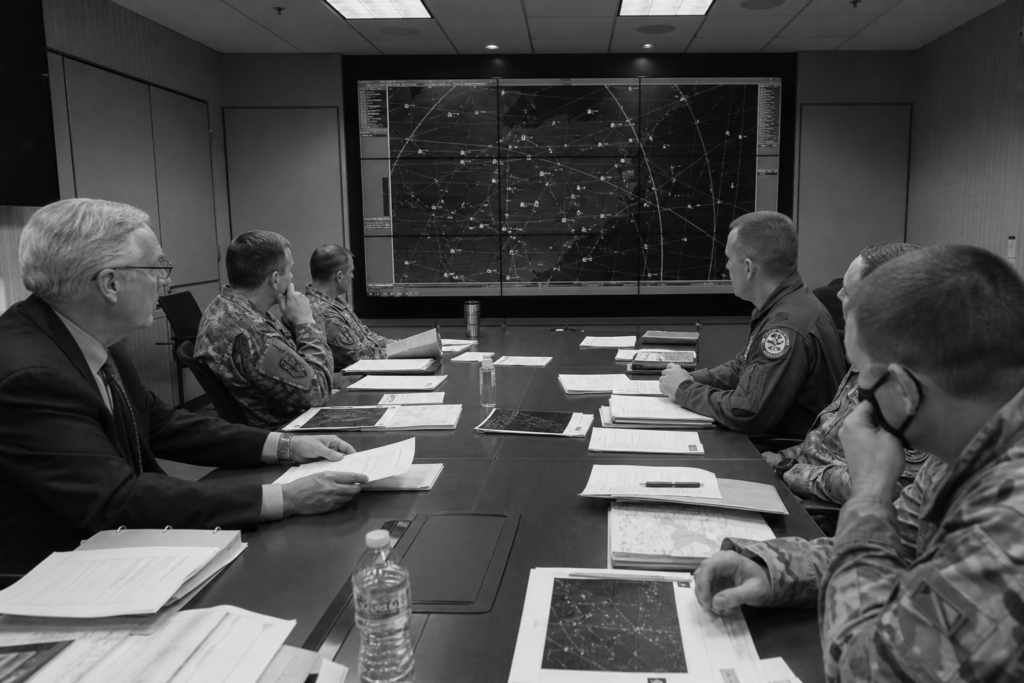
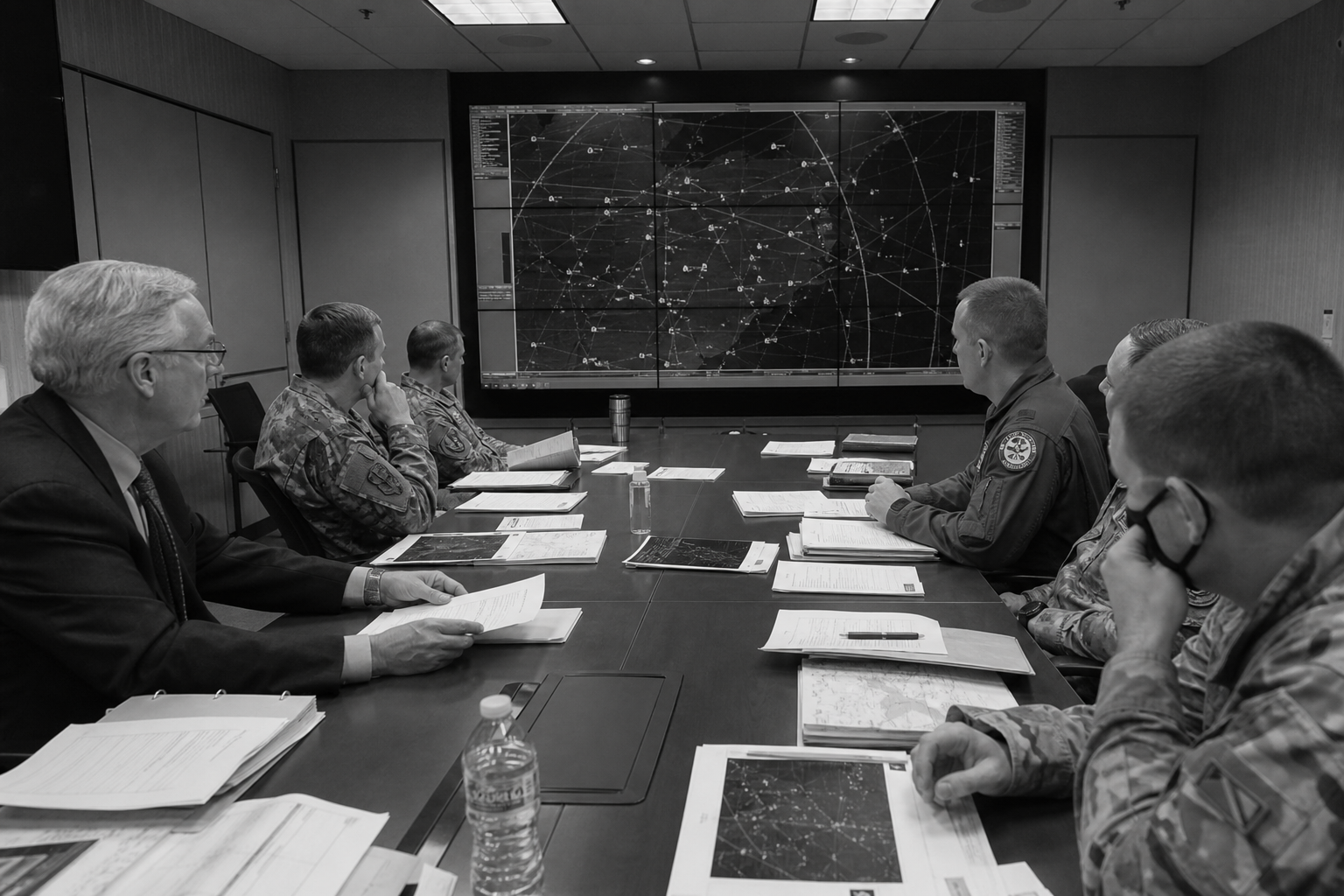
On November 23, 2021, the Pentagon established the Airborne Object Identification and Management Synchronization Group, or AOIMSG, marking a more formal effort to organize how the U.S. government addressed unidentified aerial phenomena. The name was bureaucratic, but the change mattered: rather than treating reports of unusual airborne objects as a narrowly bounded curiosity, the department framed them as an issue requiring coordinated attention across defense and intelligence bodies.
This was not an announcement that unidentified objects had an extraordinary origin. It was the creation of a UAP coordination office intended to improve the detection, identification, and management of objects in sensitive airspace, questions tied to situational awareness and the ability to distinguish a known aircraft or sensor artifact from something not yet identified.
AOIMSG also occupied a brief but consequential place in the institutional timeline. It followed the UAP Task Force, whose work had brought greater public attention to the subject, and it was itself superseded in 2022 by the All-domain Anomaly Resolution Office, or AARO. The sections that follow trace what the Pentagon announced, why it created this new coordinating structure, how its intended role differed from the task force’s, and why Congress and the Defense Department moved so quickly to a broader successor office.
What the Pentagon Announced in November 2021
Rather than announce findings about particular sightings, the November 23 statement set an administrative checkpoint: Defense Department and intelligence-community work would be brought under a single synchronizing mechanism. The Department of Defense introduced the Airborne Object Identification and Management Synchronization Group, or AOIMSG, for matters involving unidentified airborne objects, including objects observed in special-use airspace.
Deputy Secretary of Defense Kathleen Hicks directed the group to align efforts to detect, identify, and attribute objects of interest; assess associated threats; and manage the resulting information. “Unidentified” described an unresolved attribution, not a conclusion about origin. A report might ultimately involve a known aircraft, a sensor effect, or another explainable category; the announcement assigned no extraordinary explanation to such reports.
The Pentagon positioned the group as the organizational successor to the UAP Task Force. The practical change was institutional: instead of a task-force model, the new structure’s public remit emphasized shared reporting, analysis, and threat assessment across participating organizations, not public pronouncements on what UAP were.
Its tenure was brief. Congressional direction in the fiscal year 2022 defense authorization process called for a broader anomaly office, and the Defense Department announced the All-domain Anomaly Resolution Office, or AARO, in July 2022. The 2021 Pentagon UAP office thus served as the transition between the UAP Task Force and AARO.
Why the Pentagon Established AOIMSG
At its core, the rationale was risk management in airspace where military training and other sensitive operations occur. Special-use airspace is airspace designated for activities that may require restrictions or heightened control, such as military exercises. An object that cannot promptly be identified in that environment can complicate flight-safety decisions and raise a national-security question: is it benign, a conventional platform, a collection system, or something else requiring a response?
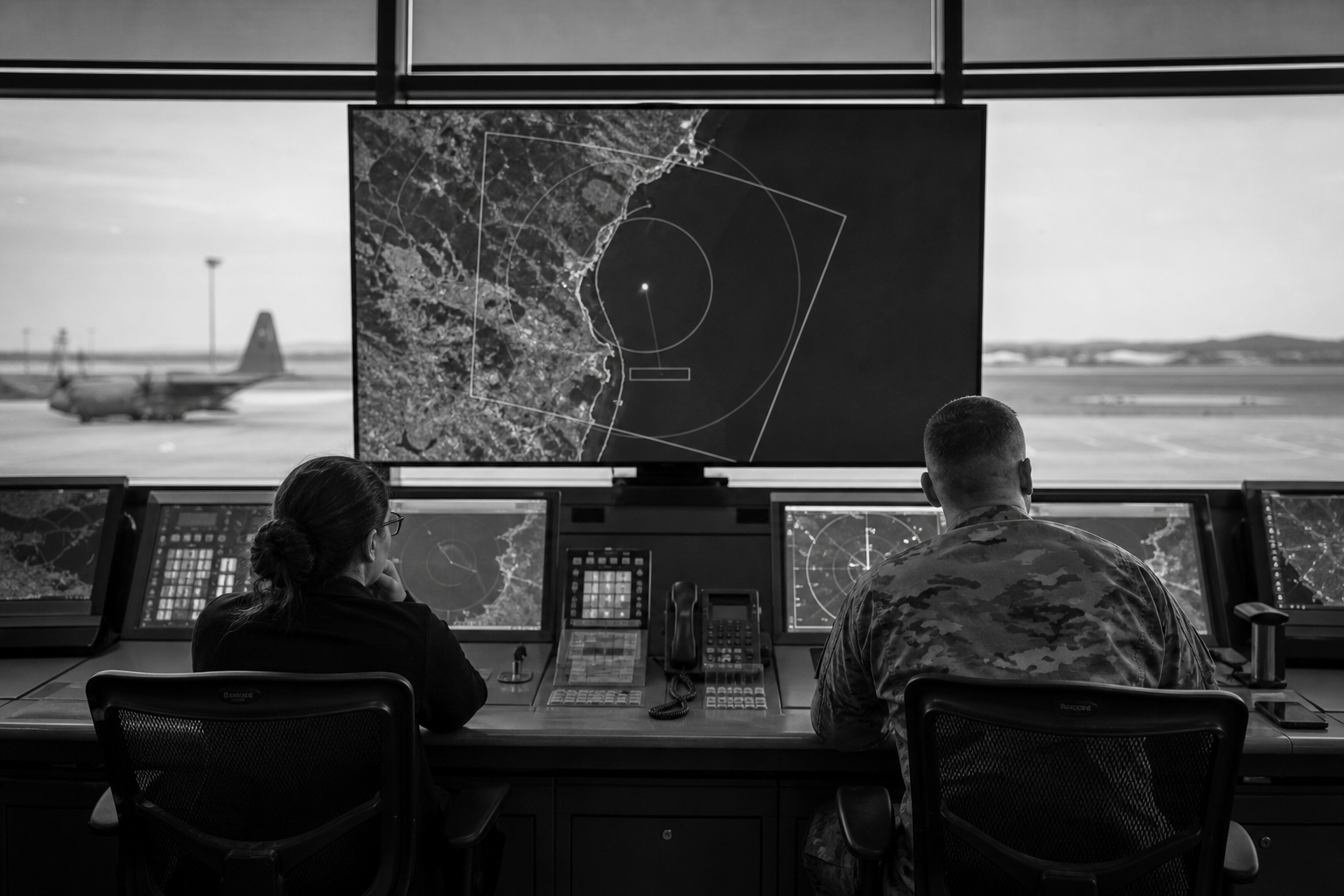
The Pentagon’s stated emphasis was therefore on improving the practical chain from detection to assessment. Detection means noticing an object through sensors or observation; identification means determining what it is; management means ensuring the relevant report and analysis reach the organizations able to evaluate a possible threat. A weak process leaves isolated reports in separate channels. A stronger one connects reporting, technical analysis, intelligence assessment, and operational awareness so that uncertainty can be reduced or appropriately tracked.
That need also explains the shift away from the UAPTF. The task force had concentrated attention on the subject, but the new arrangement was intended to synchronize continuing Defense Department and intelligence-community work rather than treat each report as a stand-alone curiosity. Public references to a “Pentagon UFO office” can obscure that administrative purpose. The existence of an office to handle unresolved military UAP reports establishes that officials considered unresolved airborne-object reports worth organizing and assessing; it does not establish the identity, origin, or capabilities of any particular object.
Public speculation about a government cover-up addresses a different proposition. The November 2021 action announced an operational coordination mechanism and identified flight safety and national security as concerns. It did not disclose a finding that unidentified reports represented extraterrestrial craft, nor did it validate broader claims about hidden programs. Its later replacement by AARO reflects an institutional redesign, not a public determination of what the reported objects were.
What AOIMSG Was Intended to Do
The practical design was one of synchronization rather than a separate, publicly described field-investigation service. The November 2021 directive placed oversight of the effort with the Office of the Under Secretary of Defense for Intelligence and Security, while calling for participation by the Joint Staff and other relevant Defense Department components. That arrangement linked intelligence, operational, and policy functions: each could retain its own responsibilities while contributing to a common approach for reports that crossed organizational boundaries.
In that model, synchronization meant more than collecting sightings in one inbox. A report could require operational context from the military unit that encountered an object, sensor or technical information from the organization that recorded it, and intelligence analysis bearing on possible attribution. “Attribution” is the step of connecting an object or event to a known source or actor when the available information permits it. The intended benefit was to reduce duplication, ensure that relevant information reached the right officials, and make unresolved cases visible as continuing issues rather than isolated anecdotes.
The group’s title also described a sequence of work. Identification concerned determining what an observed object was; management concerned handling the information and any associated response after identification remained incomplete or raised a concern. Those functions are distinct. An object can remain unidentified because available data are insufficient, while its report may still need to be managed for operational awareness, threat assessment, or further analysis. Neither outcome inherently implies an unusual or extraordinary explanation.
For readers assessing the scope of this new UAP coordination office, the important limit is what the public announcement did, and did not, show. It set out a leadership and coordination framework under the intelligence-and-security office, with Joint Staff and component involvement. It did not publicly describe a fully developed independent operational organization, disclose a permanent staffing model, or detail case-by-case investigative authorities. The public record therefore supports a narrower conclusion: AOIMSG was intended to align existing Defense Department and intelligence-community work around airborne-object incidents, not to demonstrate that all such work had already been centralized in a mature stand-alone bureau.
How AOIMSG Differed From the UAP Task Force
The difference was chiefly one of organizational emphasis. The UAP Task Force, commonly shortened to UAPTF, was created to improve the Defense Department’s understanding of unidentified aerial phenomena and to develop a clearer account of their nature and possible origins. Its work fed the June 2021 preliminary assessment to Congress, which examined 144 reported incidents and found that most could not be conclusively characterized with the information then available.
AOIMSG, by contrast, was announced in November 2021 as the successor arrangement and was framed around synchronizing ongoing work: detection, identification, attribution, threat assessment, and information management. That wording put greater weight on connecting the organizations that hold operational reports, sensor data, intelligence, and policy responsibility. The practical distinction is that a task force can concentrate expertise on a defined analytical problem, while a synchronization group is designed to make activity across multiple components more coordinated and durable.
There was substantial continuity. Both bodies formed part of the Pentagon’s evolving response to aerial reports that could not immediately be resolved, and both reflected the view that such reports could matter for flight safety, intelligence, and national security. The change did not mean that every incident would receive a new explanation; it changed how the department intended to organize the work of reaching one.
Nor should the succession be read as a UAP disclosure of confirmed extraordinary phenomena. The public descriptions of neither the UAPTF nor AOIMSG announced evidence of extraterrestrial or non-human activity, crash-retrieval programs, or reverse-engineering efforts. Their stated missions concerned unresolved observations and the government’s capacity to assess them. AOIMSG’s brief tenure ended when the Defense Department created AARO in 2022, expanding the institutional model again.
What Happened to AOIMSG: The Transition to AARO
Section 1683 of the fiscal year 2022 National Defense Authorization Act set the next institutional checkpoint. Enacted in December 2021, it directed the Defense Department to establish an office with department-wide responsibilities for coordinating detection, identification, attribution, and scientific characterization of reported phenomena and related transmedium objects. That statutory direction followed the November 2021 group’s creation and pointed the Pentagon toward a broader organizational model.

The change in scope was substantive. An airborne-object model centers on observations in the air, particularly where military operations may be affected. The later all-domain model encompassed anomalous, unidentified objects in space, in the air, at sea, and across more than one environment. “Transmedium” describes an object or observation associated with movement between domains, for example, an apparent transition between air and water, not a conclusion about the object’s identity. The expanded remit was designed to avoid splitting relevant reports among separate air, maritime, space, and intelligence channels.
On July 20, 2022, the Department of Defense announced the establishment of the All-domain Anomaly Resolution Office, or AARO, to carry out that wider coordinating role. The Pentagon described the office as synchronizing efforts across the department and other federal agencies to detect, identify, attribute, and mitigate objects of interest near military installations, operating areas, special-use airspace, and other areas of interest.
The chronology is decisive: the November 2021 successor arrangement to the UAP Task Force was no longer the Pentagon UAP office after AARO was established in July 2022. AARO replaced it with a statutory, all-domain framework. That replacement expanded how unresolved observations were to be organized and assessed; it did not establish that any particular observation had an extraordinary explanation.
Why AOIMSG Still Matters in the UAP Policy Timeline
Its importance lies less in its short lifespan than in what it reveals about the changing government response to anomalous reports. AOIMSG marked the point at which the Pentagon shifted from a task-force effort toward a more durable coordination model linking airspace observations, reporting channels, threat assessment, and oversight and analysis across organizations.
The institutional sequence is straightforward: the UAP Task Force produced the June 2021 preliminary assessment; the Pentagon announced the Airborne Object Identification and Management Synchronization Group in November 2021; Congress then required a broader all-domain office in the fiscal year 2022 defense law; and the Department of Defense established AARO in July 2022. The progression matters because each step widened or formalized the machinery for handling reports, rather than supplying a single explanation for them.
That distinction is the essential evidentiary takeaway. An unidentified report is a report not yet adequately characterized on the available information. It may warrant better sensor data, corroboration, and analytic attention, but institutional concern does not establish that an object was extraordinary, extraterrestrial, or even a discrete physical craft.
AOIMSG should therefore be treated as a historical bridge, not as an active Pentagon office. Readers seeking current UAP news, or official material sometimes described as UFO news, should follow AARO publications, Defense Department releases, and later congressionally required reporting. Those records address the subsequent all-domain framework; they do not revive the 2021 group or convert its creation into proof of any particular cause behind unresolved incidents.
Frequently Asked Questions
-
What was AOIMSG?
AOIMSG was the Airborne Object Identification and Management Synchronization Group, created by the Pentagon to coordinate detection, identification, attribution, threat assessment, and information management for unidentified airborne objects. It focused on reports involving sensitive and special-use airspace.
-
When did the Pentagon create AOIMSG?
The Pentagon announced AOIMSG on November 23, 2021. Deputy Secretary of Defense Kathleen Hicks directed the group as the successor to the UAP Task Force.
-
What did AOIMSG investigate?
AOIMSG coordinated the assessment of unidentified airborne objects, especially those detected near military operations and in special-use airspace. Its mission included determining whether reports involved known aircraft, sensor effects, possible threats, or objects that remained unresolved.
-
Why did the Pentagon replace the UAP Task Force with AOIMSG?
The Pentagon replaced the UAP Task Force with AOIMSG to create a more durable coordination structure across Defense Department and intelligence organizations. AOIMSG emphasized shared reporting, sensor analysis, attribution, threat assessment, and operational awareness rather than a stand-alone task force model.
-
Was AOIMSG the same as AARO, and which UAP office should people follow now?
AOIMSG was not the same as AARO. AOIMSG covered airborne objects from November 2021 until AARO was established on July 20, 2022; AARO has a broader all-domain remit covering anomalies in air, space, sea, and transmedium environments, so current official UAP information should be sought from AARO and Defense Department releases.