Japan’s Defense Minister Issues Reporting and Recording Instructions for Unidentified Objects in 2020
Learn how Japan UAP encounter protocols 2020 directed the Self-Defense Forces to document and report unknown aerial objects, and what the policy proves.
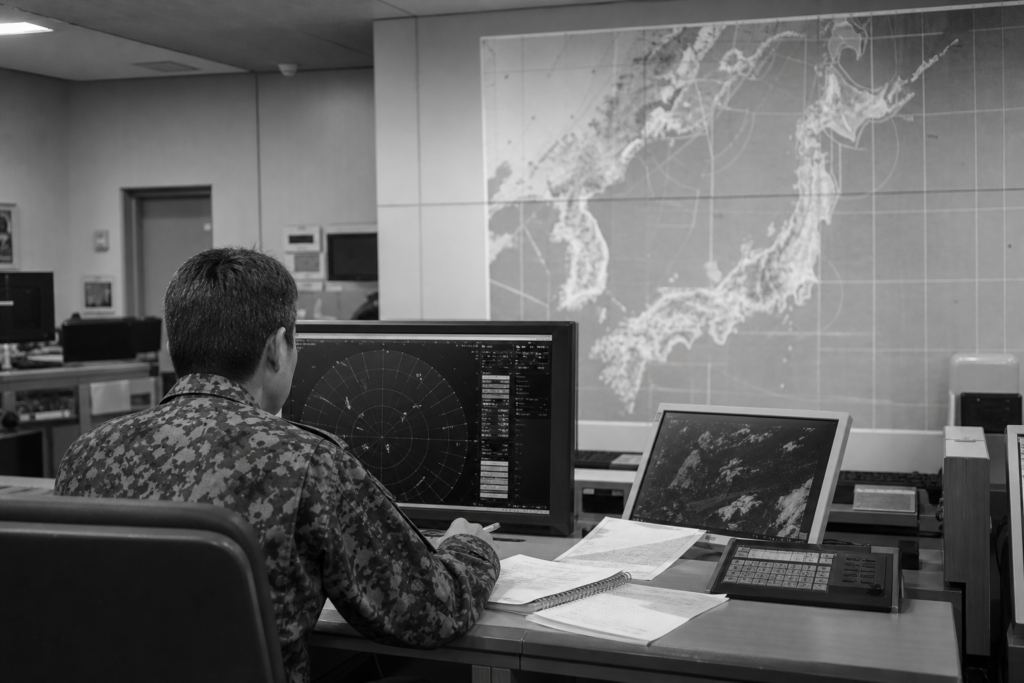
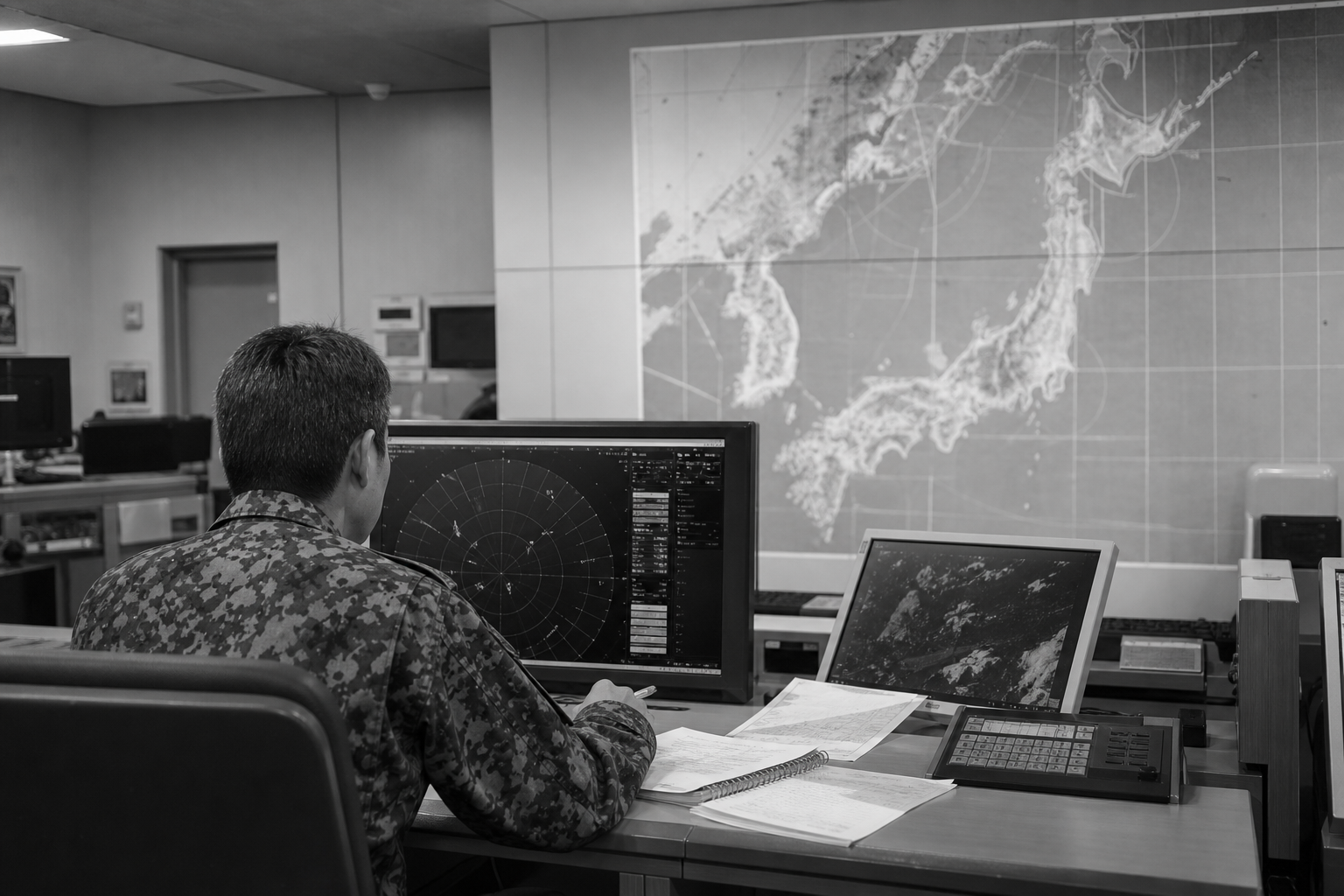
In September 2020, Defense Minister Taro Kono directed the Japan Self-Defense Forces to standardize their response when personnel encountered an unidentified object in Japanese airspace. The resulting Japan UAP encounter protocols 2020 were an instruction for military observation, evidence collection, reporting, and command-level assessment, not an announcement that Japan had identified extraordinary aircraft.
For personnel, the distinction mattered. An unidentified aerial observation describes an object whose identity cannot yet be established; it does not establish where the object came from, who operated it, or whether it displayed unusual capabilities. The guidance therefore emphasized practical actions: observe the object when feasible, preserve photographs or video and relevant details, report through the proper chain, and escalate information that could bear on airspace security.
This article examines the official Japanese record in that order: what the JSDF was told to do, why a consistent reporting process mattered to defense planners, and what cautious conclusions the policy can, and cannot, support. Its significance lies in putting an unusual category of observation inside routine national-security administration.
What Japan’s Defense Minister Announced in September 2020
Preparing a reporting chain was the specific step Taro Kono described at his 14 September 2020 press conference. Then Japan’s defense minister, Kono said he had instructed the military to prepare procedures for an encounter with an unidentified flying object.
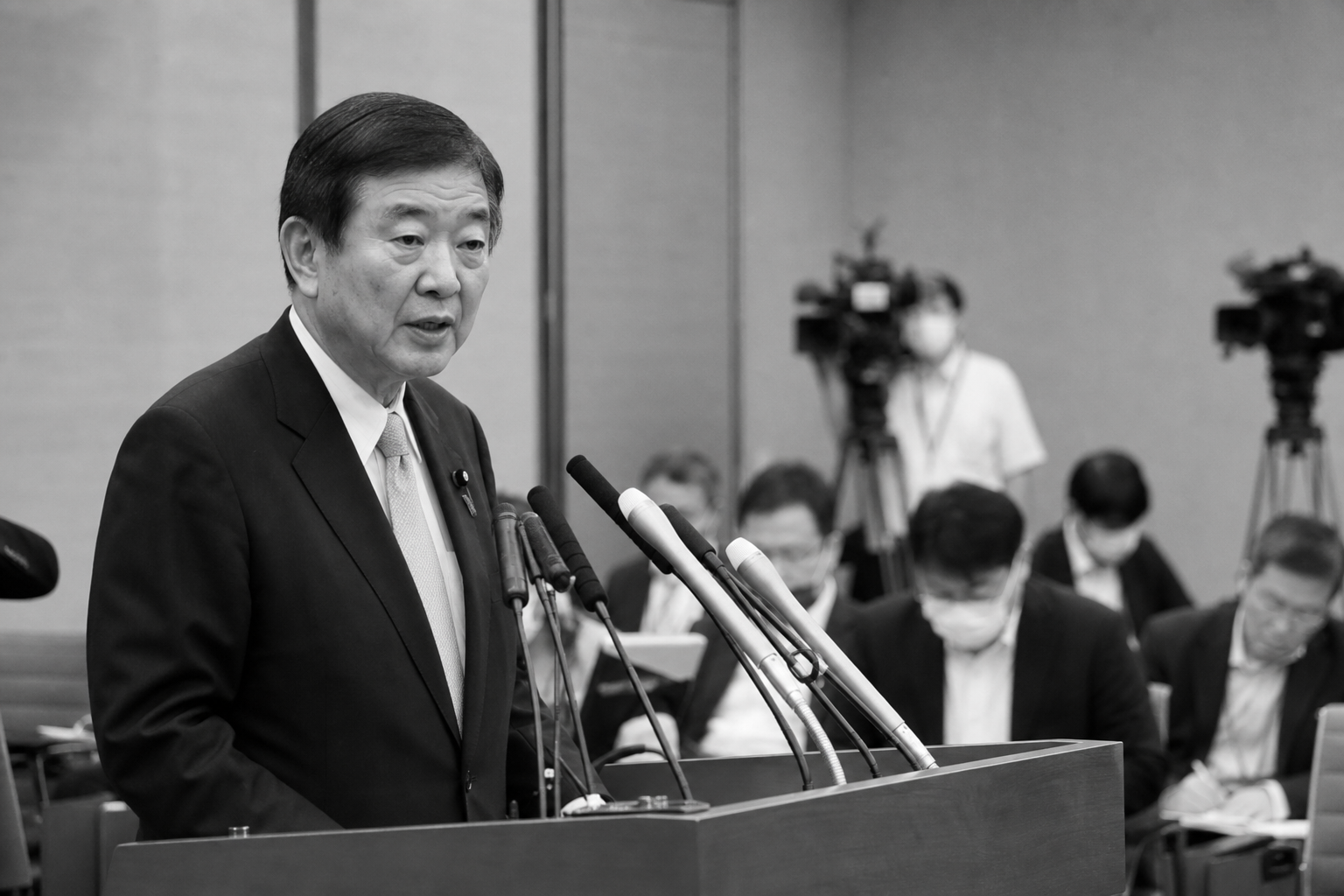
The Japan Ministry of Defense used the term mikakunin hikō buttai, literally “unidentified flying object.” It identified a classification problem, an aerial object not yet identified, not a conclusion about origin, operator, or unusual technology. Kono’s direction was consequently framed as a preparedness measure: an unexpected sighting needed a defined route for observation, recordkeeping, and transmission within the defense organization.
That distinction changes how the announcement should be read. A formal procedure can preserve the basics needed for later assessment, including the time and place of an observation, imagery if available, and the observer’s account. Without an established process, those details can remain disconnected and fail to reach officials evaluating possible implications for airspace security.
Nothing in Kono’s public remarks identified a particular craft, attributed an encounter to a foreign state, or confirmed an extraterrestrial explanation. The September decision was not an alien-disclosure event; it put unidentified aerial reports into a more consistent administrative and operational framework.
What the Japan Self-Defense Forces Guidance Required
An encounter procedure is useful only if it preserves a chain of information from the person who first sees an object to the officials able to assess it. In practical terms, that means recording the basic circumstances of an observation, time, location, direction of travel, apparent behavior, weather, and the observer’s account, before those details are lost or blended with later interpretation.
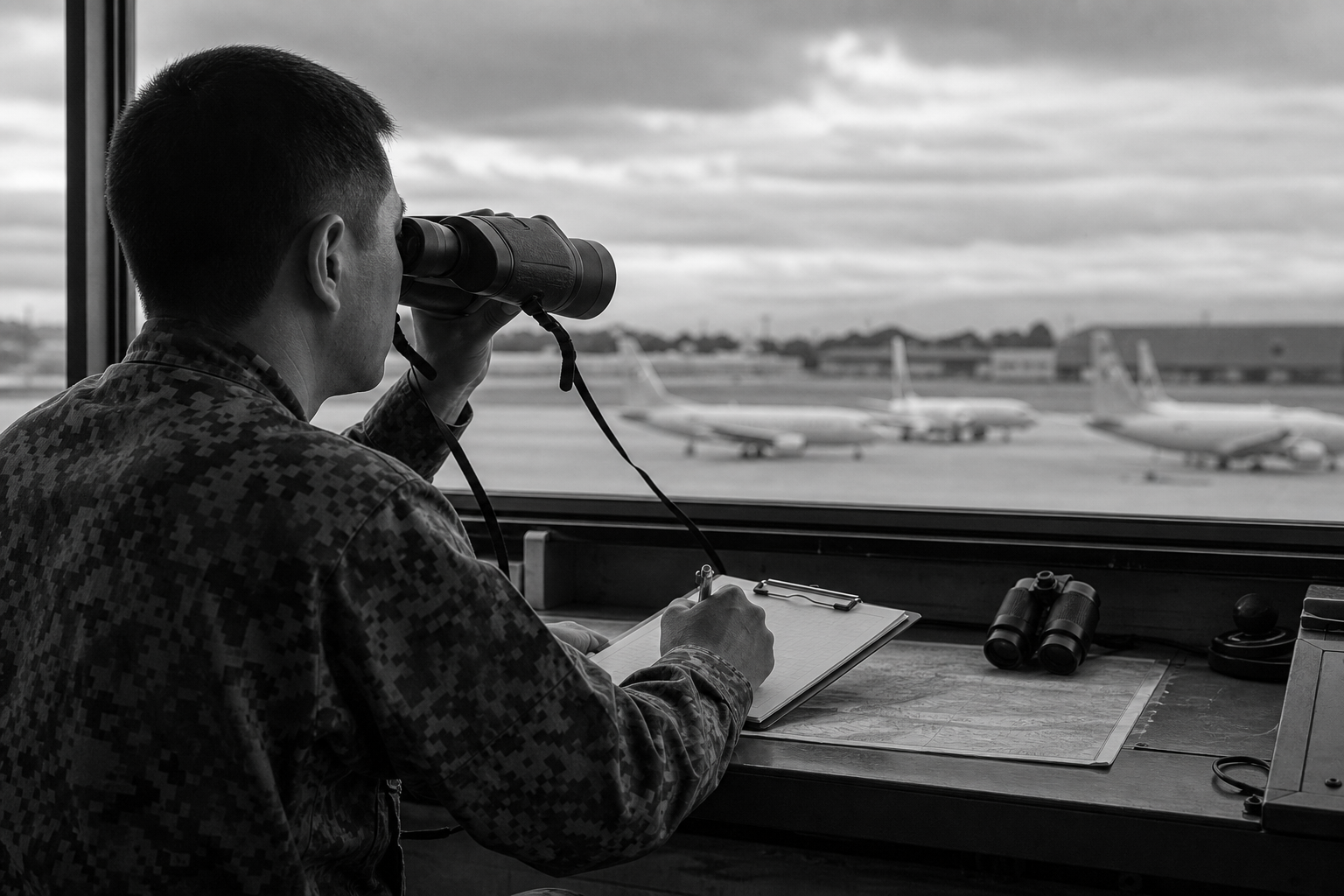
Visual observation is one part of that record, not a substitute for it. Where personnel can safely observe an object, a contemporaneous description can capture features that a sensor readout may not: apparent shape, lights, color, movement, altitude estimate, and whether the object was visible continuously or only briefly. Photographs or video, if obtained, add a reviewable record, but their value depends on retaining context such as when and where they were taken and what equipment produced them.
Relevant operational information can also matter. Radar tracks, communications logs, aircraft status, and other available sensor data may help analysts compare a reported sighting with known flights, weather effects, or other activity. The important distinction is between preserving raw material for later assessment and treating an initial report as a conclusion about what the object was.
The Japan Self-Defense Forces UAP reporting procedures described in the 2020 announcement were meant to move such information through command channels and ultimately to the Ministry of Defense. Escalation does not turn every sighting into a national emergency; it gives the ministry an opportunity to combine separate observations and determine whether further assessment is warranted.
Just as important, evidence collection is not an instruction to pursue, intercept, engage, or shoot down an unidentified object. Those are separate operational decisions governed by the circumstances of an airspace event and the authorities available to commanders. Japan’s Self-Defense Forces UFO guidelines, as publicly characterized, centered on observation, recording, and reporting, not a standing order to use force against something unidentified.
Why Japan Issued the Protocols
A useful report begins with an identification problem: can the observed object be matched to known aircraft, routine activity, or another ordinary explanation? Time, location, direction of travel, and supporting sensor material give commanders a basis for that assessment; an unexplained recollection without those particulars does not. That is the practical connection between evidence handling and airspace security.
Defense Minister Taro Kono’s direction at his 14 September 2020 press conference addressed that need for usable information. Kono said he had instructed the military to prepare procedures for an encounter with an unidentified flying object, while also saying that Japan had not confirmed such an encounter. The intended result was that an unusual observation could reach the Ministry of Defense in a form that permitted officials to decide whether it affected airspace security or warranted further assessment as a national-security matter.
The policy did not assign a presumed origin to unidentified aerial phenomena. Instead, it addressed the institutional gap that can arise when a sighting is handled informally: the observer’s account, radar information, and command assessment can remain separate. A disciplined report preserves the difference between what was observed and what analysts later infer, including whether the object can be associated with known aviation, atmospheric conditions, or other activity. The 2020 release of Navy UAP videos likewise did not establish a presumed origin.
Developments in the United States were relevant contemporaneous context, not proof of a coordinated policy. On 14 August 2020, the U.S. Department of Defense publicly announced the Unidentified Aerial Phenomena Task Force, describing its purpose as improving understanding of, and gaining insight into, the nature and origins of UAP. That visible attention helps explain why Japanese reporters raised the subject with Kono the following month. It does not show that Washington required Japan to act, or that Japan’s 2020 decision resulted from later disclosure controversies.
What the Policy Does, and Does Not, Prove
The key checkpoint is whether an observation was ever identified. A military can establish a reporting process because overlooking an ambiguous object may carry consequences, even when reports are rare and their explanations remain unresolved. The measure shows that Japan’s defense establishment considered consistent handling of unusual aerial observations worthwhile; it does not show that a confirmed UAP incursion had occurred.
Three categories must remain separate. An unidentified observation is an object or event not immediately classified from the information available. An airspace violation is a determination that an aircraft or other object entered protected airspace without authorization. Attribution goes further, identifying what the object was and who operated it. A photograph, radar track, or eyewitness report can trigger the first category without establishing either of the latter two.
That distinction prevents the 2020 policy from being read as UFO disclosure or alien disclosure. The public announcement concerned procedures for encounters and reporting. It did not announce confirmed non-human intelligence, recovered exotic technology, an extraterrestrial vehicle, or an identified foreign platform. Nor does the absence of publicly released encounter details support an inference that such evidence existed.
The more modest conclusion is also the defensible one: Japan created a repeatable way to retain observations long enough for assessment. Governments routinely plan for uncertain events, unidentified aircraft, unexplained sensor returns, or unfamiliar objects because uncertainty itself can be operationally important. A procedure improves the quality of the eventual answer; it does not predetermine that answer.
The Practical Significance: Better Evidence, Better Decisions
The operational payoff is consistency at the moment uncertainty is highest. Personnel no longer have to improvise whether an unusual observation is worth passing upward or what details may matter. A useful reporting protocol fixes the initial account in time: where the object appeared, how long it was visible, its apparent course, the observing platform’s position, and any imagery or sensor indications available at the time.
That contemporaneous record is stronger than a later recollection. A weak signal might be a single description that an object “moved strangely”; a stronger one pairs that description with time stamps, location, weather conditions, viewing angle, and any relevant radar or video record. Centralized reporting and assessment can then compare reports from different personnel and systems rather than asking one observer to settle the object’s identity alone.
It also makes pattern analysis possible. Similar UAP sightings can be grouped by place, altitude, timing, and reported characteristics, then tested against ordinary explanations: scheduled or unidentified aircraft, drones, balloons, atmospheric effects, optical illusions, and sensor artifacts. The point is not to force every report into a conventional category, nor to preserve every ambiguity as extraordinary. It is to separate observations that can be resolved from those that require further attention.
Better internal evidence does not necessarily mean greater public visibility. Military observations may involve surveillance methods, sensor capabilities, readiness procedures, or information shared among agencies. For that reason, a disciplined reporting process can improve decision-making without producing a public case file for each incident. The practical significance of Japan’s 2020 approach lies in that institutional capacity: retaining usable information, evaluating it at the appropriate level, and avoiding conclusions that outrun the evidence.
Political Significance and the Limited U.S. Comparison
The political shift was one of vocabulary and responsibility. By directing the Self-Defense Forces to handle unidentified aerial observations through established defense channels, Taro Kono made the subject discussable as an airspace and information-management issue rather than as a claim about extraordinary technology. That framing gave officials a disciplined public position: an object could be unidentified, worth recording, and potentially relevant to security without its origin being assumed.
The contemporaneous U.S. comparison is useful, but it is not a claim of a shared program. In 2020, the U.S. Department of Defense publicly acknowledged a UAP Task Force intended to improve its understanding of unidentified aerial phenomena and associated threats. Japan’s September action likewise emphasized obtaining observations for assessment. In both cases, the immediate institutional value lay in collecting information before reaching conclusions.
The structures were nevertheless different. Japan’s measure was a defense-ministry direction concerning how its own personnel should respond to an encounter, while the U.S. task force was an analytical effort within the Pentagon’s intelligence and defense apparatus. Their public practices also differed: an internal military reporting process does not require publication of individual reports, whereas U.S. UAP activity later became tied to formal public reporting and congressional attention. Similar subject matter did not create identical authority, scope, or transparency obligations.
Later institutions should not rewrite that chronology. The Pentagon UFO office terminology and AARO UAP responsibilities belong to subsequent U.S. developments, not to the cause of Japan’s 2020 guidance. The lasting significance of Japan’s decision is narrower: it put an unusual category of aerial observation into ordinary defense administration while leaving the identity of any particular object open to evidence. Later, UAP discussion entered Japanese political institutions without changing what the 2020 military guidance established.
What Japan’s 2020 UAP Protocols Ultimately Mean
A record is most valuable when it preserves the difference between an observed fact and an explanation. Japan’s 2020 measure placed unusual aerial encounters within a defined Self-Defense Forces reporting framework so that an observation could become usable material for the officials responsible for assessing it.
A standardized report improves the quality of the response: it can separate what was seen or detected from what an observer thought it might be, retain imagery and relevant operational details where available, and move the account through a command chain rather than leaving an isolated anecdote. That supports airspace security because commanders can weigh a contemporaneous report against other information before deciding whether an event is routine, remains unresolved, or needs further attention.
The Japan UAP encounter protocols 2020 therefore matter as an administrative and political choice to handle uncertainty without sensationalism. They did not establish a proven threat, identify a foreign platform, or confirm an extraordinary origin. They established that unidentified aerial observations warranted disciplined military reporting, with evidence, not assumption, guiding the next assessment.
Sources
Frequently Asked Questions
-
What UAP encounter protocols did Japan issue in 2020?
In September 2020, Defense Minister Taro Kono directed the Japan Self-Defense Forces to prepare standardized procedures for unidentified aerial encounters. Personnel were to observe when feasible, preserve evidence such as photos, video, and sensor data, and report information through command channels to the Ministry of Defense.
-
Who was Japan’s defense minister when the UFO reporting guidance was issued?
Taro Kono was Japan’s defense minister when the guidance was announced on 14 September 2020. He said the military had been instructed to prepare procedures for encounters with unidentified flying objects.
-
Did Japan’s military receive orders to shoot down UFOs?
No. Japan’s 2020 guidance focused on observation, documentation, evidence preservation, reporting, and command-level assessment, not interception, engagement, or use of force.
-
What information should Japan Self-Defense Forces personnel record during a UAP sighting?
Reports should preserve the time, location, direction of travel, apparent behavior, weather, observer account, and available photos or video. Relevant radar tracks, communications logs, aircraft status, and other sensor data can also support later identification and airspace-security assessment.
-
How did Japan’s 2020 UAP policy compare with the U.S. military approach?
Japan created an internal Defense Ministry reporting procedure for Self-Defense Forces encounters, while the U.S. Department of Defense announced its Unidentified Aerial Phenomena Task Force on 14 August 2020. Both emphasized gathering information before drawing conclusions, but Japan’s measure was a military reporting direction rather than a Pentagon analytical task force.