DoD IG Report 2024: Pentagon’s UAP Gaps Could Endanger National Security
Explore the DoD IG UAP report 2024, its documented Pentagon oversight gaps, national-security risks, recommendations, and key limits.
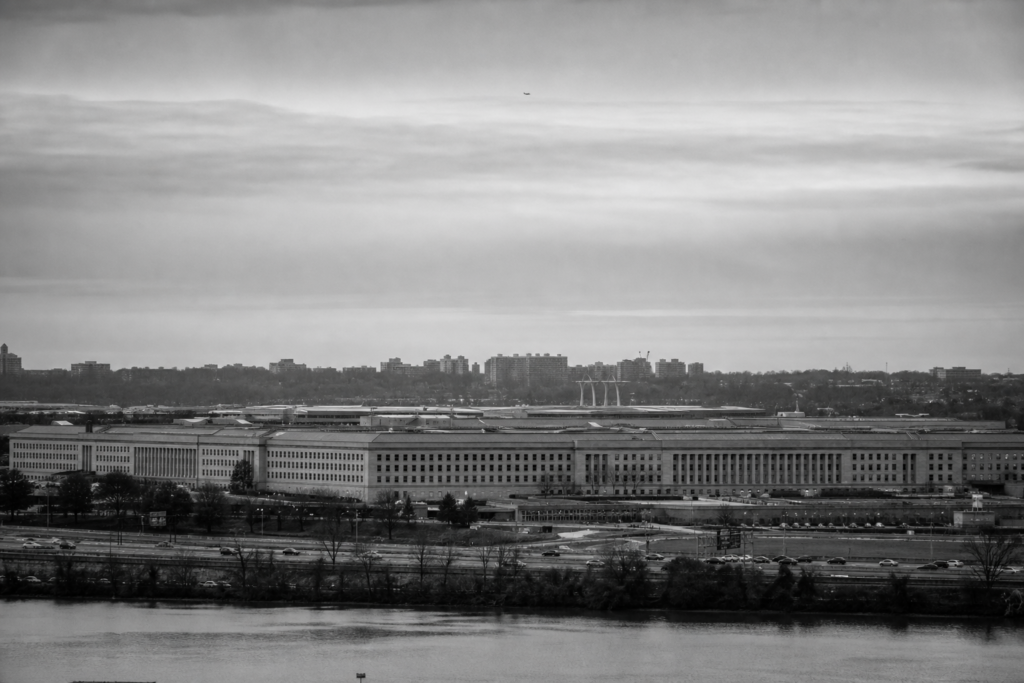
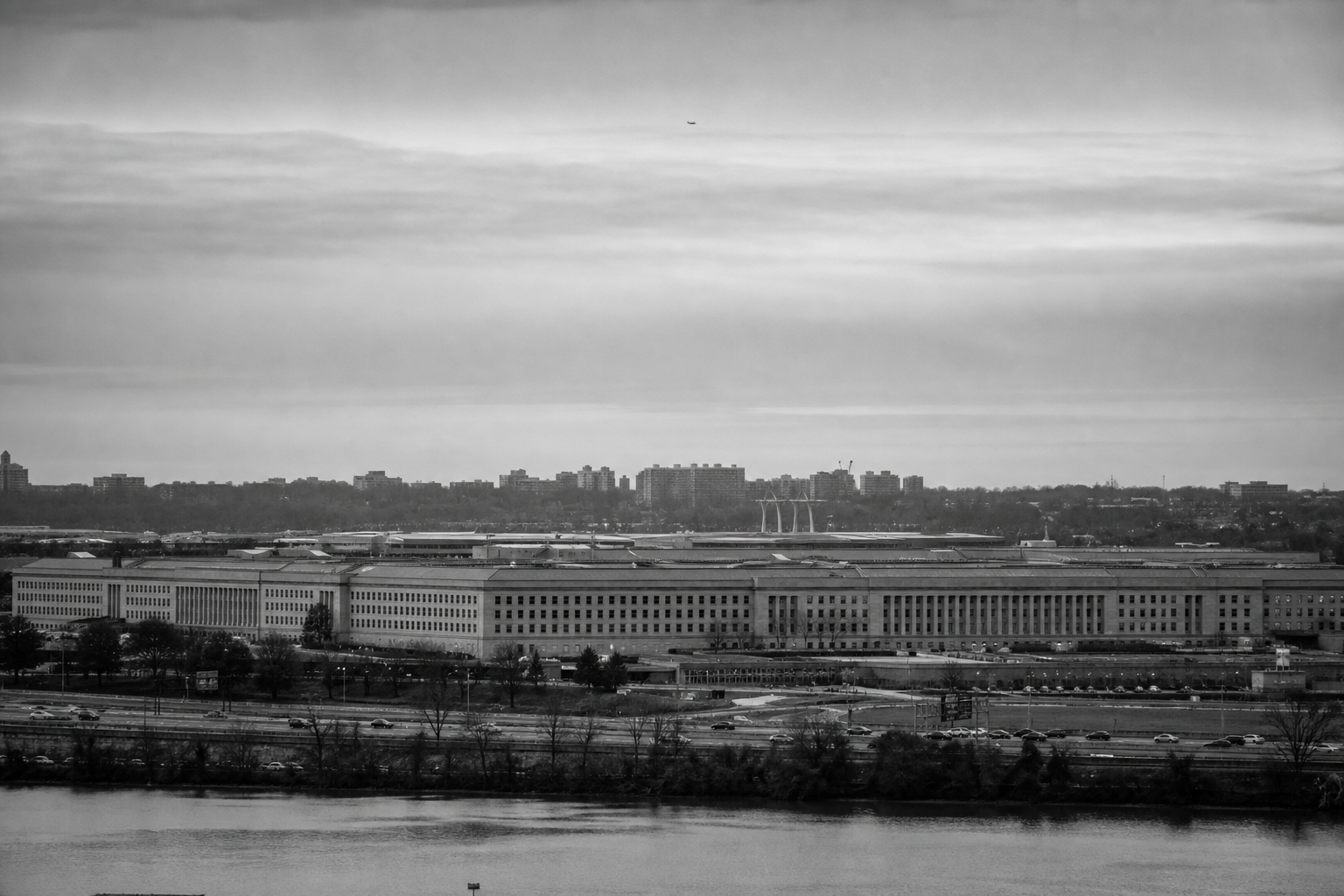
An unidentified object near a military operating area is not chiefly a cultural mystery; it is an information problem. Decision-makers need to know whether a report reflects a sensor error, an airborne hazard, a foreign collection effort, or something that requires further analysis. When observations are delayed, incomplete, inconsistently routed, or poorly shared, the practical cost is weaker awareness of what may be operating around U.S. forces and installations.
The DoD IG UAP report 2024 puts that problem in oversight terms. Its significance is not that it resolves the origin of unidentified anomalous phenomena, nor that it substantiates claims about non-human intelligence. The relevant question is narrower and more consequential for defense management: whether the Pentagon’s UAP-related reporting, analysis, coordination, and accountability arrangements give leaders usable information in time to act.
This article separates the Inspector General’s documented findings from disclosure advocacy and unverified allegations. It examines what the review covered, the gaps it identified, how those gaps can translate into national-security risk, and the recommendations and responses that determine whether Pentagon UAP oversight improves in practice. A sound conclusion requires both discipline: take process failures seriously, while refusing to treat an oversight review as an extraordinary-origin verdict.
What the 2024 DoD IG UAP Report Is, and Why It Matters
The document at issue is the Department of Defense Office of Inspector General evaluation, Evaluation of the DoD’s Actions Regarding Unidentified Anomalous Phenomena, issued on November 15, 2024, as Report No. DODIG-2025-043. Its subject is the Pentagon’s institutional handling of UAP reports, not a finding about the origin of any particular sighting. The review asks whether DoD has a coordinated approach for identifying, analyzing, reporting, and sharing information about unresolved phenomena.
That is a concrete oversight question because the same initial report can trigger different defense needs. An object observed near aircraft or a training range may require an immediate airspace-safety response; recurring activity near a military installation may warrant scrutiny as possible foreign surveillance; incomplete sensor data can reduce intelligence warning; and a report that is not routed to the relevant command can impair force protection. “Unidentified” describes an unresolved assessment at that point in the process, not evidence of an extraterrestrial or non-human origin.
The Inspector General’s role is to independently audit and evaluate DoD programs and operations. In this case, that means testing the practical machinery behind UAP oversight: assigned responsibilities, reporting channels, access to information, analysis, and coordination among offices. A strong system preserves the report, connects it with relevant sensor or intelligence information, and makes it available to officials who need to assess a potential threat; a weak one leaves those steps fragmented or uncertain.
The public significance of the report is therefore bounded but substantial. It examines whether the Pentagon can turn unresolved observations into usable defense information. It does not establish that any UAP was a physical craft, a foreign platform, or non-human technology.
What the Inspector General Reviewed, and the Pentagon Offices Involved
The evaluation tested the Department’s overall UAP framework: whether responsibilities for identifying, analyzing, reporting, and sharing UAP information were coordinated across DoD. That is a systems-level review of policy, information flow, and organizational accountability, not a reinvestigation of the Navy videos, a specific pilot report, or any other individual encounter.
AARO sits inside the framework the Inspector General examined, but it does different work. The Department established the All-domain Anomaly Resolution Office in July 2022 to succeed the Airborne Object Identification and Management Synchronization Group and serve as DoD’s focal point for resolving reports across air, sea, space, and other domains. AARO’s job is to receive and analyze anomaly information; the DoD Office of Inspector General’s job is to independently evaluate whether the departmental structure around that mission is working.
The relevant chain includes personnel and units that observe an event, organizations that retain sensor or intelligence data, offices that analyze it, and leaders responsible for routing results to decision-makers. A meaningful oversight checkpoint is whether an initial report can be paired with supporting context, such as location, time, sensor data, or operational circumstances, and reach the appropriate analytic channel without being lost in a disconnected reporting process.
Congress supplied the institutional foundation for that architecture. Section 1683 of the FY2022 National Defense Authorization Act directed DoD to create an office to synchronize collection, reporting, and analysis on unidentified aerospace-undersea phenomena; Section 1673 of the FY2023 act set out AARO’s functions and reporting duties. The 2024 Pentagon UAP inspector general report therefore assessed the Pentagon’s ability to carry out an established oversight and reporting mission. It did not adjudicate whistleblower allegations or furnish evidence that any UAP involved non-human intelligence.
The Report’s Documented Shortcomings: Governance, Reporting, Analysis, and Coordination
A finding-by-finding account requires the Inspector General’s actual finding language, the process examined, and the corrective action requested. The publicly available materials identified here establish that Report No. DODIG-2025-043 was issued on November 15, 2024, but do not supply its finding-by-finding text, classified annexes, recommendation language, or component-response letters. It would therefore be inaccurate to attribute a confirmed failure in a particular reporting channel, database, analytic unit, access-control process, or personnel-protection mechanism to the DoD Inspector General UAP report.
The categories under review are distinct controls, not interchangeable labels. Governance assigns authority and accountability; a defect could mean unclear ownership among AARO, military departments, intelligence organizations, and operational commands. Reporting is the route that carries an observation, time and location information, and supporting sensor material to an office able to act. Analysis evaluates and retains that material. Coordination is the controlled exchange of relevant information among organizations with separate missions and classification boundaries.
A documented oversight finding should identify the affected DoD process, evidence reviewed, and corrective action sought. A conclusion that a reporting route is unclear, for example, differs from a conclusion that reports were never received: the first concerns policy design; the second concerns implementation and records. Neither proposition follows merely from the evaluation’s title, its systems-level scope, or the possibility of redacted or classified material.
That evidentiary boundary also limits UAP disclosure claims. A classified annex can protect operational, intelligence, or technical details; its existence does not establish an undisclosed conclusion about an individual incident or non-human technology. The public record supports scrutiny of Pentagon process, not an invitation to fill unavailable findings with whistleblower allegations, incident narratives, or speculation.
Why UAP Oversight Gaps Can Create National-Security Risk
The operational consequence begins with time. A report that is incomplete, inconsistently routed, or separated from its supporting sensor data may leave commanders and analysts unable to determine promptly whether it reflects a harmless object, a flight-safety hazard, or activity requiring a defensive response.
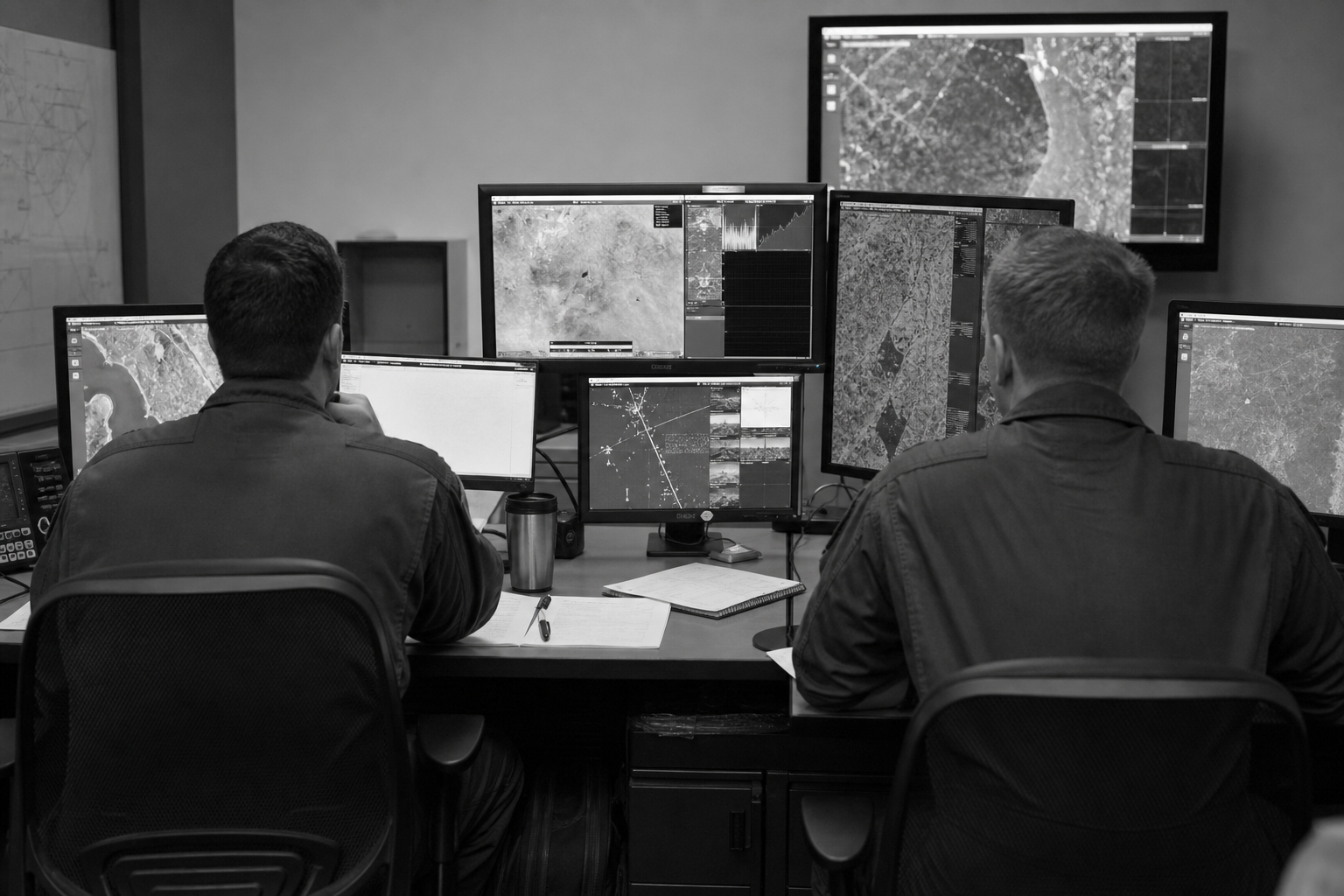
Situational awareness is more than a count of UAP sightings. It is a usable picture built by connecting location, time, altitude, movement, sensor observations, and relevant intelligence. If those elements arrive in different systems, are not retained, or cannot be compared across units, patterns may be harder to recognize. The resulting risk is not that every unresolved observation is hostile; it is that a potentially relevant pattern could remain unresolved longer than it should.
Information sharing affects the next decision point: threat assessment. An aviation-safety office may need enough detail to protect operations, while intelligence and counterintelligence personnel may need to assess whether an object or activity could indicate foreign surveillance or collection. Those are related but distinct missions. A weak handoff between them can produce delay, duplication, or an assessment made without the information another office holds.
Unclear ownership creates a different failure mode. When no office has plainly assigned responsibility to assemble the record, set priorities, and ensure a response, an event can be passed among organizations without a timely decision. In a military setting, that could hinder action on a possible airborne hazard near training, operations, personnel, or sensitive infrastructure.
These are risk-management pathways, not findings that a particular object had an extraordinary origin. The public material described in the preceding section does not support assigning any individual case to non-human technology, nor does an oversight concern establish that a security breach or accident occurred. The significance of Pentagon UAP gaps for national security lies in the possibility that preventable information failures can complicate ordinary defense judgment under uncertainty.
What the Report Establishes, and What It Does Not
An oversight finding answers a narrower question than a disclosure claim: whether the Department’s arrangements for handling uncertain reports were adequate within the area the Inspector General reviewed. Readers can reasonably infer concern about the reliability of that administrative and analytic process, not a determination of what any reported object was, who operated it, or whether a particular incident posed a realized threat.
“Unidentified” is a status of the available record, not a positive explanation. It can mean that the available observations are too limited, inconsistent, delayed, or inaccessible to support a defensible identification. A confirmed explanation requires affirmative evidence sufficient to connect an event to a known cause, such as an aircraft, balloon, drone, atmospheric effect, sensor artifact, or other source. Missing data may prevent either conclusion.
That boundary also limits what can be read into the DoD IG UAP report 2024. An Inspector General concern about governance, reporting, retention, analysis, or coordination does not establish extraterrestrial craft, non-human intelligence, crash-retrieval programs, or a government UFO cover-up. Nor does it authenticate any individual public allegation. Those propositions require their own directly supporting evidence; they do not follow from weaknesses in a management system.
UFO disclosure advocacy can therefore raise questions outside the review’s scope, but it cannot supply the missing evidentiary link. The consequential conclusion is more disciplined: uncertainty deserves competent handling precisely because it remains uncertainty. The report supports scrutiny of Pentagon processes, not an alien disclosure verdict.
Recommendations, DoD Responses, and the Test of Follow-Through
Public accountability turns on a simple record: the recommendation, the office assigned to act, management’s written position, and the Inspector General’s closure decision. The available material identifies Evaluation of the DoD’s Actions Regarding Unidentified Anomalous Phenomena, Report No. DODIG-2025-043, issued November 15, 2024, but does not reproduce the individual recommendation text, management-comment letters, or a recommendation-status table. It therefore cannot support a reliable count of recommendations, assign a particular remedy to AARO or another DoD office, or establish concurrence, partial concurrence, dispute, completion, or open status for any individual item.

A workable corrective-action plan would nevertheless have visible components. A policy remedy would assign reporting and retention duties to named offices; a reporting remedy would specify how an observation and its sensor material move to the analytic body; and a data-sharing remedy would define recipients, access rules, and delivery deadlines. Section 1683 of the FY2022 National Defense Authorization Act directed DoD to establish an office to synchronize UAP collection, reporting, and analysis. Effective follow-through would convert that broad function into written procedures, accountable owners, dated milestones, and testing evidence.
Status labels distinguish intent from completion. An open recommendation has not been validated for closure; a closed one has supporting evidence accepted by the Inspector General. Partial concurrence means an organization accepts only part of a proposed remedy, while a plan to act is not proof that the action occurred. As of the report’s November 15, 2024 publication date, the public material available here does not document a validated closure or an official recommendation-tracking update. Follow-through remains unresolved in that public record.
The Bottom Line: A National-Security Oversight Finding, Not an Alien Verdict
The defensible takeaway is practical rather than extraordinary: unidentified events deserve disciplined Pentagon oversight because uncertainty itself can affect force protection, airspace awareness, and decision-making. That is a reason to test how reports move through the Department and how corrective measures are proven, not an alien verdict.
For future UFO news, including claims attached to UFO sightings 2025 or UFO sightings 2026, use a simple hierarchy of evidence:
- Start with the primary Inspector General report. A strong account identifies its title, date, scope, findings, and any redactions; a weak one relies on excerpts or characterizations.
- Separate public material from classified material. A withheld detail may limit what outsiders can assess, but it does not establish a particular explanation.
- Distinguish an official finding from an agency response, a whistleblower allegation, or an advocate’s interpretation. Each carries a different evidentiary weight.
- Look for independently documented follow-through: a status update, completed deliverable, or Inspector General closure, not merely a promise to improve.
That standard keeps scrutiny focused where it belongs: whether the Pentagon can manage unresolved observations without turning uncertainty into an avoidable operational blind spot.
Frequently Asked Questions
-
What did the DoD Inspector General’s 2024 UAP report examine?
Report No. DODIG-2025-043, issued November 15, 2024, evaluated whether DoD had a coordinated system for identifying, analyzing, reporting, and sharing UAP information. It reviewed Pentagon processes and accountability, not the origin of specific sightings.
-
Does the 2024 DoD IG UAP report confirm aliens or non-human intelligence?
No. The report does not establish that any UAP was extraterrestrial, non-human technology, a foreign craft, or a physical object. Unidentified means the available evidence was insufficient for a defensible identification.
-
What is AARO’s role in Pentagon UAP oversight?
The All-domain Anomaly Resolution Office, established in July 2022, is DoD’s focal point for receiving and analyzing anomaly reports across air, sea, space, and other domains. The DoD Inspector General independently evaluates whether the wider departmental structure supporting that mission is working.
-
Why can gaps in UAP reporting create national-security risks?
Incomplete or delayed reports can prevent commanders and analysts from quickly determining whether an observation is a sensor error, aviation hazard, foreign surveillance effort, or possible threat. Missing links between time, location, sensor data, and intelligence can also make recurring patterns harder to detect.
-
What should you look for when assessing whether the Pentagon fixed UAP oversight problems?
Look for the specific Inspector General recommendation, the office assigned to act, management’s written response, and an official closure decision. Reliable evidence includes written procedures, accountable owners, deadlines, completed deliverables, and Inspector General validation rather than promises to improve.