ODNI 2023 UAP Report: Sightings Surge to 510 as Stigma Fades
Explore the ODNI 2023 UAP report: why 510 was a total inventory, what officials identified, and how reporting stigma shaped the count.
The headline number, 510, demands context before it can support any larger conclusion. The ODNI 2023 UAP report is often summarized as a surge in sightings, but a tracked total is not the same thing as 510 newly submitted reports, 510 confirmed objects, or 510 unexplained events.
This article reads the figure on its own terms: what entered the government’s UAP inventory, how additions and earlier cases affected that inventory, and which reports received ordinary characterizations versus remaining unresolved. That distinction matters because an unresolved report reflects incomplete attribution, not proof of an extraordinary explanation.
The report’s frame was practical rather than sensational: potential flight-safety, national-security, and intelligence concerns require reliable reporting and analysis. A larger count can therefore reflect broader intake, clearer reporting channels, and more complete record collection as well as changes in what personnel observe.
Reduced stigma belongs in that institutional context. A more receptive reporting environment is a plausible reason that more incidents reached official systems, but the record does not measure stigma or establish it as the cause of the increase. The pages that follow separate the report’s numbers and findings from the inferences readers may reasonably draw from them.
The 510 Figure: A Total Case Inventory, Not 510 New Sightings
Publication date and reporting date are different here. The Office of the Director of National Intelligence released its Annual Report on Unidentified Aerial Phenomena on January 12, 2023, but the reporting period ended on August 30, 2022. The report therefore did not describe 510 events newly observed or submitted during 2023.
The 510 was the size of the government’s tracked set of UAP reports at that cutoff. A report is an entry assembled from an observed incident and its available material, such as pilot testimony, radar returns, imagery, or other sensor data. It is not, by itself, an independently verified physical object. One report may be richly documented; another may contain too little information for a confident assessment. Treating every entry as a confirmed craft erases that difference.
This is also why “510 UAP sightings” is an imprecise shorthand. The ODNI UAP report 510 figure combines reports already in the reviewed population with additional material brought into the tracked inventory. It does not establish that 510 separate objects appeared at once, that all were newly reported in the same year, or that analysts had validated an extraordinary origin for each one.
The next question is numerical rather than speculative: which additions produced the larger inventory, and how much of the apparent jump reflects newly received reports versus earlier cases incorporated into the system?
How the Tracked Total Rose From 144 to 510
The arithmetic is straightforward, but the two categories within it matter more than the headline: 144 + 366 = 510. The 144 were the reports assessed in the June 2021 preliminary assessment. The later ODNI report added 366 reports that had been identified since that assessment, producing the 510-report inventory at the August 2022 cutoff.

| Component | Reports | What it means |
|---|---|---|
| 2021 preliminary-assessment population | 144 | The previously assessed baseline. |
| Earlier reports added later | 119 | Reports received or newly discovered after the preliminary assessment that had not been included in its set. |
| Reports received during the later period | 247 | New reports entering the system after the earlier assessment. |
| Total tracked inventory | 510 | 144 + 119 + 247. |
The key distinction is between newly identified records and newly occurring events. The 119 were not evidence of 119 fresh observations during the later reporting window. They were older or previously unincorporated reports brought into the reviewed population after the 2021 assessment. That kind of retrospective addition can enlarge a database without demonstrating an equivalent rise in real-world activity.
The remaining 247 are the portion most reasonably described as new reports received in the subsequent period. Even that number measures reports entering official channels, not a count of confirmed objects or a finding that each case was anomalous. Read this way, the rise in the 510 UAP reports reflects both expanded intake of current material and reconciliation of earlier material that the initial assessment did not include.
What the Report Identified, and What It Left Uncharacterized
Of the 366 additions, 171 were characterized as balloon or balloon-like entities, the largest identified category. The January 2023 annual report also characterized 163 as uncrewed aerial systems or drone-like entities and six as clutter. These are characterization categories: they identify the most supportable ordinary explanation from the available information, rather than claiming every detail of an encounter had been conclusively reconstructed.
The categories describe importantly different possibilities. A balloon-like entity is a lighter-than-air object whose observed behavior or signature fits that explanation; a drone-like entity is an uncrewed aircraft system; and clutter is material or interference that can register as an apparent object in reporting data. Together, those 340 additions show that analysts could place many reports in recognizable categories without treating them as extraordinary technology.
Twenty-six of the 366 additions remained designated as uncharacterized UAP when the report was issued. That label describes an attribution limit, not a finding about origin: the report explained that many cases lacked the detailed information needed for a high-confidence assessment. Incomplete sensor data, brief observations, or missing contextual information can leave analysts unable to distinguish reliably among plausible explanations.
Nothing in the unresolved label confirmed alien craft, non-human intelligence, or a novel technological capability. An uncharacterized UAP was simply a case whose available record did not support a defensible classification at that point. The result was a mixed inventory: many additions had conventional characterizations, while a smaller remainder was indeterminate rather than assigned to an extraordinary category.
Did Reduced Stigma Cause the Surge in Reporting?
Institutional willingness to report is the narrow point behind the “stigma fades” framing. The ODNI’s January 2023 report said the increase in UAP reporting could be attributed to a better understanding of the possible threats UAP may pose and to reduced stigma surrounding reporting. It also pointed to better reporting mechanisms. Taken together, those explanations describe a changed reporting environment: personnel may have had clearer routes to submit an observation and stronger reasons to regard doing so as part of their duty.
That is meaningful evidence of an official institutional assessment, not a finding that stigma had vanished across the military, intelligence community, or public. The report did not survey attitudes before and after the change, measure how many people had previously withheld reports, or assign a percentage of the higher inventory to reduced stigma. Nor did it isolate that factor from expanded intake channels, greater organizational attention, and the addition of earlier records to the tracked set.
The practical distinction is between a change in reporting behavior and a demonstrated change in what was present in the airspace. Better reporting mechanisms can raise the number of cases available for analysis even if the underlying number of observations is steady; retrospective record collection can enlarge the inventory without representing a new event at all. Conversely, a larger total alone cannot show whether more events occurred. The ODNI 2023 UAP report supports the restrained conclusion that reporting had become more institutionally accepted and capable, while leaving the relative weight of stigma, threat awareness, and data-collection changes unquantified.
The Report’s Bottom Line: Safety, Security, and Attribution Limits
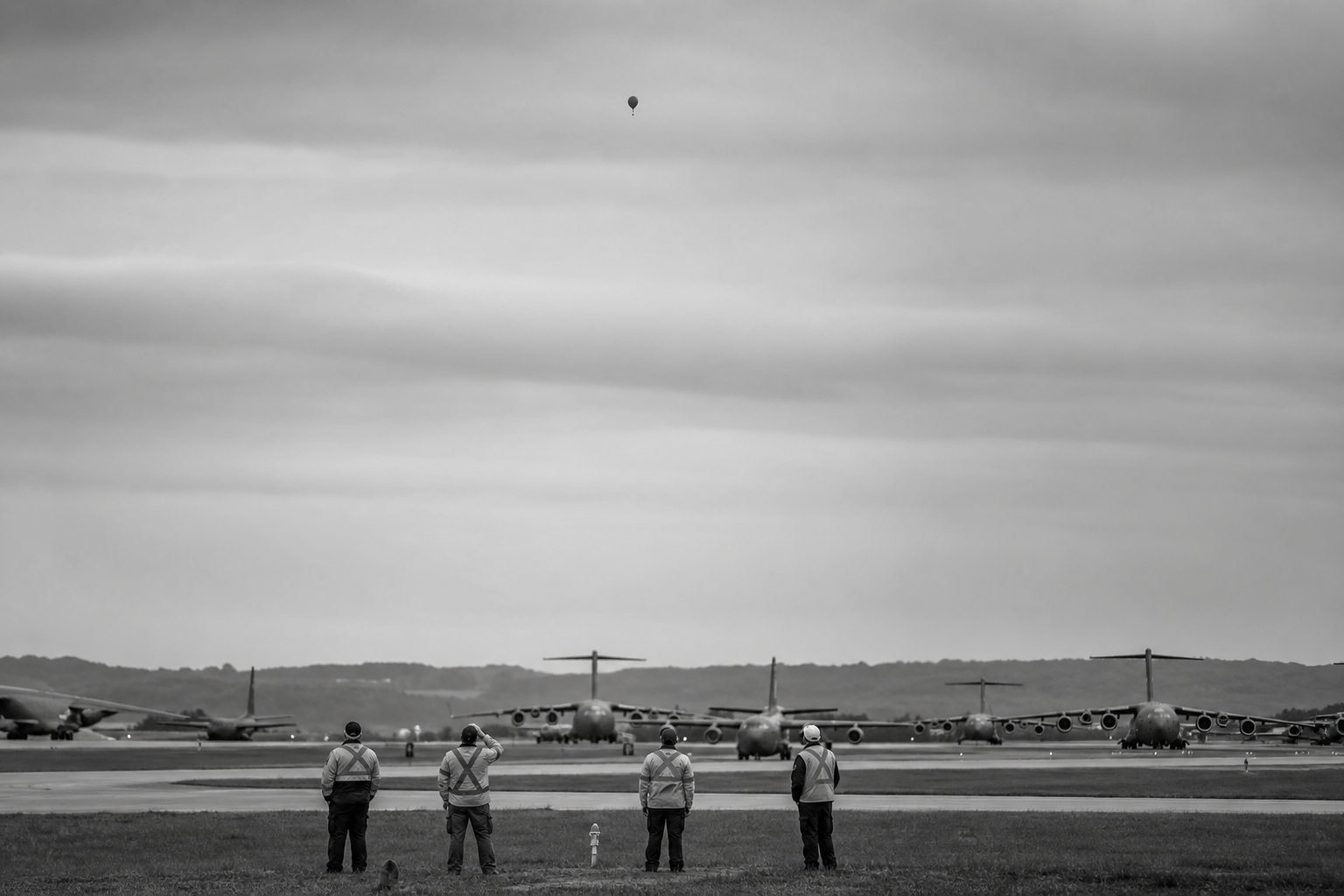
A report can matter operationally even when it cannot yet identify every object. The ODNI framed UAP reporting around potential airspace safety and flight-safety concerns: an unrecognized object near military activity can create risk regardless of whether it later proves to be a balloon, drone, clutter, or something not yet characterized.
The intelligence concern was equally practical. The report warned that some cases could represent foreign surveillance or intelligence-collection platforms, or signal an adversary’s aerospace development. Those are competing hypotheses to be investigated, not findings that a particular foreign government operated a particular UAP. The relevant distinction is between an observation that remains uncharacterized because the data are incomplete and an attribution supported by enough evidence to identify an operator, platform, and purpose.
For that reason, the ODNI 2023 UAP report emphasized more complete, standardized, and multi-sensor reporting. A visual observation alone may establish that personnel saw something, while radar, infrared, telemetry, and contextual information can help establish location, movement, physical characteristics, and possible origin. Better data reduce both avoidable misidentification and the number of cases that must remain unresolved.
The report did not conclude that any case involved aliens, extraterrestrial technology, or non-human intelligence. It also did not substantiate claims of crash-retrieval programs or a government UFO cover-up. Its unresolved category was an attribution limit, a record of insufficient information for a defensible classification, not affirmative evidence for an extraordinary explanation. In national-security terms, uncertainty was a reason to improve collection and analysis, not a basis for declaring what the objects were.
ODNI, the Pentagon, and AARO: What This Report Was Designed to Do
A useful first question is which institution is speaking and what job its publication performs. The January 2023 document was an intelligence-community reporting product prepared with Department of Defense participation: it summarized records and assessments available through its stated cutoff. It was not a standalone Pentagon investigation or a declaration that every entry had been resolved.
The January 2023 report should also be distinguished from AARO, the Defense Department office established to coordinate investigation and resolution of anomalies across domains. That institutional context explains why later coverage may focus on AARO UAP findings, but it does not alter the conclusions reached in the earlier report.
Use four checkpoints when reading a future official assessment:
- Identify the reporting period rather than assuming the publication date marks when observations occurred.
- Separate the number of reports in an inventory from the number of cases newly received, characterized, or resolved.
- Ask what data support the conclusion: a multi-sensor record offers a stronger basis for attribution than a brief visual account.
- Read the agency’s exact finding. “Uncharacterized” describes an evidentiary limit; it is not a finding of extraordinary technology, non-human intelligence, or a particular operator.
What the 510 UAP Cases Actually Tell Us
The useful conclusion is less dramatic than the headline, but more valuable: a reporting system became better able to capture observations that required attention. The 510 figure was an inventory accumulated from the 144 earlier assessed reports and later additions, including both newly submitted material and cases found in existing records. It is not a count of 510 newly observed events, confirmed craft, or confirmed anomalies.
That distinction sets the proper evidentiary bar. A report can be ordinary, incomplete, misidentified, or still uncharacterized; those outcomes describe different stages of attribution, not degrees of exoticness. The report’s identified balloon-like objects, drone-like systems, and clutter demonstrate why an initial UAP label should not be treated as a final conclusion. Conversely, an uncharacterized entry means the available information did not support a defensible classification, not that extraordinary technology had been established.
Reduced stigma is best understood as a plausible contributor to higher submissions, alongside clearer reporting channels and greater awareness of airspace and intelligence concerns. The record supports a changed institutional posture, not a measured causal finding that stigma alone produced the increase or that activity in the airspace rose. The durable lesson of the ODNI 2023 UAP report is therefore procedural and analytical: fuller, standardized, multi-sensor reporting improves attribution and helps agencies address safety and security questions without turning uncertainty into speculation, as later UAP report inventories also illustrate.
Frequently Asked Questions
-
What did the ODNI 2023 UAP report mean by 510 reports?
The 510 figure was the total tracked inventory of UAP reports as of August 30, 2022. It was not 510 newly reported incidents, confirmed physical objects, or unexplained events.
-
How did the number of UAP reports rise from 144 to 510?
The inventory grew from 144 previously assessed reports to 510 after 366 additional records were identified. Those additions included 119 earlier reports incorporated later and 247 reports newly received after the 2021 assessment.
-
How many of the 366 added UAP reports were identified as balloons, drones, or clutter?
Of the 366 additions, 171 were characterized as balloon or balloon-like entities, 163 as drone-like uncrewed aerial systems, and six as clutter. A total of 26 additions remained uncharacterized because the available data did not support a confident classification.
-
Did the ODNI 2023 UAP report confirm aliens or non-human intelligence?
No. The report did not confirm aliens, extraterrestrial technology, non-human intelligence, crash-retrieval programs, or a government cover-up. Uncharacterized cases reflected incomplete information, not evidence of an extraordinary origin.
-
What should I look for when comparing ODNI UAP reports with AARO investigations?
Check the reporting cutoff date, distinguish total inventory from newly received or resolved cases, and examine whether the finding is supported by multi-sensor data. The January 2023 ODNI document summarized intelligence-community records with Defense Department participation, while AARO is the Pentagon office that coordinates investigations and resolution of anomalies.