AARO Gets New Director in 2024: NSA Quantum Physicist Jon Kosloski Appointed
Learn why Jon Kosloski AARO director appointment matters, his verified background, AARO's mission, and the transparency tests ahead.
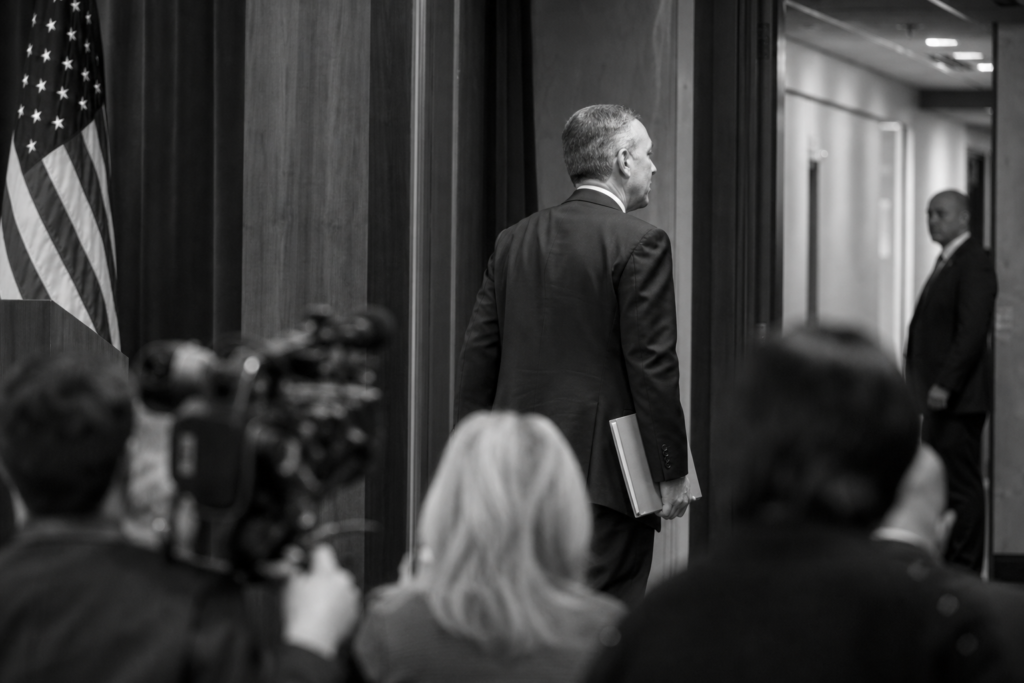
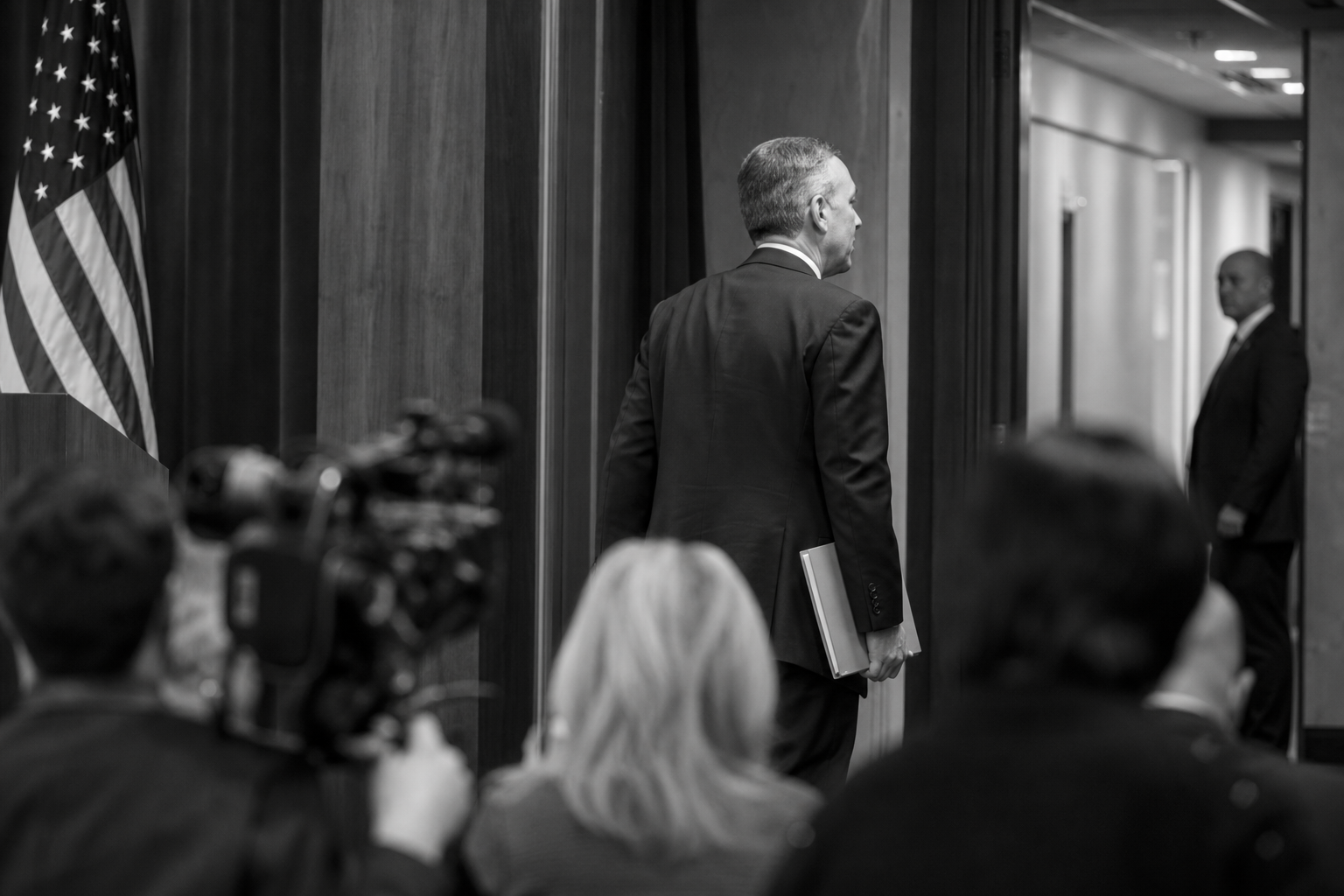
On August 1, 2024, Jon Kosloski became director of the Pentagon’s All-domain Anomaly Resolution Office, or AARO. The office is the Defense Department’s focal point for reports of unidentified anomalous phenomena, incidents observed in air, sea, space, or other domains that have not yet been identified.
The change put Kosloski in charge of an office with a public-facing UAP role as well as a national-security one. AARO receives and analyzes reports, coordinates work across government organizations, and issues unclassified reporting for Congress and the public; it is not an institution created to authenticate any particular extraordinary explanation.
Kosloski inherited an unusually visible assignment. AARO’s work is judged not only by whether individual cases receive explanations, but by whether its methods distinguish a resolved report from one limited by incomplete sensor data, missing context, or restricted access to records. Specific analytical standards, timely public reports, and substantive responses to congressional oversight are stronger performance signals than broad assurances.
This assessment of the Jon Kosloski AARO director transition separates confirmed government actions from whistleblower allegations, advocacy claims, and editorial interpretation. The relevant test is whether AARO produces disciplined, reviewable results within its mission, not whether a leadership appointment proves an extraordinary UAP claim.
What the Pentagon Confirmed About Kosloski’s 2024 Appointment
The Pentagon’s June 24, 2024 announcement separated the selection from its effective date: Dr. Jon T. Kosloski was named to become AARO director on August 1. The formal title is consequential. He took charge of AARO itself, rather than a separate disclosure program or a single investigation.
Kosloski succeeded Dr. Sean Kirkpatrick, AARO’s first director. Kirkpatrick’s previously announced departure took effect at the end of December 2023. The months between that departure and Kosloski’s August start date should not be read as evidence of an uninterrupted handoff or as proof of a policy change; the confirmed record establishes the 2024 AARO director appointment and leadership transition.
The Pentagon’s action was a personnel decision that established responsibility for directing the office’s work. It did not announce revised conclusions about unidentified anomalous phenomena, endorse claims about their origin, or commit AARO to a particular disclosure result. Those are different questions: a director sets priorities and oversees analysis, while findings must rest on the evidence available in individual cases.
That distinction supplies a practical baseline for evaluating AARO director Jon Kosloski. A consequential shift would appear later in the office’s work, through clearer analytical explanations, more complete public reporting, or more substantive engagement with congressional oversight, not in assumptions drawn from the appointment itself.
Kosloski’s Documented Technical and National-Security Background
AARO’s public biography identifies Dr. Jon T. Kosloski as a physicist with 15 years of experience at the National Security Agency, including work as a research scientist and in research leadership. It also lists a doctorate in physics from the University of Maryland, Baltimore County, and describes his scientific work as involving quantum information science.
The “NSA quantum physicist” shorthand compresses those separate facts. A physics doctorate identifies his academic discipline; quantum information science concerns how quantum-mechanical systems can represent, transmit, or process information; and his NSA service establishes prior national-security research experience. It should not be read as a claim that Kosloski remained an NSA employee after taking the AARO post, that he brought a particular intelligence remit to AARO, or that his background gives him preexisting answers about any unexplained case.
Those distinctions matter because scientific and technical analysis is not simply the use of advanced credentials. In AARO’s setting, it means separating an observation from an inference about its cause, comparing competing explanations against the available data, identifying gaps in sensor coverage or reporting, and stating the confidence limits of an assessment. A case can remain unresolved because its evidence is incomplete; that status alone does not establish an extraordinary explanation.
Kosloski’s documented combination of physics training, quantum-information research, and national-security experience is relevant to the analytical discipline the Pentagon UFO office requires. It does not predict the conclusions of Jon Kosloski UAP investigations. The meaningful test is whether AARO’s work makes its evidentiary reasoning legible: what information was assessed, which explanations were tested, and why the office reached, or could not reach, a finding.
What AARO Is Actually Tasked With Investigating
A useful first checkpoint is the difference between an unresolved report and a conclusion about its cause. A report may remain unidentified because sensor data are incomplete, conflicting, or insufficient for a reliable identification; that status does not establish a non-human, extraterrestrial, or otherwise extraordinary origin. AARO coordinates examination of such phenomena across operational domains, including air, sea, space, and the interfaces between them.
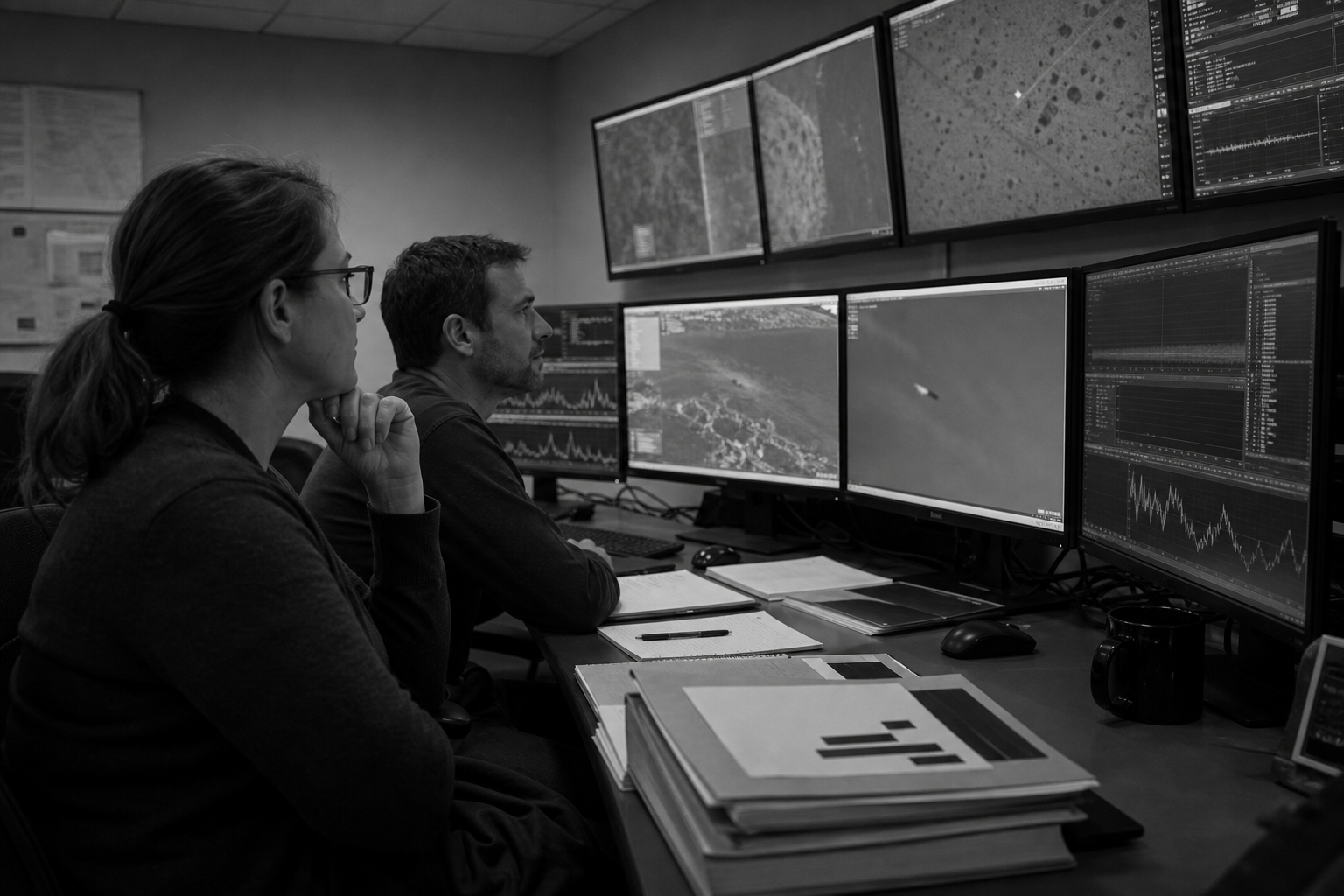
Operationally, AARO receives reports, brings together relevant defense and intelligence information, assesses whether an observation can be explained, and identifies possible implications for flight safety, force protection, counterintelligence, or national security. Its mission is therefore broader than cataloguing unusual sightings. A weak result is a tally of cases; a stronger one identifies the data considered, the explanations tested, the limits of the analysis, and the reason a case remains open.
The office also serves as a coordinating and reporting body for Pentagon UAP investigations. Its effectiveness depends on whether personnel and agencies can submit information through established channels, whether relevant data can be compared across organizations, and whether findings reach Defense Department and intelligence leaders and Congress in forms that protect sensitive information while permitting meaningful oversight.
That operational role is separate from the UAP Records Collection. AARO analyzes current reports and supports the government’s anomaly-resolution mission. The records-collection process concerns identifying, reviewing, and releasing, or continuing to protect, historical UAP-related records through a distinct archival and UAP disclosure framework. An archival release is not an operational case finding, and an unresolved current case does not prove that historical records contain a settled answer.
For Kosloski, the practical standard follows from that division: improve the quality and traceability of current analysis while making public conclusions clear enough for Congress and the public to distinguish evidence, uncertainty, and speculation.
The Trust and Transparency Challenges Kosloski Inherited
Public confidence turns on keeping four evidentiary categories separate. First, AARO’s published findings are the government’s formal analytical conclusions: they show what the office is prepared to say on the public record, along with any stated limits in the available data. They are not the same thing as a complete public inventory of every classified report, source or collection method.
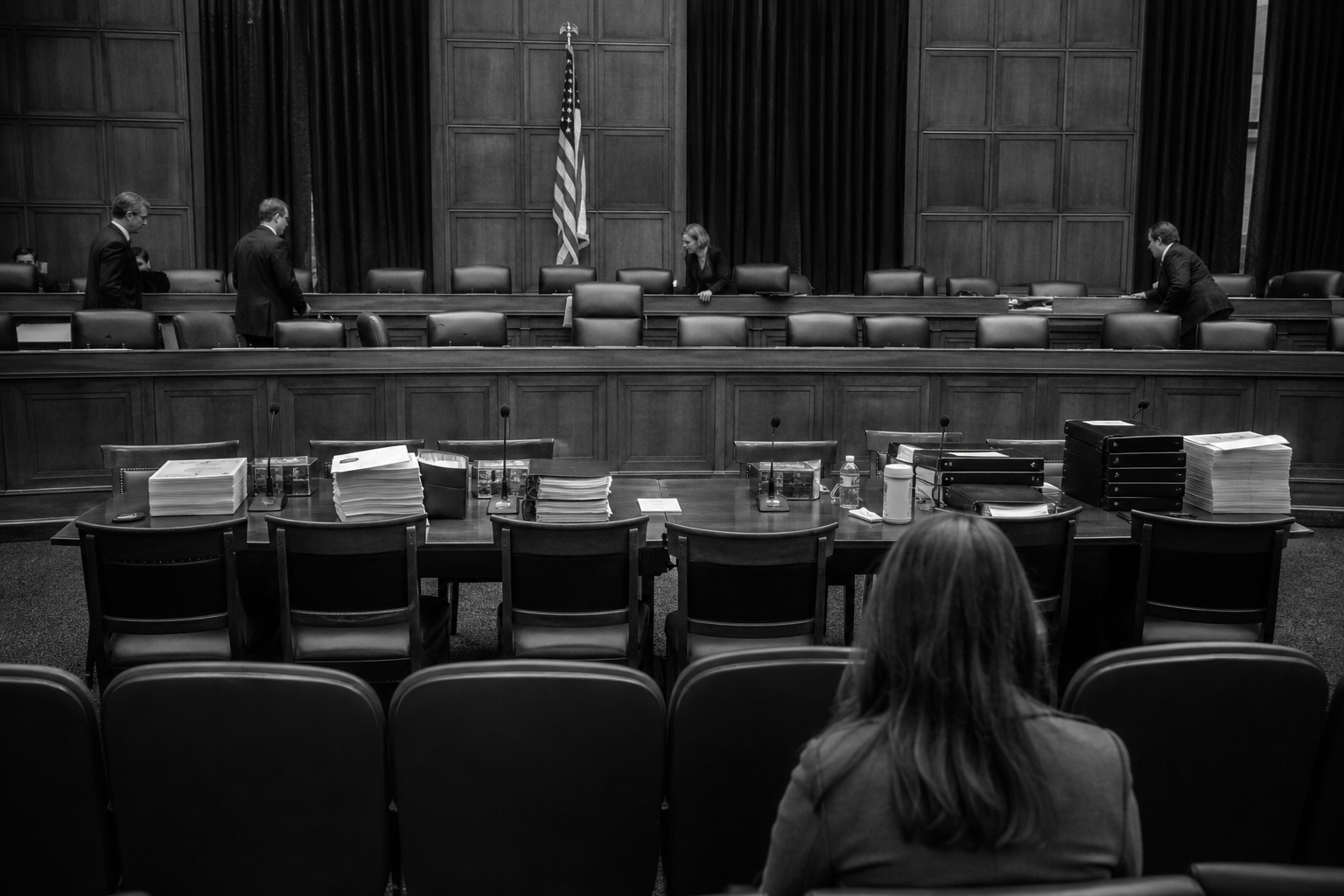
Second, lawmakers’ concerns belong to the oversight record. Congressional questions, hearing exchanges and reporting requirements can test whether an office has adequate access, independence, staffing and disclosure practices. Such scrutiny matters because Congress can demand explanations and assess performance; it does not, by itself, establish the underlying proposition being examined.
Third, whistleblower allegations and public testimony require still more precision. A witness may describe personal observations, information received in an official role, or a belief that programs or materials exist outside ordinary reporting channels. Those accounts can justify further inquiry, but allegations of a government UFO cover-up, crash-retrieval activity or non-human intelligence remain allegations unless independently substantiated by evidence that can be assessed.
Fourth, advocacy groups and media commentary interpret the gaps between those categories. They may argue that redactions, delayed releases or unresolved cases point to withheld answers; others may regard the same record as a predictable consequence of protecting sources, methods, military capabilities and personal information. Interpretation can identify questions worth pursuing, but it is not a substitute for demonstrated facts.
That distinction is central to the transparency problem Kosloski inherited. Classified access may give AARO a fuller evidentiary picture than the public can see, while declassification review can leave public reports selective and unevenly detailed. Those constraints understandably fuel demands for UFO disclosure, particularly when a conclusion is stated more clearly than its underlying record. Yet opacity alone does not validate any particular extraordinary claim. The meaningful test is whether AARO can explain its methods, disclose what can be disclosed, identify the reason material remains protected, and give Congress enough specificity to evaluate work that the public cannot fully inspect.
What Kosloski’s Leadership Could Mean for AARO’s UAP Mission
The most revealing changes would appear in AARO’s analytical trail rather than in a single headline case. A stronger process would show how an observation moved from an initial report to a disposition: which sensors contributed, whether imagery and telemetry were time-aligned, what conventional explanations were tested, and what missing information prevented a conclusion. A weak signal would be a growing total of “unresolved” cases without comparable detail about the limits of the evidence.
Cross-agency coordination is another practical test. AARO director Jon Kosloski can be judged by whether the office turns information held in separate military, intelligence and scientific channels into a coherent assessment without exposing sensitive collection capabilities. The useful public outcome is not automatic release of classified UAP data; it is an intelligible account of the evidentiary basis, confidence level and reason for any continuing protection.
Case resolution should also become more legible. Readers can look for published methodological standards that distinguish an identification supported by direct evidence from a plausible but lower-confidence assessment, as well as explanations for why cases remain open. That distinction matters because incomplete data, conflicting sensor readings and unavailable contextual information call for different follow-up work.
Historical-records work and public-facing UAP reporting offer separate measures. Progress would mean describing the scope of records searched, the categories of material located or unavailable, and the basis for withholding or releasing material. Regular reports, declassified examples where feasible, and substantive briefings to congressional overseers would provide a clearer performance record than broad assurances of transparency.
These are tests of management and analytical discipline, not predictions that Kosloski’s tenure will confirm or reject extraordinary explanations. The meaningful question is whether AARO makes its conclusions, and its uncertainties, more reviewable over time.
The Bottom Line: Judge the New AARO Director by Verifiable Results
The scorecard is straightforward: publish methods that let readers distinguish evidence from inference; deliver reports on a dependable schedule; protect genuinely sensitive capabilities while explaining each withholding decision; provide intelligible public case accounts when possible; and answer congressional oversight with substance rather than general assurances.
Kosloski’s 2024 appointment was a confirmed leadership transition at AARO. Its value will be measured in those observable results, not as confirmation or refutation of alien-disclosure claims, which remain part of a broader unresolved congressional disclosure and historical-records debate.
A New Director, but Results Are the Test
The transition’s significance lies in the standard it sets for a technically complex public office. Appointed on June 24, 2024, after Sean Kirkpatrick’s departure, Dr. Jon T. Kosloski brought a documented background spanning physics, quantum-related research and national-security work to an organization charged with coordinating UAP reporting and analysis across government. That experience can support rigorous handling of sensor data and competing hypotheses; it is not, by itself, evidence for any particular explanation of a reported anomaly.
AARO’s challenge is equally institutional. It must protect sensitive sources and capabilities while giving Congress and the public enough detail to understand how cases are assessed, why some remain unresolved, and where historical-records or declassification work stands. Strong performance would mean traceable case methods, useful public reporting, specific explanations of evidentiary limits, and substantive responses when overseers request information. Weak performance would leave conclusions opaque or substitute broad assurances for analytical detail.
The appropriate measure of Kosloski’s tenure is therefore not rumor or expectation. It is whether AARO produces documented outputs, responds meaningfully to oversight, and demonstrates verifiable investigative progress over time.
Frequently Asked Questions
-
What is Jon Kosloski’s NSA and quantum-physics background?
Kosloski has a doctorate in physics from the University of Maryland, Baltimore County and spent 15 years at the National Security Agency. His documented work includes research science, research leadership, and quantum information science.
-
What does AARO do at the Pentagon?
AARO receives and analyzes reports of unidentified anomalous phenomena across air, sea, space, and other domains. It coordinates relevant defense and intelligence information, evaluates possible explanations, and assesses potential flight-safety, force-protection, counterintelligence, and national-security implications.
-
Does an unresolved AARO UAP case mean it is non-human or extraterrestrial?
No. A case can remain unresolved because sensor data are incomplete or conflicting, contextual information is unavailable, or the evidence is insufficient for a reliable identification. Unresolved status does not establish a non-human, extraterrestrial, or other extraordinary cause.
-
What should people look for to judge Jon Kosloski’s performance as AARO director?
Look for published methods showing what sensors and evidence were assessed, which conventional explanations were tested, and why cases remain open or protected. Useful performance indicators include dependable public reports, declassified examples where feasible, clear confidence levels, and substantive responses to congressional oversight.