2023 Balloon Shootdowns: Four Unidentified Objects Downed Over North America
Explore the 2023 balloon shootdowns: learn why one object was identified as Chinese surveillance gear and three remain unresolved.
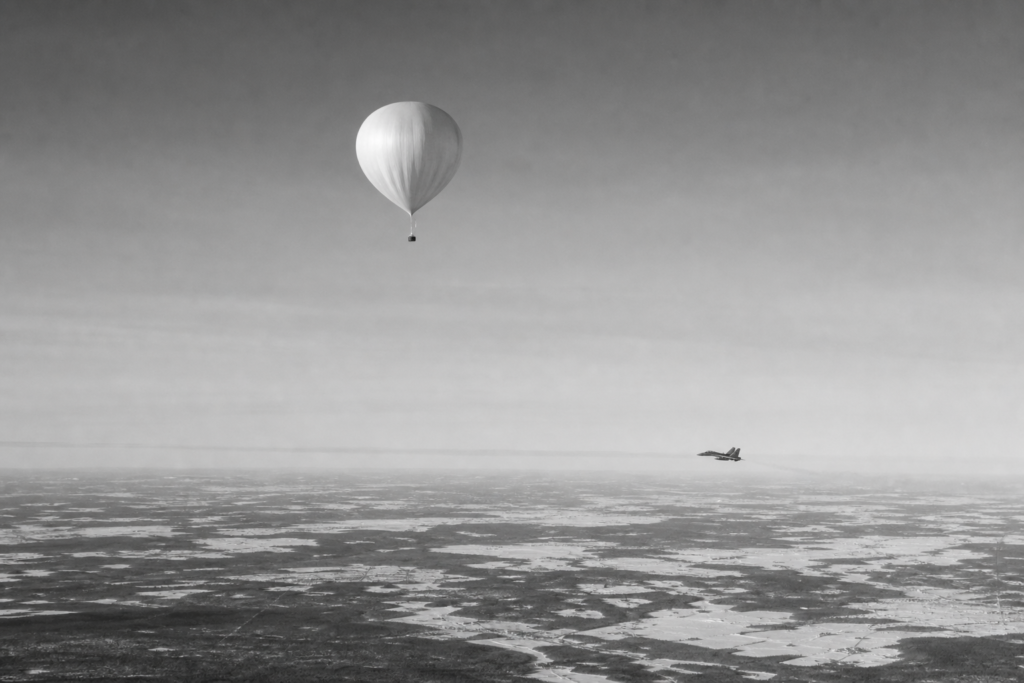
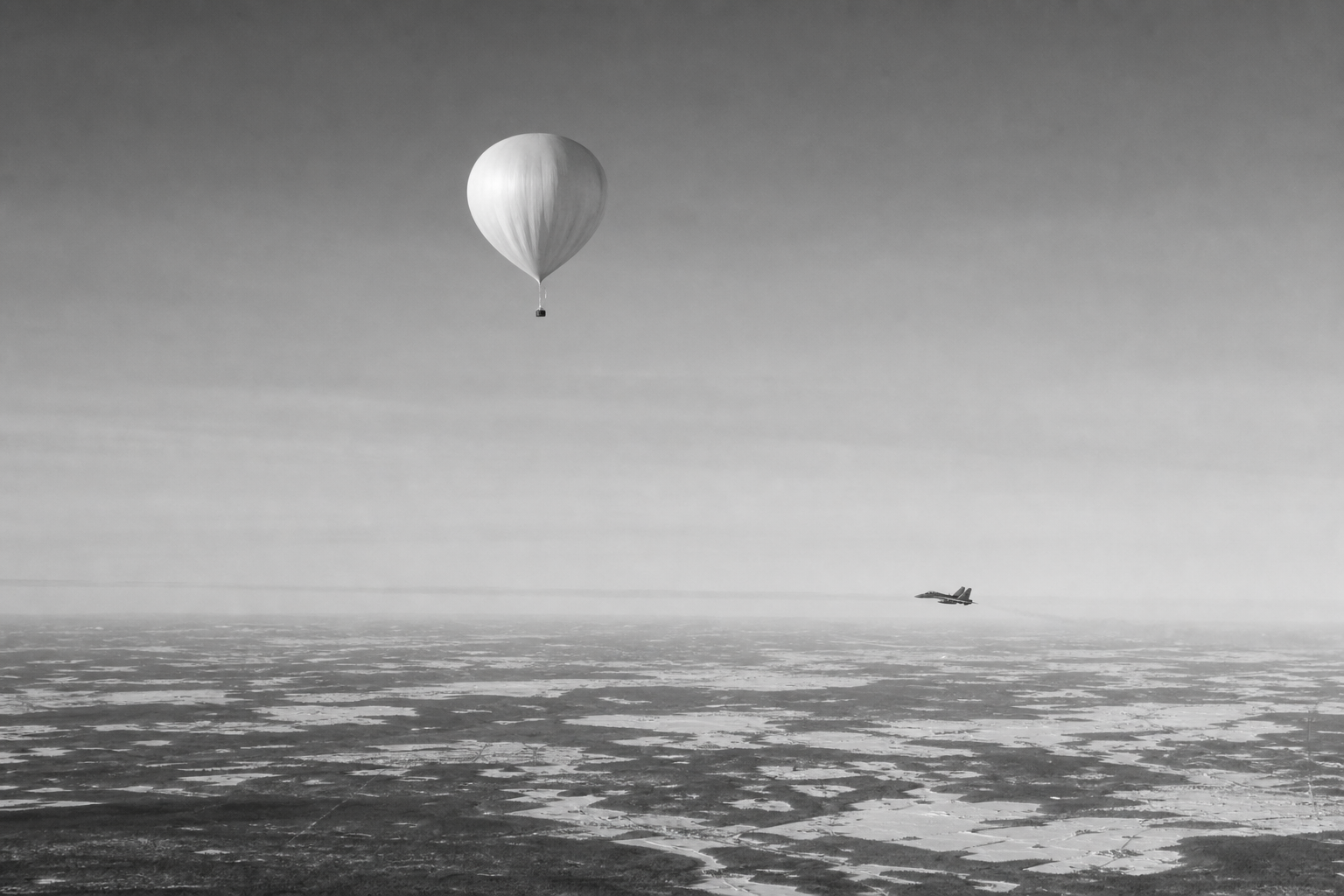
Within eight days in February 2023, U.S. fighter aircraft shot down four airborne objects over or near North America: off South Carolina on February 4, over Alaska on February 10, over Canada’s Yukon on February 11, and over Lake Huron on February 12. The speed of that sequence made the 2023 balloon shootdowns an extraordinary air-defense episode shared by the United States and Canada.
The four cases were not alike. The first was publicly identified by the U.S. government as a Chinese high-altitude surveillance balloon, and debris recovered from the Atlantic enabled officials to investigate it as a known foreign intelligence platform. The next three were described publicly as unidentified objects. That term records a limit in the public evidence: officials did not provide a conclusive public identification of their origin, purpose, or ownership. It does not establish that they were the same kind of craft as the Chinese balloon, or anything extraordinary.
That distinction is why the incidents became a major modern UFO/UAP news story. “Unidentified” is an evidentiary category, not a claim about alien or non-human technology. No public official evidence established extraterrestrial involvement. What remains is a tightly bounded factual question: what was confirmed about each shootdown, what recovery efforts found, and why three objects remained unresolved in the public record.
What Happened During the February 2023 Shootdowns
Public attribution is the key dividing line in the operational record. The February 4 target was identified by U.S. officials as a Chinese high-altitude surveillance balloon. Three later interceptions involved separate objects over Alaska, Canada’s Yukon, and Lake Huron on February 10, 11, and 12; Canada authorized the Yukon action through the shared North American air-defense framework.
“Balloon” was therefore not an official catchall for all four targets. The first case concerned an identified foreign surveillance platform. Officials used the more limited description “unidentified object” for the other three, and no conclusive public account subsequently assigned them an owner, mission, or final physical identification. That leaves them distinct from both the confirmed Chinese balloon and any demonstrated extraordinary craft.
The compressed timing, fighter response, and incomplete public resolution made the February 2023 shootdowns major UFO news. In UAP reporting, the episode illustrates a necessary evidentiary distinction: an object may remain unidentified in the public record without that absence of identification becoming evidence of alien or non-human technology.
Timeline: The Four Objects Shot Down Over North America
The dates and locations show four discrete intercepts, each prompted by a separate command decision rather than a single continuing engagement.
- February 4, off South Carolina: U.S. Northern Command directed an F-22 Raptor to destroy the Chinese surveillance balloon after it moved over the Atlantic. The fighter used an AIM-9X missile; debris fell into waters off the coast, where U.S. forces recovered major components.
- February 10, northern Alaska: North American Aerospace Defense Command aircraft downed an unidentified object over frozen waters near Deadhorse. An F-22 fired an AIM-9X after officials described the target as roughly car-sized and flying at an altitude that posed a potential concern for civilian aviation.
- February 11, Yukon Territory: After Canadian authorization, an F-22 operating under NORAD shot down another unidentified object over the central Yukon with an AIM-9X. Canadian officials described it as a small cylindrical object flying at high altitude.
- February 12, Lake Huron: U.S. forces downed a fourth object over Lake Huron after it had been tracked near sensitive U.S. airspace. An F-16 fired the successful AIM-9X missile after an earlier shot missed; officials described the target as an octagonal structure with strings hanging from it.
The first entry had a named attribution from the outset. The Alaska, Yukon, and Lake Huron objects had immediate visual descriptions and military responses, but those descriptions did not amount to public identification of their origin or purpose. See related coverage of military aerial-object shootdowns.
Object One: The Confirmed Chinese Surveillance Balloon
Recovery crews retrieved major pieces of the February 4 target from the Atlantic, creating a physical evidentiary record unavailable in the three later cases. U.S. officials tracked the large balloon as it traveled across the continental United States after approaching North America from the northwest. Its route drew public attention when it was seen over Montana, and the Pentagon identified it as a high-altitude surveillance balloon from the People’s Republic of China rather than an object of uncertain origin.
President Joe Biden said he had directed the military to take it down as soon as doing so would not create an undue risk to people on the ground. That decision explains the delay sometimes portrayed as inaction: destroying the balloon while it was over land could have spread its envelope, gondola, and attached equipment across a populated area. Once it had passed the South Carolina coast and moved over the Atlantic, U.S. Northern Command authorized the intercept.
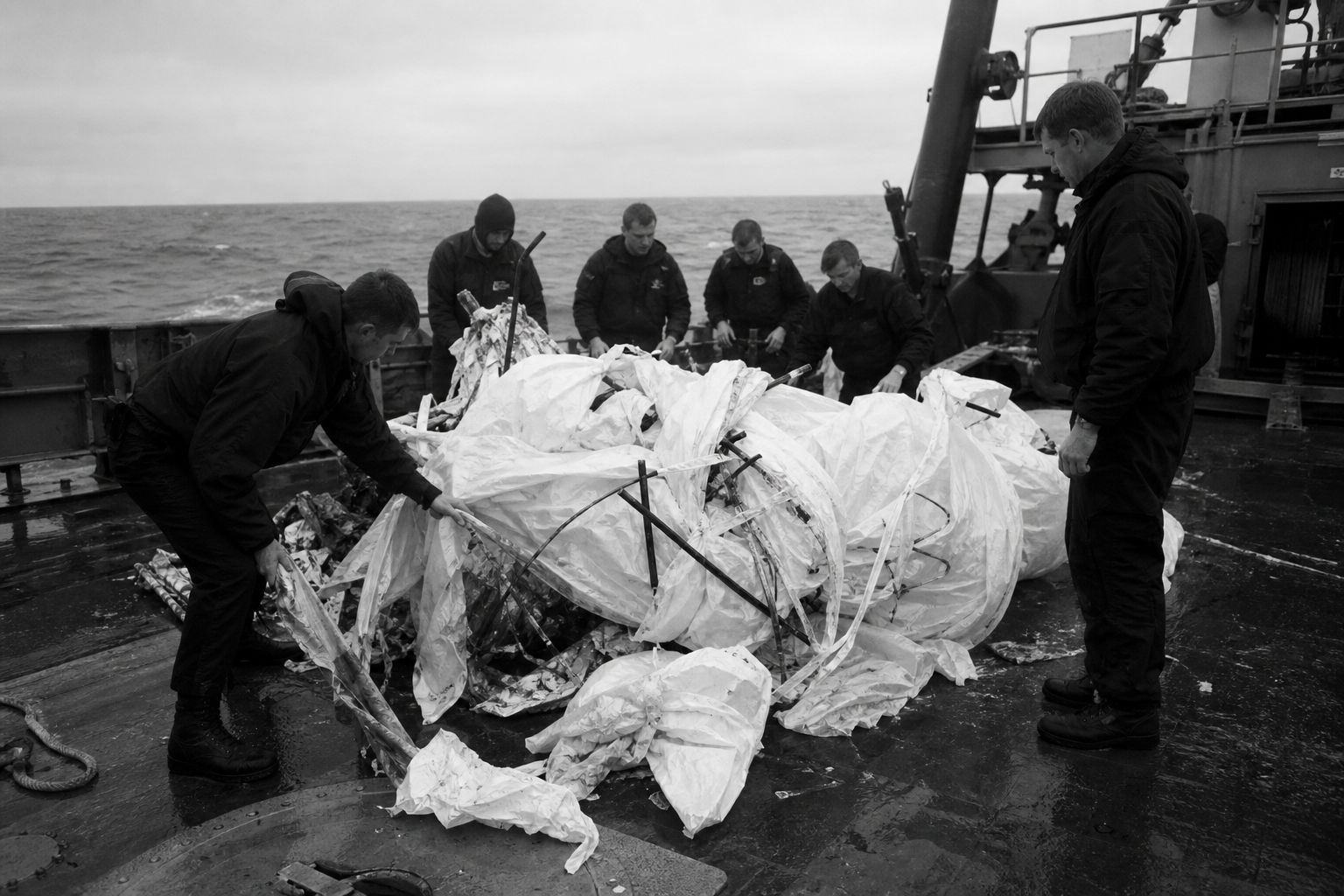
On February 4, an F-22 Raptor fired an AIM-9X missile and destroyed the balloon offshore. The Chinese spy balloon shootdown in 2023 was therefore more than a radar contact or an inconclusive aerial encounter. Navy, Coast Guard, and FBI personnel conducted a recovery operation in U.S. waters, retrieving debris that included major portions of the payload for examination.
The recovered material gave the U.S. government a basis for its public assessment beyond the craft’s appearance and flight path. The Pentagon maintained that it was a Chinese surveillance platform, while the FBI processed and analyzed recovered equipment. Public reporting confirmed recovery and analysis, but it did not disclose every technical finding or provide a complete public account of the mission’s intelligence objectives. Recovery established that wreckage existed and was examined; it did not make every broader claim about intent publicly provable.
Beijing disputed the central U.S. characterization. China described the craft as a civilian airship used mainly for meteorological and other research that had deviated far from its planned course, and it condemned the shootdown. The disagreement is best kept precise: China challenged the surveillance allegation and the circumstances of the flight, while U.S. officials maintained that the recovered craft was part of a People’s Republic of China surveillance operation. Whatever the unresolved political dispute over purpose, this was the sole February case publicly linked to a named foreign government and supported by recovered wreckage.
Objects Two Through Four: What Officials Said About Alaska, Yukon, and Lake Huron
Alaska, February 10. U.S. Northern Command said the object was detected over Alaska and downed off the state’s northern coast after it posed a potential hazard to civilian aircraft flying at roughly 40,000 feet. Pentagon officials described it as about the size of a small car and cylindrical, with no observed propulsion system or payload. An F-22 brought it down on President Biden’s direction. Those were observational details, not a technical identification: the object’s owner, purpose, and origin were not publicly established.
Yukon, February 11. The next day, Canadian and U.S. forces acted through NORAD, the joint continental-defense command. Prime Minister Justin Trudeau said he had ordered the takedown of an unidentified object that had violated Canadian airspace over the Yukon Territory; a U.S. F-22 carried out the intercept after Canadian authorization. Public descriptions called it a small, cylindrical object flying at high altitude and presenting a possible threat to civil aviation. Canada’s role was therefore substantive, not symbolic: the object was over Canadian territory and the Canadian government authorized the action. No final public identification followed.
Lake Huron, February 12. A third later object crossed into U.S. airspace and was shot down over Lake Huron after being assessed as a possible aviation-safety concern. Officials described an octagonal structure with strings hanging from it, but no discernible payload. That visual account differs from the car-sized cylindrical description used for Alaska and Yukon; it is a reason not to collapse the three 2023 unidentified objects shot down into one presumed type. An F-16 destroyed the Lake Huron object, yet its final identity also remained undisclosed publicly.
Terms such as cylindrical, octagonal, and occasionally balloon-like recorded what pilots or sensors could initially observe. They did not establish construction, operator, mission, or provenance. None of the three later cases produced public official evidence identifying alien or non-human craft.
Why the Three Later Objects Were Never Publicly Identified
Recovery conditions, rather than a later public finding about the objects themselves, shaped the difference in outcomes. The Chinese balloon fell into the Atlantic, where the U.S. military mounted an extensive ocean recovery operation and retrieved material for examination. Its large size and the accessible offshore search area made that effort fundamentally different from the searches that followed the three later shootdowns.
For the Alaska object, searchers faced remote northern terrain, severe weather, snow and ice, and limited access. U.S. Northern Command ultimately ended the effort after determining that the likelihood of locating recoverable debris was too low. A search can be curtailed without resolving what was shot down: it means the expected value of further searching no longer justified the operational difficulty and risk.
The Yukon search confronted similarly rugged, mountainous and snow-covered terrain. Canadian authorities suspended recovery operations because conditions made locating small fragments impracticable. Lake Huron presented the opposite setting but a comparable problem: debris was believed to have fallen into deep water, where currents, depth, and the small expected debris field complicated recovery.
No publicly released debris established the identity, operator, or purpose of the Alaska, Yukon, or Lake Huron objects. That absence leaves their public record unresolved; it does not supply positive evidence for any particular explanation. In particular, an unsuccessful debris recovery is not evidence of a government UFO cover-up. The defensible conclusion is narrower: unlike the Chinese balloon case, the later objects did not yield publicly available physical evidence sufficient for a final identification.
How the Shootdowns Changed Radar Screening and the UAP Conversation
The apparent surge in targets reflected a change in how the air-defense system looked for them, not necessarily a sudden appearance of previously unseen craft. After the Chinese balloon’s transit, Pentagon officials said they adjusted radar parameters, often described as radar filtering, to detect slower, smaller, or less conspicuous objects that earlier settings could have treated as clutter. Filters are designed to prioritize tracks relevant to an immediate defense mission; widening them can reveal more low-speed objects, while also producing more detections requiring assessment.
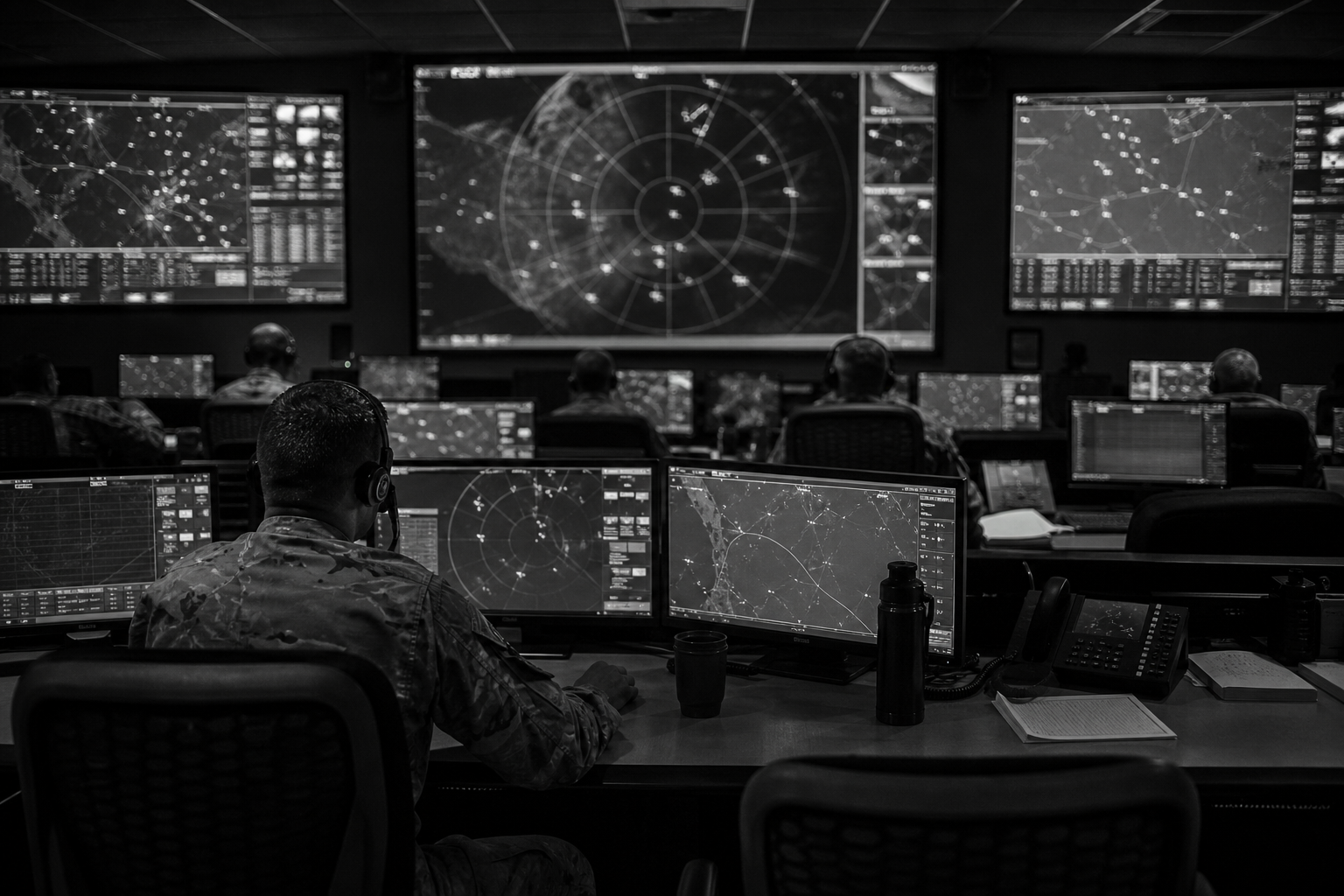
That operational shift helps explain why the three later interceptions became intertwined with the wider official UAP reporting and assessment environment. It exposed a public-information gap: people could see that fighter aircraft had acted, but the available record did not supply recovered evidence or final identifications. Interest in UAP disclosure therefore centered reasonably on what authorities had detected, how they evaluated it, and what evidence could be released.
It did not, however, turn the episode into evidence of alien disclosure. Pentagon use of UAP is a label for an observation not yet identified, not a classification of extraterrestrial or non-human technology. Neither the revised detection posture nor the unresolved status of the later objects publicly established non-human intelligence, a crash-retrieval program, or an extraordinary origin.
The Lasting Significance of the 2023 Shootdowns
The decisive evidentiary split was physical recovery: debris from the February 4 Chinese surveillance balloon was retrieved from the Atlantic, whereas searches after the February 10 Alaska, February 11 Yukon, and February 12 Lake Huron shootdowns produced no conclusive public identification. Each of those later engagements was authorized as an airspace-protection decision while ownership, purpose, and origin remained unresolved.
That record makes the 2023 balloon shootdowns over North America a useful benchmark for UFO sightings 2025 and UFO sightings 2026 coverage. A documented intercept, such as an F-22 action over Alaska or Lake Huron, is not the same thing as recovered evidence, a final government assessment, or proof of a particular technology. The three later objects remained publicly unresolved, but unresolved is not evidence of an extraordinary origin.
Nor can the February 2023 cases be joined to unrelated UAP reports merely because both began as unidentified observations. A credible link would require shared evidence of an operator, technology, route, or purpose; none was publicly established for the Alaska, Yukon, and Lake Huron objects. No public official evidence identified alien or non-human craft in any of the four shootdowns.
What We Know, and What Remains Unresolved
Recovery is the practical checkpoint that separates a public identification from an unresolved intercept. Material retrieved from the February 4 balloon supported the U.S. government’s public identification of it as a Chinese surveillance balloon. No comparable public recovery or conclusive identification followed the three subsequent shootdowns. Their owners, purposes, and origins therefore remained unresolved in the public record.
That outcome rules out two equally misleading summaries: these were neither four confirmed Chinese balloons nor four fully explained threats. The later objects prompted action because commanders had to make airspace-protection decisions with limited information, including concerns about flight safety and location. It does not follow that every object was known to be hostile, or that an unresolved identity established an extraordinary origin.
The episode also changed the terms of attention. Broader radar screening exposed tracks that had previously received less scrutiny, showing how detection settings influence what reaches public view and operational decision-makers. For UAP reporting, the useful standard is straightforward: recovered evidence and official identification carry more weight than labels or speculation. Available public official accounts did not establish alien or non-human craft; they documented three cases whose final identities were not publicly resolved.
Frequently Asked Questions
-
What were the four objects shot down over North America in February 2023?
U.S. fighter aircraft downed four objects within eight days: a Chinese surveillance balloon off South Carolina on February 4, then unidentified objects over Alaska on February 10, Yukon on February 11, and Lake Huron on February 12. Only the February 4 object was publicly identified as a Chinese high-altitude surveillance balloon.
-
Were the objects shot down over Alaska, Yukon, and Lake Huron confirmed balloons?
No. Officials publicly described the Alaska, Yukon, and Lake Huron targets as unidentified objects, not confirmed balloons. Alaska and Yukon were described as small or car-sized cylindrical objects, while the Lake Huron target was described as octagonal with strings hanging from it.
-
What aircraft and missiles were used in the 2023 shootdowns?
F-22 Raptors downed the February 4 Chinese balloon, the February 10 Alaska object, and the February 11 Yukon object using AIM-9X missiles. An F-16 shot down the Lake Huron object with an AIM-9X on February 12 after an earlier missile shot missed.
-
Why were the Alaska, Yukon, and Lake Huron objects never publicly identified?
Recovery efforts did not produce publicly released debris for a conclusive identification. Alaska and Yukon searches faced severe weather, snow, ice, and remote terrain, while Lake Huron debris was believed to be in deep water affected by currents and depth.
-
How can you tell the confirmed Chinese balloon apart from the other three 2023 shootdown objects?
Look for physical recovery and an official attribution. The February 4 balloon’s debris was recovered from the Atlantic and publicly identified by U.S. officials as a Chinese surveillance platform, while the other three had no publicly confirmed owner, purpose, origin, or recovered evidence establishing their identity.